✓ 5G offers speeds up to 100 times faster than 4G.
✓ Latency with 5G can be as low as 1 millisecond, crucial for real-time applications.
✓ 5G enables massive machine-to-machine communication, supporting billions of devices.
✓ It's a foundational technology for IoT, AI, and AR/VR advancements.
How It Works
1
Enhanced Mobile Broadband (eMBB)
This aspect of 5G delivers significantly higher speeds and greater capacity for mobile devices. It means faster downloads, smoother streaming, and more reliable connections, even in crowded areas.
2
Ultra-Reliable Low-Latency Communications (URLLC)
URLLC provides incredibly low latency and high reliability, critical for time-sensitive applications. This enables real-time control of machinery, autonomous vehicles, and remote surgery with minimal delay.
3
Massive Machine-Type Communications (mMTC)
mMTC allows 5G networks to connect a vast number of devices simultaneously, often with low power consumption. This is fundamental for the Internet of Things (IoT), supporting smart sensors and connected devices across diverse environments.
4
Network Slicing
Network slicing is a key 5G feature that allows operators to create multiple virtual networks on a single physical 5G infrastructure. Each 'slice' can be customized with specific performance characteristics (speed, latency) for different applications or industries.
Transforming Industries with 5G Connectivity
Photo: Qeis Ismail / Pexels
The advent of 5G technology marks a pivotal moment in connectivity, moving far beyond simply faster phone speeds. Its true power lies in its ability to fundamentally reshape entire industries by providing a robust, low-latency, and high-capacity network foundation. Consider manufacturing, for instance. With 5G, factories are evolving into 'smart factories' where machinery communicates autonomously, enabling predictive maintenance, real-time quality control, and highly agile production lines. Robots can collaborate more efficiently, guided by AI and connected via 5G, leading to unprecedented levels of automation and reduced downtime. This isn't just about efficiency; it's about creating entirely new production paradigms.
Healthcare is another sector experiencing profound transformation. Remote surgery, once a futuristic concept, is becoming a reality thanks to 5G's ultra-low latency. Surgeons can operate on patients hundreds or even thousands of miles away with precision, guided by real-time high-definition video feeds and haptic feedback. Moreover, connected health devices, from wearable sensors monitoring vital signs to smart hospitals managing patient flow, leverage 5G to provide continuous, reliable data. This data empowers doctors to make more informed decisions, offers proactive care, and can even facilitate rapid responses in emergency situations. The ability to transmit large medical imaging files instantly over a secure 5G network drastically improves diagnostic speed and collaboration among specialists. Exploring the nuances of IoT in healthcare reveals just how interconnected these advancements are.
Logistics and transportation are also being revolutionized. Autonomous vehicles, whether self-driving cars or delivery drones, rely heavily on 5G for real-time communication with each other and with infrastructure. This constant data exchange is crucial for navigation, collision avoidance, and efficient traffic management. Smart cities initiatives, powered by 5G, will integrate traffic lights, public transportation, and emergency services into a cohesive, responsive system. Imagine a world where traffic jams are minimized because vehicles and infrastructure dynamically adjust to conditions, or where public safety is enhanced by interconnected sensor networks providing immediate alerts. The sheer volume of data generated by these systems demands the capacity and speed that only 5G can provide, creating a truly intelligent urban environment. This foundational shift in how data is handled and utilized across sectors is what makes 5G not just an upgrade, but a paradigm shift.
Enhancing Everyday Life and Entertainment
While industrial applications highlight 5G's transformative potential, its impact on our daily lives and entertainment is equally profound and more immediately noticeable for many consumers. The most obvious benefit is the sheer speed. Downloading a full-length movie in seconds, experiencing virtually lag-free online gaming, and streaming high-resolution content without buffering are becoming the norm. This enhanced mobile broadband (eMBB) capability significantly improves the user experience on smartphones, tablets, and other portable devices, making high-bandwidth activities seamless and enjoyable. It liberates us from the constraints of Wi-Fi hotspots, offering consistent, high-performance connectivity wherever 5G is available.
Beyond just speed, 5G unlocks new dimensions in entertainment and communication through its low latency. Augmented Reality (AR) and Virtual Reality (VR) applications, which have historically been limited by processing power and network delays, are now thriving. Imagine immersive VR gaming experiences where every movement is instantly reflected, or AR applications that seamlessly overlay digital information onto the real world with no perceptible lag. From virtual tours of properties to interactive educational experiences, 5G makes these technologies genuinely practical and engaging. Live events can be streamed with multiple camera angles and interactive overlays, giving viewers unprecedented control over their experience, blurring the lines between physical and digital presence.
Furthermore, 5G is a cornerstone for the next generation of smart homes and personal IoT devices. Connecting dozens of smart appliances, security cameras, thermostats, and entertainment systems without network congestion becomes effortless. Imagine a truly responsive smart home where devices anticipate your needs, all communicating seamlessly over a reliable 5G network. This extends to personal wearables and health monitoring devices, providing real-time data to users and healthcare providers alike, supporting proactive health management. The ability to manage and interact with a vast ecosystem of connected devices, both inside and outside the home, without compromising performance, is a direct result of 5G's massive machine-type communications (mMTC) capabilities. It's about creating a more connected, responsive, and personalized environment that adapts to our lifestyle, making technology an invisible, helpful assistant rather than a source of frustration.
The Role of 5G in Smart Cities and Public Services
The vision of smart cities, where urban infrastructure and services are intelligently managed to improve quality of life, is largely dependent on the robust capabilities of 5G technology. 5G provides the essential backbone for integrating diverse urban systems, collecting vast amounts of data, and enabling real-time decision-making. Consider traffic management: 5G-enabled sensors embedded in roads and traffic lights can monitor vehicle flow, pedestrian movement, and even air quality in real-time. This data, transmitted instantly over 5G, allows city planners to dynamically adjust traffic signals, reroute vehicles to ease congestion, and provide accurate public transport information. The result is reduced commute times, lower emissions, and a more efficient urban environment. This level of interconnectedness is impossible with previous generations of cellular technology due to latency and capacity limitations.
Public safety and emergency services also stand to gain immensely from 5G. First responders can utilize 5G for faster, more reliable communication, including high-definition video streaming from incident sites, enabling remote expert consultation and improved situational awareness. Drones equipped with 5G can rapidly assess disaster zones, locate individuals, and deliver critical supplies, providing a lifeline in situations where traditional infrastructure might be compromised. Smart streetlights with integrated 5G sensors can detect unusual activity, gunshots, or accidents, automatically alerting authorities and directing emergency services to the precise location. This proactive approach to public safety, powered by 5G, can significantly reduce response times and save lives. Understanding the evolution of communication networks underscores the leap 5G represents in critical infrastructure.
Environmental monitoring and resource management are further areas where 5G is making a substantial difference. Smart waste management systems, for example, use 5G-connected sensors in bins to signal when they are full, optimizing collection routes and reducing fuel consumption and emissions. Water infrastructure can be monitored with 5G-enabled sensors to detect leaks, prevent waste, and ensure efficient distribution. Air quality sensors, deployed across a city, can provide granular, real-time data, allowing authorities to identify pollution hotspots and implement targeted interventions. By providing a pervasive, high-performance network, 5G transforms how cities operate, making them more sustainable, safer, and more responsive to the needs of their citizens. It’s about creating an intelligent layer over existing infrastructure, making our urban spaces truly 'smart' and future-proof.
Addressing Concerns and Future Outlook for 5G Adoption
Despite its immense potential, the widespread adoption and utilization of 5G technology are not without challenges and ongoing discussions. One significant concern often raised is related to infrastructure deployment. Building out a dense 5G network, especially for millimeter-wave (mmWave) frequencies that offer the highest speeds but have shorter ranges and are more susceptible to physical obstructions, requires a massive investment in new small cells and fiber optic backbones. This represents a substantial undertaking for telecommunication companies and municipalities, impacting the speed and reach of 5G availability. Another area of public discourse revolves around health concerns, with some individuals expressing worries about radiofrequency (RF) radiation. However, extensive research by organizations like the World Health Organization and the FCC consistently concludes that 5G, like previous generations of cellular technology, operates within established safety limits and poses no proven health risks. Educating the public with factual information is crucial to dispel misinformation and build trust.
Security is another paramount consideration for 5G networks, especially given their role in critical infrastructure and connecting billions of devices. The increased complexity and software-defined nature of 5G networks introduce new potential attack vectors. Robust encryption, network slicing for isolation, and advanced threat detection mechanisms are vital to ensure the integrity and resilience of 5G-enabled systems. As more sensitive data and critical operations migrate to 5G, the need for stringent cybersecurity measures becomes even more pronounced. Furthermore, the digital divide remains a concern; ensuring equitable access to 5G, particularly in rural and underserved areas, is essential to prevent exacerbating existing inequalities.
Looking ahead, the future of 5G is incredibly promising, with ongoing research and development into 5G-Advanced and eventually 6G. These evolutions will further enhance speed, capacity, and intelligence, paving the way for even more sophisticated applications such as holographic communication, truly ubiquitous sensing, and deeply integrated AI at the network edge. The focus will shift towards making networks more intelligent, self-optimizing, and capable of supporting an even broader array of use cases, from pervasive digital twins to fully immersive metaverse experiences. The journey of 5G is still in its early stages, with its full potential yet to be realized. As the technology matures and infrastructure expands, we can expect a continuous wave of innovation that will profoundly impact nearly every aspect of human life, pushing the boundaries of what is technologically possible and redefining our relationship with the digital world.
* **Infrastructure Deployment Challenges:** High costs and complex logistics for widespread small cell and fiber optic installation.
* **Health and Safety Concerns:** Misinformation regarding RF radiation, countered by scientific consensus on safety within limits.
* **Cybersecurity Risks:** Increased attack surface due to network complexity and expanded connectivity, demanding advanced security protocols.
* **Digital Divide:** Ensuring equitable access to 5G in rural and underserved areas.
* **Regulatory Frameworks:** Adapting existing regulations to accommodate new 5G applications and services.
* **Interoperability:** Ensuring seamless communication between diverse devices and platforms across different 5G networks.
Comparison
Feature
5G
4G LTE
Wi-Fi 6 (802.11ax)
Peak Speed (Mbps)
Up to 10,000
Up to 1000
Up to 9600
Typical Latency (ms)
1-5
20-50
2-20 (local)
Device Density (per km²)
1,000,000+
100,000
100s-1000s (local)
Mobility Support
Excellent (high speed)
Good (medium speed)
Limited (fixed/local)
Network Slicing
✓
✗
✗
Primary Use Case
IoT, Industry, Mobile
Mobile Browsing, Video
Home/Office Connectivity
What Readers Say
★★★★★
"My work involves large data transfers for graphic design, and 5G has been a game-changer. What used to take minutes now takes seconds, dramatically improving my productivity. It's incredible how much faster everything feels."
Sarah J. · Austin, TX
★★★★★
"As an avid online gamer, 5G's low latency is exactly what I needed. No more frustrating lag spikes, even when playing on the go. The responsiveness is indistinguishable from a wired connection at home."
Mark D. · San Francisco, CA
★★★★★
"Our hospital is piloting 5G for remote monitoring of patients, and the results are promising. The reliable, high-speed connection allows us to collect real-time vital signs and imaging data without interruption, significantly enhancing patient care outside the clinic."
Dr. Elena R. · Boston, MA
★★★★★
"While 5G speeds are fantastic in downtown areas, coverage can still be spotty in some suburban parts of the city. When it works, it's amazing, but consistency is still a work in progress for my specific location."
David K. · Denver, CO
★★★★★
"I use 5G for my small business's mobile payment system and inventory management. The reliability and speed have streamlined our operations, allowing for faster transactions and more accurate stock updates, which directly impacts our customer service."
Lisa M. · Chicago, IL
Frequently Asked Questions
What are the primary advantages of 5G technology over 4G?
5G offers three main advantages: significantly higher speeds (up to 100x faster than 4G), ultra-low latency (as low as 1 millisecond, compared to 20-50ms for 4G), and massive capacity for connecting a vast number of devices. These improvements enable entirely new applications that were not feasible with 4G.
Is 5G technology safe for human health?
Yes, major health organizations worldwide, including the World Health Organization (WHO) and the FCC, have consistently stated that 5G technology operates within established safety guidelines and does not pose a proven risk to human health. The radiofrequency emissions from 5G are similar to those from current 4G and Wi-Fi networks.
How can I get 5G service on my current phone?
To get 5G service, you need a 5G-compatible smartphone and a 5G data plan from your mobile carrier. Your phone must also be in an area with 5G network coverage. If you have an older phone, you will likely need to upgrade to a newer model that supports 5G bands.
Is 5G more expensive than 4G?
Initially, some 5G plans may have been priced at a premium, but as 5G becomes more widespread, many carriers are integrating 5G access into their standard unlimited data plans without a significant price increase. The cost can vary depending on your carrier, data allowance, and specific plan features.
How does 5G compare to Wi-Fi 6?
Both 5G and Wi-Fi 6 offer high speeds and low latency, but they serve different purposes. 5G is a wide-area cellular network designed for mobility and widespread coverage, while Wi-Fi 6 is a local area network standard typically used for home or office connectivity. They are complementary technologies, with devices often switching between them seamlessly.
Who benefits most from 5G technology?
Virtually everyone will benefit from 5G, but some key beneficiaries include industries like manufacturing, healthcare, and logistics for automation and real-time operations; consumers for faster downloads, immersive AR/VR, and seamless streaming; and smart cities for improved infrastructure management and public services.
Are there any privacy concerns with 5G networks?
While 5G networks themselves offer enhanced security features like stronger encryption, the expanded connectivity and proliferation of IoT devices mean more data is being collected and transmitted. This increases the importance of robust data privacy policies and user awareness regarding how their data is used by connected devices and applications.
What will be the next evolution after 5G?
The next evolution after 5G is expected to be 6G, which is currently in its early research and development phases. 6G aims to push the boundaries even further with terahertz speeds, even lower latency, pervasive AI integration, and capabilities like holographic communication and ubiquitous sensing, creating a truly intelligent and hyper-connected world.
Understanding what is 5G technology used for reveals a future brimming with innovation and efficiency. Embrace the power of 5G to transform your business, enhance your daily life, and step into the next era of unparalleled connectivity.

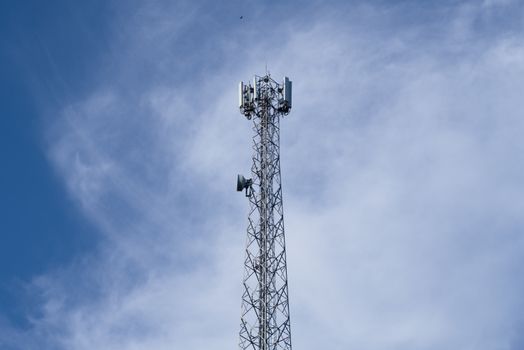 Photo: Qeis Ismail / Pexels