✓ 5G is the 5th generation of cellular technology, offering significantly faster speeds and lower latency.
✓ It utilizes a combination of spectrum bands: low-band, mid-band, and high-band (mmWave).
✓ Key enhancements include enhanced mobile broadband (eMBB), ultra-reliable low-latency communications (URLLC), and massive machine-type communications (mMTC).
✓ 5G is foundational for innovations like autonomous vehicles, smart cities, and advanced IoT.
How It Works
1
New Radio (NR) Interface
5G uses a new air interface called 5G NR, designed for greater flexibility and efficiency across various spectrum types. This allows for diverse use cases from high-speed mobile to low-power IoT devices.
2
Spectrum Utilization
Unlike previous generations, 5G aggregates multiple spectrum bands: low-band for wide coverage, mid-band for balanced speed and range, and high-band (millimeter wave or mmWave) for ultra-fast speeds in dense areas. This multi-band approach optimizes performance for different environments and needs.
3
Massive MIMO & Beamforming
Massive MIMO (Multiple Input, Multiple Output) uses many antennas to send and receive more data simultaneously, boosting capacity and speed. Beamforming directs radio signals precisely to user devices, reducing interference and improving signal quality and efficiency.
4
Network Slicing & Edge Computing
Network slicing allows operators to create virtual, customized networks on a shared physical infrastructure, tailored for specific applications (e.g., IoT, critical communications). Edge computing processes data closer to the source, reducing latency and improving real-time application performance.
Understanding the Core: What is 5G Technology?
Photo: Ulrick Trappschuh / Pexels
The advent of 5G technology marks a pivotal moment in the evolution of wireless communication. More than just a faster iteration of 4G, 5G represents a fundamental paradigm shift, designed to support an unprecedented array of new services, devices, and applications. At its heart, 5G is the fifth generation of cellular mobile communication, engineered to deliver higher peak data speeds, ultra-low latency, more reliability, massive network capacity, increased availability, and a more uniform user experience to more users. It’s not just about speed; it's about transforming the very fabric of our digital interactions and enabling a future where connectivity is truly ubiquitous and intelligent.
To fully grasp what is 5G technology, we must look beyond the marketing hype and delve into its foundational improvements. Unlike its predecessors, which primarily focused on enhancing mobile broadband, 5G is built with three main pillars: enhanced Mobile Broadband (eMBB), Ultra-Reliable Low-Latency Communications (URLLC), and Massive Machine-Type Communications (mMTC). Each of these pillars addresses distinct needs and opens up a vast landscape of possibilities. eMBB caters to the demand for higher speeds and capacity, allowing for seamless 4K/8K video streaming, immersive AR/VR experiences, and faster downloads on mobile devices. URLLC is critical for applications requiring instantaneous and highly reliable communication, such as autonomous vehicles, remote surgery, and industrial automation. Imagine a world where self-driving cars communicate with each other and with traffic infrastructure in milliseconds, preventing accidents and optimizing traffic flow. This is the promise of URLLC. Finally, mMTC is designed to connect a colossal number of devices, enabling the widespread adoption of the Internet of Things (IoT). From smart city sensors monitoring air quality to agricultural sensors optimizing crop yields, mMTC provides the backbone for a truly connected world.
Another crucial aspect of 5G lies in its utilization of a broader range of spectrum bands. While 4G primarily operated on low and mid-band frequencies, 5G extends into the high-band spectrum, specifically millimeter wave (mmWave). Each band plays a unique role: low-band (sub-1 GHz) offers extensive coverage, penetrating buildings and reaching rural areas, though with slower speeds. Mid-band (1-6 GHz) provides a balance of speed and coverage, serving as the workhorse for many urban and suburban deployments. High-band (24-40 GHz and above), or mmWave, delivers astonishingly fast speeds and massive capacity but has a shorter range and is more susceptible to obstacles like buildings and foliage. The genius of 5G is its ability to intelligently combine these different bands, using technologies like carrier aggregation, to provide a dynamic and optimized connectivity experience. This multi-band approach is essential for delivering on 5G’s ambitious promises, ensuring that it can adapt to various environmental and usage demands, from densely populated urban centers to sprawling rural landscapes. Understanding how wireless networks operate is crucial to appreciating these advancements.
The Technical Marvels Behind 5G Performance
Photo: Lutfi Elyas / Pexels
Beyond the spectrum, the technical innovations underpinning 5G are what truly differentiate it from previous generations. These advancements are not merely incremental; they represent a fundamental rethinking of network architecture and signal processing. One of the most significant innovations is Massive MIMO (Multiple Input, Multiple Output). Where 4G might use a handful of antennas on a cell tower, Massive MIMO employs dozens, or even hundreds, of antennas. This allows the base station to send and receive multiple data streams simultaneously to and from many users, dramatically increasing network capacity and efficiency. Think of it like a highway that can suddenly handle ten times the traffic without getting wider, simply by optimizing how cars use the existing lanes. This technology is crucial for managing the exponential growth in data traffic expected with 5G.
Complementing Massive MIMO is beamforming, a sophisticated signal processing technique. Instead of broadcasting signals in all directions, beamforming directs radio energy precisely towards user devices. This targeted approach reduces interference, improves signal quality, and extends the range of high-frequency mmWave signals, which are otherwise prone to signal degradation over short distances. Imagine a powerful spotlight that can track individual users, ensuring they receive the strongest possible signal, rather than a floodlight illuminating an entire area indiscriminately. This precision is vital for delivering consistent, high-speed connectivity, especially in crowded environments like stadiums or concert venues.
Network slicing is another transformative feature of 5G. This allows mobile operators to create multiple virtual networks on a single physical 5G infrastructure. Each 'slice' can be customized with specific performance characteristics – for example, one slice might be optimized for ultra-low latency for autonomous vehicles, while another might prioritize massive connectivity for IoT sensors, and a third could offer high bandwidth for video streaming. This flexibility means that different industries and applications can have their network tailored to their exact needs, ensuring optimal performance without having to build entirely separate physical networks. It’s like having a customizable, on-demand network for every distinct use case, leading to unprecedented efficiency and innovation.
Finally, edge computing plays a critical role in unlocking 5G's full potential, particularly for applications requiring real-time responses. In traditional cloud computing, data often travels long distances to centralized data centers for processing. With edge computing, data processing is moved closer to the source of data generation – at the 'edge' of the network, closer to the users and devices. This drastically reduces latency, as data doesn't have to travel as far. For critical applications like remote surgery, factory automation, or augmented reality, where milliseconds matter, edge computing combined with 5G's URLLC capabilities makes these futuristic scenarios a practical reality. These combined technical marvels underscore why understanding what is 5G technology goes far beyond just faster internet; it’s about a fundamentally more intelligent and responsive network infrastructure.
Transformative Applications and the Future of 5G Technology
Photo: Mathias Reding / Pexels
The implications of what is 5G technology extend far beyond faster smartphone downloads; it is a foundational technology poised to revolutionize industries and reshape daily life. One of the most anticipated applications is in the realm of autonomous vehicles. 5G’s ultra-low latency and high reliability will enable vehicles to communicate with each other (V2V), with traffic infrastructure (V2I), and with pedestrians (V2P) in near real-time. This instantaneous exchange of data is crucial for preventing accidents, optimizing traffic flow, and enabling fully autonomous driving systems that require split-second decision-making. The ability to process vast amounts of sensor data at the edge of the network, coupled with reliable communication links, will make self-driving cars safer and more efficient.
Smart cities are another sector where 5G is expected to have a profound impact. Imagine cities where sensors monitor everything from air quality and waste levels to traffic congestion and public safety, all communicating over a massive 5G IoT network. This data can be used to optimize resource allocation, improve emergency response times, enhance urban planning, and create more livable, sustainable environments. From smart streetlights that adjust brightness based on pedestrian traffic to smart grids that dynamically manage energy distribution, 5G provides the connective tissue for truly intelligent urban ecosystems. The sheer volume of interconnected devices and the need for efficient data transfer make 5G an indispensable component of smart city initiatives.
Healthcare is also ripe for transformation with 5G. Remote surgery, where a surgeon operates on a patient miles away using robotic instruments, becomes a tangible reality thanks to URLLC. Telemedicine will become more robust, allowing for high-definition video consultations and real-time monitoring of vital signs from connected medical devices. Wearable health trackers will transmit data continuously and reliably, enabling proactive healthcare and personalized treatment plans. The ability to transmit large medical imaging files quickly and securely will also facilitate faster diagnoses and better collaboration among medical professionals. This will undoubtedly improve access to quality healthcare, especially in underserved areas, and revolutionize patient care.
Industrial automation and the concept of Industry 4.0 are deeply intertwined with 5G. Factories can deploy massive numbers of IoT sensors to monitor machinery, predict maintenance needs, and optimize production lines. AGVs (Automated Guided Vehicles) and industrial robots can communicate wirelessly with each other and central control systems with unprecedented reliability and precision, leading to more flexible and efficient manufacturing processes. The reduced latency will also enable real-time control of critical operations, paving the way for truly smart factories. As we embrace a more connected future, understanding the importance of cybersecurity in this landscape becomes paramount, especially with the increased attack surface presented by 5G-enabled devices.
Navigating the 5G Landscape: Challenges and Considerations
While the promise of what is 5G technology is immense, its widespread deployment and full realization come with a set of significant challenges and considerations that need to be addressed. One of the primary hurdles is the sheer cost and complexity of infrastructure deployment. Building out a comprehensive 5G network requires an extensive rollout of new small cells, especially for mmWave, which necessitates a much denser network of antennas compared to previous generations. This involves securing new sites, obtaining permits, and integrating new hardware, which can be a time-consuming and capital-intensive process for carriers. The diverse spectrum bands also mean different deployment strategies, adding to the complexity.
Another critical consideration is security. With billions of new IoT devices connecting to 5G networks, the attack surface for cyber threats expands dramatically. Ensuring the security and privacy of data transmitted across these networks is paramount. 5G introduces new security features, but also new vulnerabilities that hackers may exploit. Robust encryption, secure network slicing, and advanced threat detection mechanisms are essential to protect critical infrastructure and personal data. The potential for state-sponsored attacks or widespread disruptions through IoT vulnerabilities is a serious concern that requires continuous vigilance and innovation in cybersecurity.
Public perception and health concerns, however unfounded they may be, also present a challenge. Misinformation surrounding 5G and health risks (e.g., radiation, illness) has led to public resistance and even vandalism of infrastructure in some areas. Educating the public about the scientific consensus on electromagnetic fields and 5G safety is crucial to foster acceptance and smooth deployment. Addressing these concerns with transparent, evidence-based communication is vital for the technology's progress.
Finally, the regulatory landscape and spectrum allocation remain complex. Governments and regulatory bodies play a crucial role in assigning spectrum, setting policies, and ensuring fair competition. Harmonizing these regulations across different regions and countries is essential for global interoperability and the seamless functioning of 5G-enabled services, especially for international applications like autonomous shipping or global supply chains. Overcoming these challenges will be key to unlocking the full potential of what is 5G technology and ensuring its successful integration into our society.
**Tips for embracing 5G:**
* **Check Carrier Coverage:** Before investing in 5G devices, verify that your primary locations (home, work) have reliable 5G coverage from your preferred carrier.
* **Understand Your Needs:** Determine if your current usage truly requires 5G speeds and low latency. For basic browsing, 4G might still suffice, but for AR/VR, cloud gaming, or work-from-home demands, 5G can be a game-changer.
* **Invest in Compatible Devices:** Ensure your smartphone, tablet, or other connected devices are 5G-capable to take advantage of the new network.
* **Explore 5G Plans:** Carriers often offer different 5G plans. Compare data caps, speeds, and pricing to find one that fits your budget and usage patterns.
* **Stay Informed:** Keep an eye on new 5G applications and services as they emerge, as the technology is constantly evolving and offering new possibilities.
Comparison
Feature
5G
4G LTE
3G
Peak Speed (Theoretical)
Up to 10 Gbps
Up to 1 Gbps
Up to 14 Mbps
Latency
1-5 ms
50-100 ms
100-500 ms
Capacity
Very High (1M devices/km²)
High (100K devices/km²)
Low (10K devices/km²)
Use Cases
Autonomous vehicles, AR/VR, IoT, remote surgery
Mobile broadband, video streaming
Basic internet, voice calls
Spectrum Use
Low-band, Mid-band, mmWave
Low-band, Mid-band
Low-band
Network Slicing
✓
✗
✗
Energy Efficiency
Higher per bit
Moderate
Lower
What Readers Say
★★★★★
"Understanding what is 5G technology has completely changed how I work remotely. The speeds are incredible, making video conferences seamless and file transfers instant. It's truly a game-changer for productivity."
Sarah J. · Austin, TX
★★★★★
"I was skeptical about 5G at first, but after reading this guide, I see its potential. My new 5G phone gets amazing speeds, even in crowded areas. It feels like the internet is always fast now."
Mark D. · Seattle, WA
★★★★★
"This article clarified so much about what is 5G technology. Since upgrading to a 5G plan, my cloud gaming experience is lag-free, and I can download entire movies in seconds. It's a noticeable and impactful upgrade."
Emily R. · Boston, MA
★★★★★
"5G is great where I have coverage, but it's not everywhere yet. This guide helped me understand why, especially the part about mmWave. The speeds are excellent when available, and I'm excited for broader deployment."
David L. · Denver, CO
★★★★★
"As a developer working on IoT solutions, understanding what is 5G technology is crucial. The low latency and massive connectivity are enabling innovations I couldn't even dream of with 4G. This article provided excellent context."
Jessica M. · San Francisco, CA
Frequently Asked Questions
What is the main difference between 4G and 5G technology?
The main difference lies in speed, latency, and capacity. 5G offers significantly higher peak speeds (up to 10 Gbps vs. 1 Gbps for 4G), ultra-low latency (1-5 ms vs. 50-100 ms), and vastly increased capacity, allowing it to connect millions of devices per square kilometer. This enables new applications like autonomous vehicles and advanced IoT that 4G cannot reliably support.
Is 5G technology safe for health?
Leading international health organizations, including the World Health Organization (WHO), and numerous scientific bodies have concluded that there is no established scientific evidence that the low-level radiofrequency radiation from 5G, or any wireless technology, is harmful to human health. 5G operates within spectrum bands that have been safely used for decades, and exposure levels are well below international safety guidelines.
How can I get 5G technology for my devices?
To access 5G, you need two main things: a 5G-compatible device (like a 5G smartphone or router) and a 5G service plan from a mobile carrier that offers 5G coverage in your area. Once you have both, your device will automatically connect to the available 5G network when within range.
Is 5G technology more expensive than 4G?
Initially, 5G-compatible devices and some premium 5G plans might have been more expensive. However, as 5G becomes more widespread, the cost difference is diminishing. Many carriers now include 5G access in their standard plans, and 5G devices are becoming more affordable and common across all price points.
How does 5G technology compare to Wi-Fi 6?
Both 5G and Wi-Fi 6 are designed for faster speeds and better performance, but they serve different purposes. 5G is a wide-area cellular technology for mobile devices and large-scale connectivity, offering ubiquitous coverage. Wi-Fi 6 is a local area network technology, typically used within homes or offices, providing high-speed internet to multiple devices connected to a single router. They are complementary technologies, with 5G often providing the backhaul for Wi-Fi 6 networks.
Who should use 5G technology?
Anyone seeking faster internet speeds, lower latency, and improved network reliability will benefit from 5G. It's particularly beneficial for gamers, professionals who transfer large files, users of AR/VR applications, and anyone heavily reliant on cloud services. Industries like manufacturing, healthcare, and transportation will also extensively leverage 5G for their advanced operational needs.
Are there any privacy concerns with 5G technology?
While 5G networks themselves incorporate enhanced security features compared to previous generations, the increased number of connected IoT devices and the vast amount of data they generate do raise privacy considerations. Users should be mindful of the data collected by 5G-enabled devices and applications, and ensure they understand privacy policies. Strong data encryption and robust cybersecurity practices remain crucial for protecting personal information on 5G networks.
What is the future trend for 5G technology and beyond?
The future of 5G involves continued expansion of coverage, refinement of its capabilities (like network slicing and edge computing), and deeper integration into vertical industries. Beyond 5G, research and development for 6G are already underway, aiming for even higher speeds, virtually zero latency, and the integration of AI, holographic communication, and truly immersive digital experiences, pushing the boundaries of what connectivity can achieve.
Embrace the future today by understanding what is 5G technology and how it will redefine our connected world. Explore its immense potential, prepare your devices, and get ready for a new era of speed, efficiency, and innovation.

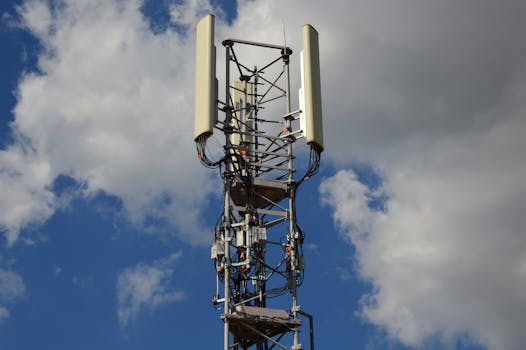 Photo: Ulrick Trappschuh / Pexels
 Photo: Lutfi Elyas / Pexels
 Photo: Mathias Reding / Pexels