What is 5G Technology Explained: Your Guide to the Next-Gen Network
what is 5g technology explained

What is 5G Technology Explained: Your Guide to the Next-Gen Network

Illuminated 5G sign with modern geometric ceiling and warm lighting.Photo: Z z / Pexels

What is 5G Technology Explained: Your Guide to the Next-Gen Network

Dive deep into 5G's core, unraveling its transformative power for a hyper-connected world.

Explore 5G Now

Key Takeaways

  • ✓ 5G is the 5th generation of cellular technology, offering significantly faster speeds and lower latency.
  • ✓ It utilizes a combination of spectrum bands: low-band, mid-band, and high-band (mmWave) for varied coverage and capacity.
  • ✓ Key enhancements include enhanced Mobile Broadband (eMBB), Ultra-Reliable Low Latency Communications (URLLC), and Massive Machine Type Communications (mMTC).
  • ✓ 5G is foundational for innovations like autonomous vehicles, smart cities, and advanced IoT applications.

How It Works

1
Enhanced Spectrum Utilization

5G leverages a broader range of radio frequencies, from existing low-band to new high-band (mmWave) spectrums, to deliver higher bandwidth and capacity. This intelligent use of diverse frequencies allows for both wide-area coverage and ultra-fast, localized connections.

2
Massive MIMO and Beamforming

Massive MIMO (Multiple-Input, Multiple-Output) uses many antennas at the base station to send and receive data simultaneously, boosting capacity and speed. Beamforming directs these signals precisely to user devices, reducing interference and improving signal quality over long distances.

3
Network Slicing

Network slicing allows mobile operators to create multiple virtual networks on a single physical 5G infrastructure. Each 'slice' can be customized with specific performance characteristics (e.g., low latency for critical applications, high bandwidth for video streaming), catering to diverse service requirements efficiently.

4
Edge Computing Integration

5G works in conjunction with edge computing, bringing data processing closer to the source of data generation (e.g., IoT devices, smartphones). This proximity significantly reduces latency, enabling real-time applications and enhancing the responsiveness of connected systems.

Unpacking the Core: What Exactly is 5G Technology Explained?

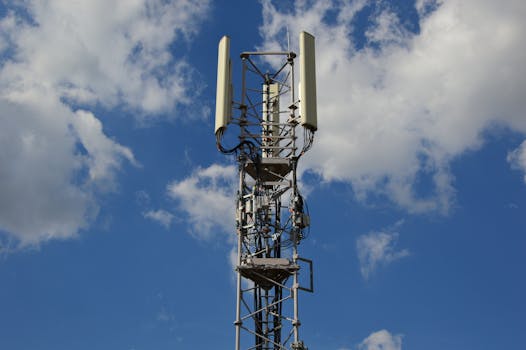
A tall metal communications tower stands against a backdrop of a clear blue sky with scattered clouds.Photo: Qeis Ismail / Pexels
The advent of 5G represents more than just a marginal upgrade from its predecessors; it is a paradigm shift in how we conceive and interact with digital connectivity. At its heart, 5G, or the fifth generation of cellular technology, is engineered to deliver unprecedented speeds, ultra-low latency, and massive capacity, fundamentally reshaping our digital landscape. Unlike 4G LTE, which primarily focused on mobile broadband, 5G is designed as a unifying connectivity fabric for a hyper-connected world, serving not only smartphones but also an expansive ecosystem of devices, vehicles, and critical infrastructure. The foundational principles of 5G revolve around three primary pillars: Enhanced Mobile Broadband (eMBB), Ultra-Reliable Low Latency Communications (URLLC), and Massive Machine Type Communications (mMTC). These pillars collectively enable a diverse array of use cases, from immersive augmented reality (AR) and virtual reality (VR) experiences to the seamless operation of autonomous vehicles and the intricate orchestration of smart city initiatives. For consumers, eMBB translates into lightning-fast download and upload speeds, allowing for instantaneous streaming of 8K video, lag-free online gaming, and rapid file transfers. Businesses will leverage URLLC for mission-critical applications where even milliseconds of delay can have significant consequences, such as remote surgery or industrial automation. Meanwhile, mMTC will facilitate the proliferation of billions of IoT devices, enabling smart agriculture, intelligent logistics, and comprehensive environmental monitoring. The underlying architecture of 5G is also significantly more flexible and software-defined than previous generations, incorporating technologies like network slicing and edge computing. Network slicing allows operators to create dedicated virtual networks tailored to specific service requirements, ensuring optimal performance for various applications. Edge computing, on the other hand, brings data processing capabilities closer to the data source, drastically reducing latency and enabling real-time decision-making. Understanding the evolution of wireless technology helps contextualize 5G's monumental leap. It's not just about speed; it's about creating a responsive, resilient, and intelligent network infrastructure capable of supporting the innovations of tomorrow. This holistic approach ensures that 5G is not merely a faster internet connection but the backbone for the next industrial revolution, transforming everything from healthcare and education to entertainment and manufacturing. Its broad impact makes it a crucial topic for anyone interested in the future of technology.

The Technological Marvels Behind 5G's Performance

A tall metal communications tower stands against a backdrop of a clear blue sky with scattered clouds.Photo: Qeis Ismail / Pexels
To achieve its ambitious performance targets, 5G incorporates several groundbreaking technologies that differentiate it from previous generations. One of the most significant advancements is the utilization of a wider spectrum of radio frequencies. While 4G predominantly operated on low and mid-band spectrums, 5G expands into the high-band spectrum, specifically millimeter-wave (mmWave) frequencies. MmWave offers enormous bandwidth, enabling multi-gigabit speeds, but its signals have a shorter range and are more susceptible to physical obstructions. To counteract these limitations and optimize performance across various environments, 5G employs a sophisticated combination of technologies. Massive MIMO (Multiple-Input, Multiple-Output) is a crucial component, where base stations are equipped with hundreds of antennas to simultaneously send and receive data streams to multiple users. This dramatically increases network capacity and efficiency compared to the handful of antennas used in 4G. Complementing Massive MIMO is beamforming, a technique that precisely directs radio signals towards individual user devices, rather than broadcasting them broadly. This focused transmission reduces interference, improves signal strength, and extends the effective range of mmWave signals. Another pivotal innovation is network slicing, which allows mobile operators to segment their physical network infrastructure into multiple virtual networks. Each 'slice' can be custom-configured with specific characteristics like bandwidth, latency, and reliability to meet the unique demands of different applications or industries. For instance, a slice dedicated to autonomous vehicles would prioritize ultra-low latency and high reliability, while a slice for a smart stadium might prioritize massive bandwidth for thousands of simultaneous users. This flexibility is key to 5G's ability to support a vast and diverse ecosystem of services. Furthermore, the integration of edge computing is vital for 5G's low-latency capabilities. By deploying computing resources closer to the network edge – where data is generated and consumed – 5G reduces the distance data needs to travel to a central data center. This minimizes round-trip time, enabling real-time processing and rapid response for applications like industrial automation, augmented reality, and vehicle-to-everything (V2X) communication. These technological marvels collectively contribute to 5G's promise of a faster, more responsive, and more intelligent network, laying the groundwork for unprecedented innovation across all sectors.

Transformative Applications and Societal Impact of 5G

Vibrant night scene in Taguig, Philippines with a smartphone capturing the illuminated cityscape.Photo: Ramius Aquiler / Pexels
The implications of 5G extend far beyond faster smartphone downloads, promising to catalyze a profound transformation across numerous industries and aspects of daily life. Its enhanced capabilities in speed, latency, and capacity are unlocking possibilities that were previously confined to science fiction. In healthcare, 5G is paving the way for remote surgery, where specialists can perform complex procedures with precision from thousands of miles away, guided by real-time, ultra-low latency video feeds and haptic feedback. It also enables advanced telemedicine, allowing for remote patient monitoring with high-resolution data transmission and immediate medical consultations, especially benefiting rural or underserved communities. The manufacturing sector stands to gain immensely from 5G, with the realization of 'smart factories.' Here, 5G connects countless sensors, robots, and machinery, enabling real-time data analysis, predictive maintenance, and highly flexible production lines. This leads to increased efficiency, reduced downtime, and the potential for mass customization. Autonomous vehicles are another area where 5G's URLLC is indispensable. Vehicle-to-everything (V2X) communication, powered by 5G, allows cars to communicate with each other, traffic infrastructure, and pedestrians, creating a cohesive and safer transportation ecosystem. This real-time data exchange is crucial for preventing accidents, optimizing traffic flow, and enabling fully self-driving cars. Smart cities, too, are being redefined by 5G. From intelligent traffic management systems that dynamically adjust to congestion, to smart utility grids that optimize energy consumption, and public safety applications like real-time surveillance with AI-powered analytics, 5G provides the necessary backbone for truly interconnected urban environments. Education is also undergoing a revolution, with 5G facilitating immersive learning experiences through AR/VR, enabling remote collaboration for students and educators, and providing equitable access to high-quality digital resources. The ability to stream high-fidelity content and engage in interactive simulations without lag transforms the learning environment. Furthermore, 5G is a critical enabler for the Internet of Things (IoT), allowing for the connection of billions of devices, from smart home appliances to industrial sensors. This massive connectivity fuels data-driven insights across sectors, fostering greater automation and intelligence. For more on how these innovations are shaping our world, explore the future of smart technology. Ultimately, 5G is not just a technological advancement; it's an economic engine and a societal catalyst, promising to drive innovation, create new industries, and improve the quality of life for people worldwide by making connectivity seamless, intelligent, and ubiquitous.

Addressing the Challenges and Misconceptions of 5G Implementation

While the promise of 5G is immense, its widespread implementation and adoption come with a unique set of challenges and have unfortunately been subject to numerous misconceptions. One of the primary hurdles is the extensive infrastructure deployment required. Unlike previous generations that could largely piggyback on existing cell tower locations, 5G, particularly its high-band (mmWave) component, necessitates a much denser network of small cells. These small cells need to be installed on lampposts, buildings, and other urban furniture, requiring significant investment, regulatory approvals, and coordination with local municipalities. The cost associated with this extensive rollout is substantial, impacting both carriers and consumers. Another significant challenge is ensuring robust and ubiquitous coverage, especially in rural areas where the economic case for dense small cell deployment is less clear. Achieving a consistent 5G experience across diverse geographies requires a hybrid approach, combining low-band for wide coverage, mid-band for balanced performance, and high-band for urban hotspots. Misinformation surrounding 5G has also been a notable obstacle. Concerns about health risks, often perpetuated by unsubstantiated claims linking 5G to various illnesses or even pandemics, have created public apprehension. It's crucial to reiterate that numerous scientific studies and health organizations, including the World Health Organization (WHO) and the FCC, have consistently found no credible evidence of adverse health effects from 5G or other wireless technologies operating within established safety guidelines. The radio frequencies used by 5G are non-ionizing, meaning they lack the energy to damage DNA. Here are some common misconceptions and clarifying facts: * **Misconception:** 5G causes cancer or other health issues. * **Fact:** Extensive research by global health bodies confirms 5G operates within safe limits, with no proven health risks. * **Misconception:** 5G replaces all previous networks entirely. * **Fact:** 5G coexists with 4G and 3G, with networks often relying on 4G for foundational elements and gradually migrating services. * **Misconception:** 5G is only about faster phone speeds. * **Fact:** While faster speeds are a benefit, 5G's true power lies in its low latency and massive capacity for IoT, industrial applications, and critical communications. * **Misconception:** 5G is available everywhere now. * **Fact:** 5G rollout is ongoing, with coverage expanding, but it's not yet ubiquitous, especially for the fastest mmWave speeds. Addressing these challenges and dispelling myths through clear, evidence-based communication is vital for the successful and equitable adoption of 5G technology, ensuring its transformative benefits can be realized by all.

Comparison

Feature5G4G LTEWi-Fi 6
Peak Download SpeedUp to 10 GbpsUp to 1 GbpsUp to 9.6 Gbps
Latency1 ms30-50 ms20-50 ms
Device Capacity1M devices/km²100K devices/km²30-50 devices/router
Network Slicing
Mobility SupportExcellent (cellular)Good (cellular)Limited (fixed)

What Our Readers Say

5 ★★★★★

"Understanding what is 5G technology explained has completely shifted my perspective. The article brilliantly broke down complex concepts into digestible insights, showing how it impacts everything from my smart home to future city planning. Truly an eye-opener!"

5 ★★★★★

"As an IT professional, I appreciate the depth and clarity of this explanation. It covered not just the 'what' but also the 'how' and 'why' of 5G, including the technical marvels and real-world applications. Highly recommended for anyone in tech or just curious."

5 ★★★★★

"I was confused about 5G, but this article cleared everything up. I now understand why my new phone feels so much faster and how 5G is making my smart devices work seamlessly together. My streaming experience has never been better thanks to this new tech."

4 ★★★★☆

"The article provided a fantastic overview, especially on the societal impact. While I would have loved even more detail on specific security aspects, the content was incredibly helpful and well-researched. It's a great starting point for anyone wanting to grasp 5G."

5 ★★★★★

"This detailed explanation of what is 5G technology explained helped me understand how it will benefit my small business, especially with IoT devices and remote operations. It's clear that 5G is going to be a game-changer for efficiency and connectivity."

Frequently Asked Questions

What is the primary benefit of 5G over 4G?
The primary benefits of 5G over 4G are significantly higher speeds (up to 10 Gbps), ultra-low latency (as low as 1 millisecond), and massive capacity for connecting a vast number of devices. This enables new applications like real-time VR/AR, autonomous vehicles, and widespread IoT deployments that 4G cannot adequately support.
Is 5G safe for human health?
Yes, numerous independent scientific studies and international health organizations, including the World Health Organization (WHO) and the FCC, have consistently found no credible evidence that 5G technology, operating within established safety guidelines, poses a health risk to humans. 5G uses non-ionizing radiation, which is different from X-rays and does not damage DNA.
How can I get 5G service on my phone?
To get 5G service, you need a 5G-compatible smartphone, a 5G-enabled plan from your mobile carrier, and to be in an area with 5G coverage. Most major carriers in the US offer 5G plans, and newer flagship phones generally support 5G. Check your carrier's coverage map for availability in your area.
How much does a 5G plan cost compared to 4G?
The cost of 5G plans varies by carrier and data allowance, but many carriers now include 5G access in their standard unlimited or higher-tier plans at no additional cost compared to their 4G equivalents. While initial 5G-specific plans might have been pricier, 5G is increasingly becoming a standard feature of most mobile data offerings.
How does 5G compare to Wi-Fi 6?
Both 5G and Wi-Fi 6 offer significant speed and capacity improvements over their predecessors, but they serve different primary purposes. 5G is a cellular wide-area network designed for mobility and broad coverage, while Wi-Fi 6 is a local area network best suited for fixed indoor environments. They are complementary technologies, with 5G providing connectivity outside and Wi-Fi 6 optimizing inside buildings.
Who stands to benefit most from 5G technology?
Virtually everyone stands to benefit from 5G. Consumers will experience faster mobile internet and new immersive entertainment. Businesses, especially in manufacturing, healthcare, and logistics, will gain from automation, real-time data, and improved efficiency. Entire industries like autonomous vehicles and smart cities rely on 5G's unique capabilities to function and thrive.
What are the security implications of 5G?
5G networks incorporate enhanced security features compared to previous generations, including stronger encryption and authentication protocols. However, the increased complexity and broader attack surface (due to more connected IoT devices) also present new challenges. Operators and device manufacturers are continuously working to implement robust security measures to protect data and infrastructure.
What is the future outlook for 5G development?
The future of 5G involves continued expansion of coverage, further optimization of network performance, and the development of '5G Advanced' and eventually 6G. We can expect deeper integration with AI, more sophisticated edge computing, and the proliferation of new applications in areas like holographic communication, fully immersive metaverse experiences, and ultra-precise location services.

Ready to embrace the future? Understanding what is 5G technology explained is your first step towards navigating a world transformed by unprecedented connectivity. Stay informed, get connected, and unlock the full potential of this revolutionary network today.

Topics: what is 5g technology explained5g network benefitshow 5g works5g applicationsfuture of 5g
Leo List
Brampton weed
Adultwork