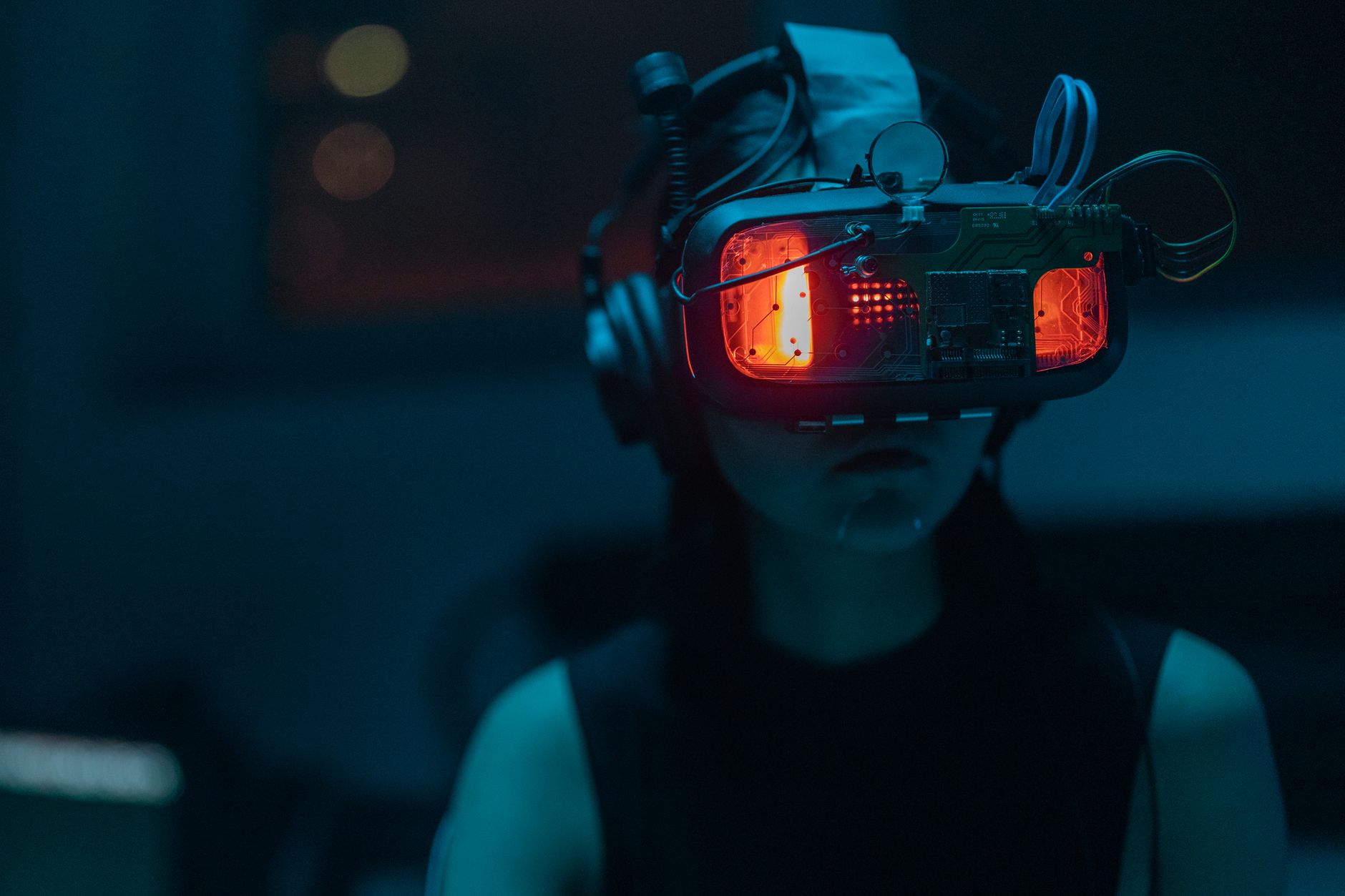
How Does Virtual Reality Work? The Ultimate Guide
how does virtual reality work

How Does Virtual Reality Work? The Ultimate Guide

Explore the fascinating technology that creates immersive digital worlds and transforms our perception of reality.

Discover VR Now

Key Takeaways

  • ✓ VR creates simulated 3D environments that can be interacted with.
  • ✓ Head-mounted displays (HMDs) are central to delivering visual and audio immersion.
  • ✓ Sensors track user movement and position, allowing interaction within the virtual world.
  • ✓ Haptic feedback enhances immersion by simulating touch and physical sensations.

How It Works

1
Display and Optics

High-resolution screens (one per eye) present stereoscopic images. Lenses then magnify and focus these images, creating a wide field of view that mimics natural vision.

2
Tracking User Movement

Built-in sensors (accelerometers, gyroscopes, magnetometers) track head rotation. External cameras or sensors often track body and hand movements, translating them into the virtual space.

3
Processing Power

A powerful computer or dedicated processor renders the complex 3D graphics in real-time. This ensures smooth, high-frame-rate visuals essential for preventing motion sickness.

4
Input and Interaction

Handheld controllers, often equipped with haptic feedback, allow users to manipulate objects and navigate. Voice commands and eye-tracking are also emerging input methods.

The Core Components: How VR Hardware Creates Immersion
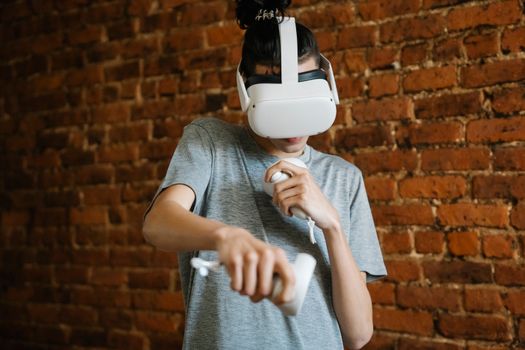
Young male teenager in casual clothes using VR headset and controllers while playing game near brick wall Photo: Eren Li / Pexels
At its heart, understanding how virtual reality works begins with its hardware. The magic of VR isn't just one component; it's a symphony of specialized technologies working in concert to trick your senses into believing you're in another world. The most recognizable piece of this puzzle is the Head-Mounted Display (HMD), often simply called a VR headset. These devices are far more sophisticated than just screens strapped to your face. Inside, you'll find two high-resolution displays, one for each eye. These aren't just any screens; they're designed to deliver images at a high refresh rate, typically 90Hz or even 120Hz, to minimize latency and prevent motion sickness. Each eye receives a slightly different perspective of the same virtual scene, a technique known as stereoscopy. This subtle difference is crucial because it mimics how our natural vision perceives depth, allowing our brain to construct a three-dimensional image. Beyond the displays, a sophisticated optical system of lenses is paramount. These lenses serve several critical functions. Firstly, they magnify the images on the small screens, making them appear to fill your entire field of view, thus enhancing the feeling of immersion. Secondly, they correct for optical distortions that would otherwise occur due to the close proximity of the screens to your eyes. Without these carefully engineered lenses, the image would appear warped and uncomfortable. Furthermore, the field of view (FOV) is a key metric here; a wider FOV means more peripheral vision is covered by the virtual world, further cementing the illusion. Modern VR headsets strive for FOVs ranging from 100 to 110 degrees, approaching human peripheral vision limits. The combination of high-resolution, high-refresh-rate displays and precise optics is the foundation upon which all other VR experiences are built, making the virtual world feel tangible and present. It's a testament to engineering that these compact devices can generate such convincing digital realities. Discover more about display technology and its impact on user experience.

Tracking and Interaction: Moving and Engaging in Virtual Worlds
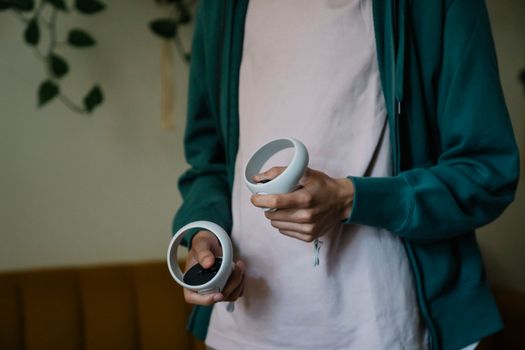
Crop anonymous male with virtual reality controllers playing video game in house room on blurred background Photo: Eren Li / Pexels
Once the visual and auditory illusion is established, the next critical layer of how virtual reality works involves tracking your movements and allowing you to interact with the digital environment. Without accurate tracking, the sense of presence would quickly shatter. VR systems employ a variety of sensors to monitor your head, body, and hand movements. Inside the headset, inertial measurement units (IMUs) – comprising accelerometers, gyroscopes, and magnetometers – continuously track the orientation and rotational movement of your head. This means that as you turn your head in the real world, your perspective in the virtual world updates instantly and seamlessly, maintaining the illusion of being there. This is known as 3-degrees of freedom (3DoF) tracking. However, true immersion requires more than just head rotation. It demands positional tracking, or 6-degrees of freedom (6DoF), which allows you to move freely within a physical space and have those movements reflected in the virtual environment. This is achieved through various methods. Some systems use external base stations or cameras that emit infrared light or lasers, which are then detected by sensors on the headset and controllers. These systems precisely triangulate your position in real-time. Other, more modern systems utilize 'inside-out' tracking, where cameras built into the VR headset itself track your surroundings and infer your position and movement without the need for external sensors. This has significantly simplified VR setup and made it more accessible. Handheld controllers are another vital component of interaction. These devices are equipped with their own tracking sensors, allowing your virtual hands to mirror your real ones. They often feature buttons, joysticks, and triggers, enabling complex actions like grasping objects, firing weapons, or navigating menus. Crucially, many controllers also incorporate haptic feedback – small motors that vibrate to simulate touch sensations, such as the recoil of a virtual gun or the texture of an object you're holding. This sensory feedback significantly enhances immersion, making interactions feel more tangible and believable. Advanced VR systems are even exploring eye-tracking and hand-tracking (using cameras to directly observe and interpret hand gestures) to offer more natural and intuitive ways to interact, moving beyond controllers altogether and blurring the lines between the physical and digital. The precision and responsiveness of these tracking and interaction systems are what elevate VR from a passive viewing experience to an active, engaging, and truly immersive one.

The Role of Software and Processing Power in VR Experiences
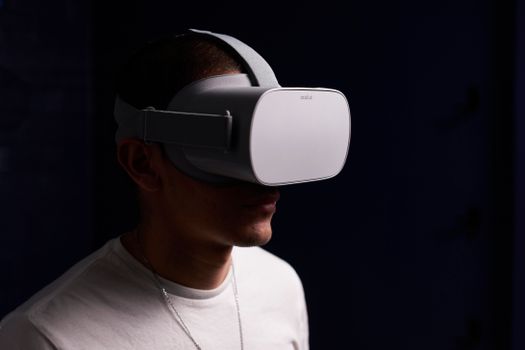
Close-up of a man wearing virtual reality goggles indoors in a dark setting. Photo: Justin Doherty / Pexels
While hardware provides the physical foundation, it's the sophisticated software and immense processing power that truly bring virtual worlds to life and define how virtual reality works. Without robust computing capabilities, even the most advanced headsets would render static, lifeless scenes. The software stack in VR is incredibly complex, encompassing everything from game engines and operating systems to specialized rendering pipelines and optimization algorithms. At the core, a powerful graphics processing unit (GPU) is essential. It's responsible for rendering the detailed 3D environments, characters, and objects at extremely high resolutions and frame rates – often 90 frames per second or more for each eye – to create a smooth, believable experience and prevent motion sickness. This demands significantly more computational power than rendering for a traditional 2D monitor. Beyond raw rendering, the software must also manage the real-time processing of sensor data from the tracking systems. It takes raw input from IMUs, cameras, and controllers, processes it, and translates it into corresponding movements and interactions within the virtual world with minimal latency. High latency, even a delay of a few milliseconds, can lead to a disconnect between your physical movement and the virtual response, causing discomfort or nausea. This is why VR development focuses heavily on optimizing every aspect of the software pipeline to achieve 'low-persistence' displays and predictive tracking algorithms that anticipate your next move. Game engines like Unity and Unreal Engine are foundational tools for VR content creators. These engines provide frameworks for building virtual environments, simulating physics, rendering graphics, and handling user input. They include specialized VR APIs (Application Programming Interfaces) that allow developers to integrate seamlessly with various VR hardware platforms. Furthermore, the operating system of a standalone VR headset, or the VR runtime on a PC, manages resource allocation, peripheral communication, and ensures all components are working harmoniously. The software also handles spatial audio, which is crucial for immersion. Instead of just stereo sound, spatial audio simulates sounds coming from specific directions and distances within the virtual environment, making the experience far more realistic. The intricate dance between powerful hardware and finely tuned software is what allows VR to deliver experiences that are not just visually compelling but also deeply interactive and believable. Explore advanced computing in gaming and its impact.

Future Trends and Overcoming VR Challenges
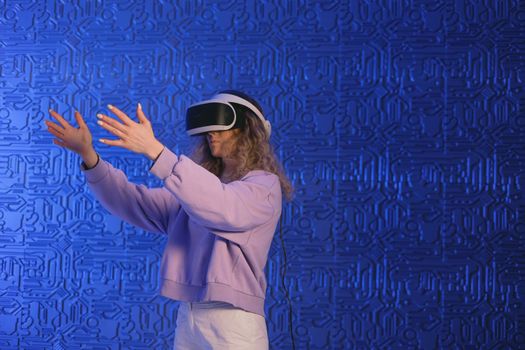
Adult woman with VR goggles interacting in a virtual environment against a blue background. Photo: SHVETS production / Pexels
The journey of how virtual reality works is far from over, with ongoing advancements continually pushing the boundaries of immersion and accessibility. One major trend is the drive towards higher resolution displays and wider fields of view. As pixel density increases, the 'screen door effect' – where the individual pixels are visible – diminishes, leading to more photorealistic visuals. Haptic feedback is also evolving beyond simple vibrations. Researchers are developing advanced haptic gloves and suits that can simulate textures, temperatures, and even resistance, making virtual interactions feel incredibly real. Another exciting area is eye-tracking, which not only allows for more intuitive input but also enables foveated rendering. This technique renders only the area where the user is looking in high detail, saving computational resources and allowing for higher overall visual quality. However, VR still faces several challenges. Cost remains a barrier for many, though standalone headsets are making VR more affordable. Motion sickness, while significantly reduced with technological improvements, can still be an issue for some users, necessitating continued focus on low latency and high refresh rates. The physical bulk and weight of current headsets can also be uncomfortable during extended use, prompting research into lighter, more ergonomic designs. Content creation is another hurdle; developing high-quality VR experiences is complex and expensive, leading to a sometimes limited library of compelling titles. **Key Future Trends:** * **Miniaturization:** Lighter, smaller headsets, potentially resembling regular glasses. * **Wireless Freedom:** Untethered experiences becoming the norm, even for high-end VR. * **Mixed Reality Integration:** Seamless blending of virtual objects with the real world. * **Advanced Haptics:** Full-body suits and gloves for comprehensive tactile feedback. * **AI-Powered Environments:** Dynamic, responsive virtual worlds that adapt to user interaction. * **Brain-Computer Interfaces (BCI):** Direct thought control for navigation and interaction. Overcoming these challenges will be crucial for VR to move from a niche technology to a mainstream platform, fundamentally changing how we work, play, and connect.

Comparison

FeatureHigh-End PC VR (e.g., Valve Index)Standalone VR (e.g., Meta Quest 3)Mobile VR (e.g., Google Cardboard)
Processing PowerExternal PC (High)Onboard Chip (Medium)Smartphone (Low)
Graphics QualityExcellentGoodBasic
Tracking (DoF)6 DoF (External/Inside-out)6 DoF (Inside-out)3 DoF (Headset sensors)
Setup ComplexityComplex (Cables/Base Stations)Simple (Wireless)Very Simple (Phone slot)
CostHighMediumLow
Freedom of MovementTethered/Wireless AdapterWireless, untetheredLimited to head rotation
Content LibraryExtensive, high-fidelityGrowing, variedLimited, casual

What Readers Say

"Before reading this, I vaguely understood how virtual reality works. This article broke down the complex tech into digestible parts, especially the explanation of stereoscopy and 6DoF tracking. Now I appreciate my Quest 3 even more!"

Alex R. · Seattle, WA

"As a budding game developer, understanding the software and processing power section was incredibly insightful. It clarified why high refresh rates and low latency are non-negotiable for a good VR experience. Excellent resource."

Priya L. · Austin, TX

"I was always curious about the 'how does virtual reality work' aspect, especially regarding the sensors. This article's deep dive into IMUs and positional tracking was exactly what I needed. It made the technology feel less like magic and more like brilliant engineering."

Mark D. · Orlando, FL

"While incredibly comprehensive on how virtual reality works, I would have loved a bit more on the specific challenges of developing for different VR platforms. Still, a fantastic overview for anyone interested in the technical side of VR."

Sarah K. · Denver, CO

"My kids asked me how virtual reality works, and this article gave me all the answers I needed to explain it to them in a way they could understand. The breakdown of core components was particularly helpful for a non-tech parent like me."

Chen W. · Boston, MA

Frequently Asked Questions

What is the fundamental principle of how virtual reality works?

The fundamental principle is to create a simulated sensory experience, primarily visual and auditory, that tricks the brain into believing it is in a different environment. This is achieved by presenting stereoscopic images to each eye, tracking user movements, and updating the virtual scene in real-time with minimal latency.

Does VR cause motion sickness, and why?

VR can cause motion sickness (cybersickness) in some users. This often happens when there's a discrepancy between what your eyes see (movement in the virtual world) and what your inner ear senses (no physical movement). High refresh rates, low latency, and smooth tracking are crucial for minimizing this effect.

How do VR controllers interact with the virtual world?

VR controllers use their own set of sensors (often IMUs) and are tracked by the VR system (either by external base stations or cameras on the headset). This allows their position and orientation to be mirrored in the virtual world, enabling users to pick up objects, press buttons, and gesture naturally within the digital environment.

Are expensive VR headsets always better, and what makes them costly?

Generally, more expensive VR headsets offer higher resolution displays, wider fields of view, more accurate tracking, and better ergonomics. Their cost is driven by advanced optics, high-performance processors, sophisticated sensor arrays, and premium materials. However, standalone headsets offer excellent value for money and accessibility.

How does virtual reality compare to augmented reality (AR)?

Virtual Reality (VR) fully immerses the user in a simulated digital environment, blocking out the real world. Augmented Reality (AR), on the other hand, overlays digital information and objects onto the real-world view, enhancing it rather than replacing it. Both use similar tracking and rendering technologies but serve different purposes.

Who benefits most from understanding how virtual reality works?

Anyone interested in technology, gaming, education, or future innovation benefits from this knowledge. Developers can create better experiences, consumers can make informed purchasing decisions, and students can grasp the foundational principles behind this transformative technology.

Is virtual reality safe for children?

Most VR manufacturers recommend a minimum age (often 12 or 13) due to potential concerns about eye development, motion sickness, and the intensity of some content. Parental supervision and limiting session times are generally advised for younger users.

What's next for VR technology?

The future of VR includes lighter, more comfortable headsets, even higher resolution displays, advanced haptics for more realistic touch, seamless integration with mixed reality, and potentially direct brain-computer interfaces. The goal is to make VR indistinguishable from reality and integrate it into everyday life.

Now that you have a comprehensive understanding of how virtual reality works, from its intricate hardware to its powerful software, you're better equipped to explore its potential. Dive into the virtual worlds, experience new forms of entertainment, or imagine its future applications in your field. The journey into immersive technology has just begun.

Topics: how does virtual reality workVR technology explainedvirtual reality componentsVR immersionfuture of VR
Leo List

DK Escorts LU Escorts AT Escorts SE Escorts FI Escorts CH Escorts DE Escorts HR Escorts IE Escorts GR Escorts CZ Escorts NO Escorts BE Escorts FR Escorts SI Escorts IL Escorts NL Escorts PL Escorts HU Escorts ES Escorts IT Escorts PT Escorts SK Escorts RO Escorts ZA Escorts UY Escorts US Escorts UK Escorts NZ Escorts AU Escorts
Brampton weed
Adultwork EstrelaBet Vai de Bet R7 Bet Betão Galera Bet Rainbet Bet9ja Shop SportyBet BetKing Sisal Loto Foot Hollywoodbets YesPlay Odibets RushBet Jugabet BetWarrior BetCity MSport betPawa Fortebet