Demystifying: How Does Quantum Computing Work?
how does quantum computing work

Demystifying: How Does Quantum Computing Work?

Unlock the secrets of the next generation of computation and understand its profound impact on our technological future.

Explore Quantum Computing

Key Takeaways

  • ✓ Quantum computers use qubits, which can represent 0, 1, or both simultaneously (superposition).
  • ✓ Entanglement allows qubits to be linked, even when physically separated, influencing each other's states.
  • ✓ Quantum parallelism enables quantum computers to process multiple calculations at once, unlike classical computers.
  • ✓ Decoherence, the loss of quantum properties, is a major challenge in building stable quantum computers.

How It Works

1
Preparing Qubits

Qubits, the basic units of quantum information, are initialized into a superposition state, allowing them to exist as both 0 and 1 simultaneously. This preparation is often done using lasers, microwaves, or magnetic fields depending on the qubit type.

2
Applying Quantum Gates

Similar to logical gates in classical computing, quantum gates manipulate the quantum states of qubits. These gates perform operations like rotations and entanglements, creating complex quantum circuits.

3
Exploiting Entanglement & Superposition

Through entanglement, qubits become linked, meaning the state of one instantly affects the others. Superposition, combined with entanglement, allows the quantum computer to explore many solutions concurrently, a phenomenon known as quantum parallelism.

4
Measurement and Output

After quantum operations, the qubits are measured. This measurement collapses their superposition into a definite classical state (either 0 or 1). Repeated measurements are often necessary to extract a probabilistic answer from the quantum computation.

The Fundamental Difference: Qubits vs. Bits
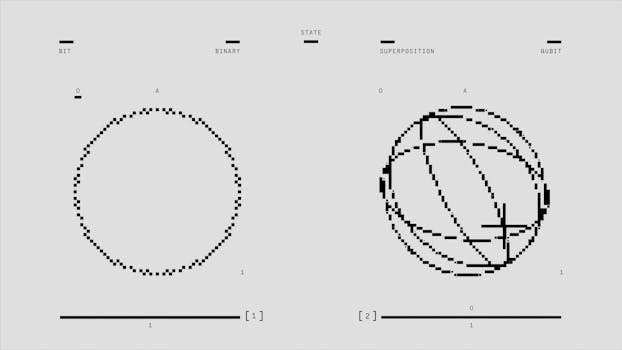
Illustration depicting classical binary bit and quantum qubit states in superposition and binary. Photo: Google DeepMind / Pexels
To truly grasp how quantum computing works, we must first understand its foundational unit: the qubit. Unlike classical computers that rely on bits, which can exist in only one of two states—0 or 1—a qubit leverages the bizarre principles of quantum mechanics to offer a much richer information landscape. A qubit can be 0, 1, or, crucially, a superposition of both 0 and 1 simultaneously. Imagine a coin spinning in the air; it's neither heads nor tails until it lands. A qubit in superposition is much like that spinning coin, holding all possibilities until measured. This unique capability is not just a slight improvement; it's a paradigm shift. While a classical bit essentially represents one piece of information at a time, a single qubit in superposition can represent a spectrum of possibilities. As you add more qubits, this power grows exponentially. Two classical bits can represent four possible states (00, 01, 10, 11), but only one at any given moment. Two qubits, however, can exist in a superposition of all four states simultaneously. This exponential increase in information density is what gives quantum computers their potential to tackle problems far beyond the reach of even the most powerful supercomputers. The ability to exist in multiple states at once means that a quantum computer can explore many computational paths concurrently, leading to vastly accelerated problem-solving for specific types of challenges. This inherent parallelism is a cornerstone of quantum advantage, allowing for breakthroughs in areas like drug discovery, material science, and complex optimization. Understanding this fundamental difference between qubits and classical bits is the first critical step in appreciating the sheer power and complexity of quantum computing. It's not just faster processing; it's a fundamentally different way of processing information, rooted in the very fabric of reality at the quantum level. Exploring quantum entanglement further illuminates how these qubits interact.

Quantum Phenomena: Superposition, Entanglement, and Interference
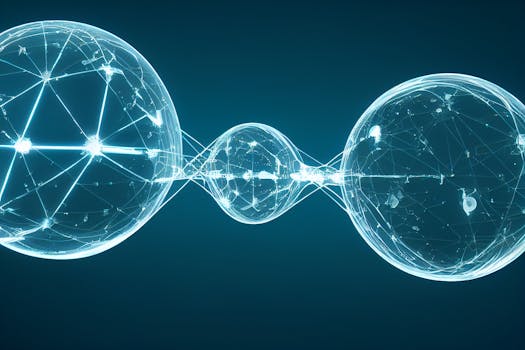
Modern digital spheres interconnected by glowing lines, showcasing a futuristic network concept. Photo: Merlin Lightpainting / Pexels
The magic of how quantum computing works lies in its exploitation of three core quantum mechanical phenomena: superposition, entanglement, and interference. We've touched on superposition, the ability of a qubit to exist in multiple states simultaneously. This means that instead of processing information sequentially, bit by bit, a quantum computer can effectively process all possible inputs at once. It's like having a library where you can read every book at the same time, rather than one by one. This parallel processing capability is what allows quantum computers to perform certain calculations exponentially faster than classical machines. Next, consider entanglement, a phenomenon Einstein famously called “spooky action at a distance.” When two or more qubits become entangled, they form a shared quantum state, meaning the state of one qubit instantaneously influences the state of the others, regardless of the physical distance separating them. If you measure one entangled qubit and find it to be 0, you instantly know the state of its entangled partner, even if it's on the other side of the universe. This interconnectedness is incredibly powerful for computation. It allows for complex relationships between qubits to be maintained and manipulated, facilitating highly efficient data processing and communication within the quantum system. Entanglement is crucial for building quantum algorithms that can solve problems intractable for classical computers. Finally, quantum interference is the mechanism by which quantum computers amplify the correct answers and cancel out the incorrect ones. Imagine waves in water: when two crests meet, they reinforce each other, creating a larger crest (constructive interference); when a crest meets a trough, they cancel each other out (destructive interference). Quantum interference works similarly with the probabilities of different computational outcomes. Quantum algorithms are designed to manipulate qubits in such a way that the amplitudes (which relate to probabilities) of the correct solutions constructively interfere, increasing their likelihood of being measured, while the amplitudes of incorrect solutions destructively interfere, reducing their likelihood. This phenomenon allows the quantum computer to sift through a vast number of possibilities and converge on the correct answer with high probability. Together, superposition, entanglement, and interference form the bedrock of quantum computation, enabling a fundamentally new approach to problem-solving. These phenomena are not just theoretical curiosities but practical tools harnessed to build the next generation of computational power, promising to revolutionize everything from medicine to finance and artificial intelligence. They represent a departure from classical physics, offering a glimpse into a world where reality itself is far more nuanced and interconnected than our everyday experience suggests. Understanding these principles is key to appreciating the immense potential and the inherent challenges in developing robust quantum technologies. The delicate balance required to maintain these quantum states is one of the biggest hurdles in realizing the full promise of quantum computing. The quest for quantum supremacy is largely about mastering these phenomena.

Building a Quantum Computer: Hardware Challenges and Approaches
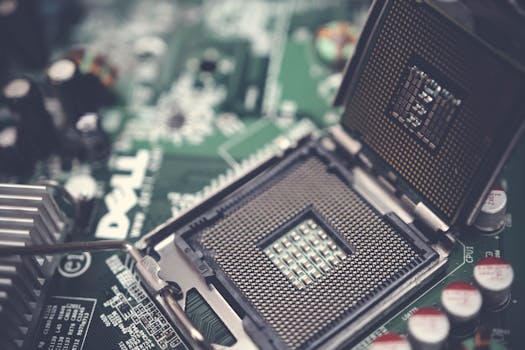
Detailed view of a CPU socket on a green motherboard, showcasing microprocessor technology. Photo: Pok Rie / Pexels
Understanding how quantum computing works also means delving into the incredible engineering feats required to build these machines. Constructing a quantum computer is an immensely complex undertaking, primarily due to the fragility of quantum states. The delicate nature of superposition and entanglement means that qubits are highly susceptible to environmental noise, such as stray electromagnetic fields, temperature fluctuations, and even vibrations. Any interaction with the environment can cause a qubit to lose its quantum properties, a phenomenon known as decoherence, which effectively collapses the superposition and entanglement, turning the quantum system back into a classical one. This loss of quantum information is the biggest challenge in scaling quantum computers. To combat decoherence, quantum computers are often operated at extremely low temperatures, sometimes just a fraction of a degree above absolute zero (around -459 degrees Fahrenheit), inside specialized refrigeration units called dilution refrigerators. These ultra-cold environments minimize thermal energy, which can disrupt qubit states. Qubits themselves can be realized in various physical forms, each with its own advantages and disadvantages. Superconducting qubits, for instance, are tiny circuits made from superconducting materials that, when cooled to near absolute zero, allow electrons to flow without resistance. These qubits are manipulated using microwave pulses. Trapped ions, another leading approach, use electromagnetic fields to suspend individual charged atoms (ions) in a vacuum. Lasers are then used to cool these ions and manipulate their quantum states. Other promising modalities include topological qubits, photonic qubits, and quantum dots. Each of these approaches faces unique engineering hurdles. For superconducting qubits, scaling up the number of qubits while maintaining coherence is a significant challenge, requiring intricate wiring and control systems. Trapped ion systems offer high coherence and connectivity but are complex to scale due to the precise laser control required for each ion. Topological qubits, while still largely theoretical, promise inherent resistance to decoherence, but their physical realization is incredibly difficult. The pursuit of robust quantum error correction is another critical area of research. Because qubits are so prone to errors, scientists are developing sophisticated algorithms and hardware designs to detect and correct these errors without disturbing the quantum information itself. This involves encoding quantum information redundantly across multiple physical qubits to protect against noise. The journey to build a fault-tolerant, large-scale quantum computer is a marathon, not a sprint, requiring breakthroughs in materials science, cryogenic engineering, laser technology, and sophisticated control electronics. The ability to overcome these hardware challenges will ultimately determine the timeline for quantum computing's widespread impact. The future of quantum technology hinges on these innovations.

Quantum Algorithms and Their Transformative Potential
Elegant 3D visualization of neural networks showcasing abstract connections in a digital space. Photo: Google DeepMind / Pexels
Understanding how quantum computing works isn't complete without exploring the algorithms that unlock its power. Unlike classical algorithms, which are designed for sequential processing of bits, quantum algorithms are specifically crafted to leverage superposition, entanglement, and interference. They are designed to exploit the quantum properties of qubits to find solutions to problems that are intractable for classical computers, even the most powerful supercomputers. This isn't about simply making existing algorithms faster; it's about enabling entirely new computational approaches. One of the most famous quantum algorithms is Shor's algorithm, developed by Peter Shor in 1994. This algorithm can efficiently factor large numbers into their prime factors, a task that becomes exponentially harder for classical computers as the number size increases. The security of much of our modern cryptography, including the encryption that protects online transactions and sensitive data, relies on the assumption that factoring large numbers is computationally infeasible for classical computers. Shor's algorithm, if run on a sufficiently powerful quantum computer, could break these cryptographic schemes, highlighting a significant future cybersecurity challenge and the need for quantum-resistant cryptography. Another pivotal algorithm is Grover's algorithm, which offers a quadratic speedup for searching unsorted databases. While a classical computer might need to check, on average, half of the items in a list to find a specific one, Grover's algorithm can find it significantly faster. Although not an exponential speedup like Shor's, a quadratic speedup can still be immensely valuable for large datasets, making it relevant for applications in fields like artificial intelligence and big data analytics. Beyond these foundational algorithms, quantum computing holds immense potential across various sectors: * **Drug Discovery and Materials Science:** Simulating molecular interactions at the quantum level is notoriously difficult for classical computers. Quantum computers could accurately model complex molecules, accelerating the development of new drugs, catalysts, and advanced materials with tailored properties. * **Financial Modeling:** Quantum algorithms could optimize complex financial portfolios, detect fraud more effectively, and improve risk analysis by simulating market behavior with greater precision. * **Optimization Problems:** Many real-world problems, from logistics and supply chain management to traffic flow and scheduling, are optimization challenges. Quantum algorithms could find optimal or near-optimal solutions much faster than classical methods. * **Artificial Intelligence and Machine Learning:** Quantum machine learning could enhance existing AI capabilities, enabling more powerful pattern recognition, data classification, and complex learning models, potentially leading to breakthroughs in areas like image recognition and natural language processing. These are just a few examples, and the field of quantum algorithm development is still nascent. As quantum hardware becomes more robust and capable, new algorithms will undoubtedly emerge, unlocking even more transformative applications. The journey to fully realize this potential involves not only building powerful quantum machines but also developing the quantum software and algorithms that can effectively harness their unique computational power. The impact of these algorithms will fundamentally reshape industries, solve previously intractable scientific problems, and redefine the boundaries of what is computationally possible.

Comparison

FeatureQuantum ComputerClassical SupercomputerStandard PC
Basic UnitQubitBitBit
Information States0, 1, or both (superposition)0 or 10 or 1
Processing MethodQuantum parallelism (simultaneous)Sequential (one by one)Sequential (one by one)
Problem SolvingExponentially faster for specific problemsFast for complex classical problemsGeneral purpose computing
Energy ConsumptionHigh for cooling, low for computationVery HighModerate
Error RatesHigh (decoherence is a challenge)LowLow

What Readers Say

"Understanding how quantum computing works has completely reshaped my perspective on computational science. The ability to simulate molecular interactions with such precision is unparalleled, offering a new frontier for drug discovery."

Dr. Eleanor Vance · Boston, MA

"This article beautifully breaks down complex quantum concepts like superposition and entanglement. It's an essential read for anyone trying to grasp the mechanics behind this revolutionary technology."

Michael Chen · San Francisco, CA

"As a finance analyst, the potential for quantum algorithms to optimize portfolios and enhance risk assessment is truly exciting. This explanation of how quantum computing works helps me envision its practical applications."

Sophia Rodriguez · Austin, TX

"While the technical depth is impressive, a bit more on the current limitations and the timeline for widespread adoption would be helpful. Still, a fantastic overview of the core principles."

David Lee · Seattle, WA

"I'm a student in computer science, and this article clarified so many of my questions about quantum mechanics in computation. It's a foundational piece for anyone entering the field."

Aisha Sharma · New York, NY

Frequently Asked Questions

What is the biggest difference between classical and quantum computers?

The biggest difference lies in their fundamental units of information. Classical computers use bits (0 or 1), while quantum computers use qubits, which can be 0, 1, or both simultaneously (superposition). This allows quantum computers to process exponentially more information and explore multiple solutions concurrently, leading to potential speedups for specific types of problems.

Is quantum computing going to replace classical computing entirely?

No, it's highly unlikely that quantum computing will replace classical computing. Quantum computers excel at specific, highly complex problems that classical computers struggle with. Classical computers will continue to be essential for everyday tasks, general-purpose computing, and many scientific applications. Quantum computing is seen as a powerful co-processor for specialized tasks, rather than a universal replacement.

How difficult is it to program a quantum computer?

Programming quantum computers requires a different mindset and specialized knowledge of quantum mechanics and linear algebra. While high-level programming languages and development kits are emerging to simplify the process, it's currently more complex than classical programming. Developing efficient quantum algorithms is a specialized skill, but the field is rapidly evolving with more accessible tools.

How much does a quantum computer cost, and are they accessible?

Quantum computers are currently extremely expensive, costing millions to hundreds of millions of dollars to develop and maintain. They are not accessible for individual purchase. Access is primarily through cloud-based quantum computing services offered by major tech companies and research institutions, allowing researchers and developers to run experiments on quantum hardware remotely.

How does quantum computing compare to supercomputing?

Supercomputers are classical machines that achieve immense power by linking thousands of traditional processors to perform parallel computations. They are excellent for complex simulations and large-scale data processing that can be broken down into many classical tasks. Quantum computers, however, use quantum mechanical phenomena to solve problems that are fundamentally intractable for even the fastest supercomputers, offering a different kind of computational advantage for specific types of problems.

Who should be interested in how quantum computing works?

Anyone interested in the future of technology, scientific discovery, and solving humanity's grand challenges should be interested. This includes researchers in physics, computer science, chemistry, materials science, finance, and cybersecurity, as well as business leaders looking to understand future technological disruptions and opportunities.

What are the main risks associated with quantum computing?

The primary risks include the potential to break current cryptographic standards, necessitating a shift to quantum-resistant encryption. There are also ethical considerations around its power for optimization and simulation, and the potential for misuse if not developed responsibly. Overcoming decoherence and ensuring error correction are major technical risks in its development.

What is the future trend for quantum computing?

The future trend for quantum computing involves continued advancements in hardware stability, scalability, and error correction, moving towards fault-tolerant quantum computers. We can expect more accessible programming tools, the discovery of new quantum algorithms, and the identification of more 'killer applications' that demonstrate clear quantum advantage. Hybrid quantum-classical computing approaches will also become more prevalent, integrating quantum processors into classical workflows.

The world of quantum computing is rapidly evolving, promising to redefine the boundaries of what's possible. By understanding how quantum computing works, you're not just observing a technological shift; you're gaining insight into the very fabric of future innovation. Stay informed and explore the incredible potential that lies ahead.

Topics: how does quantum computing workquantum mechanicsqubitsquantum entanglementquantum supremacy
Leo List
Brampton weed
Adultwork