Unlocking the Future: How Do Self Driving Cars Work?

A white autonomous vehicle navigating a city street, reflecting urban architecture in daylight.Photo: Stephen Leonardi / Pexels

Unlocking the Future: How Do Self Driving Cars Work?

Explore the revolutionary technology enabling vehicles to perceive, process, and navigate our world autonomously.

Discover the Tech

Key Takeaways

  • ✓ Self-driving cars use a complex array of sensors including cameras, radar, lidar, and ultrasonic detectors.
  • ✓ Artificial intelligence and machine learning algorithms are crucial for processing sensor data and making driving decisions.
  • ✓ High-definition maps provide a foundational layer of information for autonomous navigation.
  • ✓ There are six levels of autonomous driving, ranging from no automation (Level 0) to full automation (Level 5).

How It Works

1
Perception: Seeing the World

Vehicles use an array of sensors to gather real-time data about their surroundings, including other vehicles, pedestrians, traffic signs, and road conditions. This creates a 360-degree environmental model.

2
Localization: Knowing Your Place

The car determines its precise position on a high-definition map using GPS, IMUs, and sensor data. This pinpoint accuracy is vital for safe and effective navigation.

3
Prediction: Anticipating Movement

AI algorithms analyze the perceived environment and predict the likely actions of other road users, like a pedestrian stepping into the street or another car changing lanes. This proactive approach prevents accidents.

4
Planning: Deciding the Path

Based on perception, localization, and predictions, the car's AI plans its optimal path, speed, and maneuvers. This involves considering traffic laws, comfort, and efficiency.

The Sensory Superpowers: How Autonomous Vehicles Perceive Their Environment
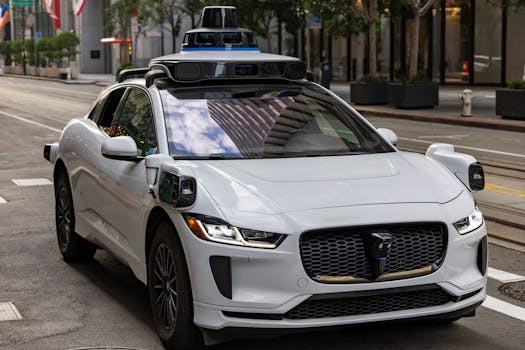
A white autonomous vehicle navigating a city street, reflecting urban architecture in daylight.Photo: Stephen Leonardi / Pexels
At the heart of understanding how do self driving cars work lies their incredible ability to perceive the world around them. Unlike human drivers who rely primarily on their eyes and ears, autonomous vehicles employ a sophisticated suite of sensors, each designed to capture different types of data, creating a comprehensive 360-degree understanding of their surroundings. This multi-modal sensor fusion is critical for robust and reliable operation in diverse driving conditions. Cameras, often multiple and strategically placed, act as the 'eyes' of the self-driving car. They capture visual information, allowing the vehicle to detect lane markings, traffic lights, road signs, pedestrians, cyclists, and other vehicles. Advanced computer vision algorithms process these images, identifying objects and their classifications with remarkable accuracy. However, cameras can be limited by adverse weather conditions like heavy rain, snow, or fog, and can struggle with glare or low light. Radar sensors, short for Radio Detection and Ranging, emit radio waves and measure the time it takes for them to return after bouncing off objects. This technology is excellent for detecting the distance, velocity, and angle of objects, even in poor weather conditions where cameras might fail. Radar is particularly effective for adaptive cruise control and emergency braking systems, as it can reliably track multiple objects ahead of the vehicle. While powerful for detection, radar typically provides lower resolution than cameras or lidar, making it less ideal for detailed object classification. Lidar, or Light Detection and Ranging, uses pulsed laser light to measure distances to objects. By emitting millions of laser pulses per second and measuring their return time, lidar systems create highly detailed 3D point clouds of the vehicle's environment. This 3D mapping is incredibly precise, allowing the car to accurately understand the shape and structure of objects, the road's topography, and potential obstacles. Lidar excels at creating high-resolution maps of the environment and is less susceptible to lighting changes than cameras. However, it can be impacted by heavy precipitation and its sensors can be costly. Ultrasonic sensors, similar to those used in parking assist systems, emit high-frequency sound waves and measure the time taken for the echo to return. These short-range sensors are primarily used for detecting objects very close to the vehicle, such as during parking maneuvers or in slow-moving traffic. They provide a final layer of close-proximity awareness, preventing bumps and scrapes. Each of these sensor types contributes unique data, and by fusing this information, the self-driving car builds a rich, redundant, and robust model of its environment, far surpassing the capabilities of any single sensor alone. This comprehensive perception system is the foundational pillar upon which all other autonomous driving functions are built, ensuring the vehicle can 'see' and 'understand' its world with unparalleled detail. Understanding sensor fusion is key to appreciating the complexity involved.

The Brains of the Operation: AI, Machine Learning, and Decision-Making
Futuristic smiling robot gadget on a car dashboard symbolizing modern technology and innovation.Photo: Erik Mclean / Pexels
Once a self-driving car has gathered all its sensory data, the next, and arguably most crucial, step in how do self driving cars work is processing this information and making intelligent driving decisions. This is where artificial intelligence (AI) and machine learning (ML) algorithms come into play, acting as the 'brains' of the autonomous vehicle. These sophisticated computational systems are responsible for interpreting the vast amounts of raw sensor data, building a coherent understanding of the situation, predicting future events, and ultimately, planning the vehicle's actions. At the core of this processing is a complex software stack that takes the fused sensor data – the detailed 3D point clouds from lidar, the object detections and classifications from cameras, the distance and velocity from radar, and the short-range detections from ultrasonics – and creates a unified environmental model. This model isn't just a static picture; it's a dynamic representation that tracks the movement and behavior of all objects within the car's vicinity. For instance, it identifies a pedestrian, determines their speed and direction, and predicts their likely path. Machine learning, particularly deep learning, plays a pivotal role in object recognition and classification. Neural networks are trained on enormous datasets of real-world driving scenarios, allowing them to learn patterns and accurately identify everything from traffic signs and lane markings to different types of vehicles and vulnerable road users. This training process is continuous, with vehicles constantly learning and refining their understanding of the world through billions of simulated miles and real-world driving data. Beyond perception, AI is responsible for prediction. Human drivers intuitively predict what other drivers might do, or if a child might run into the street. Autonomous systems must replicate this, using probabilistic models to anticipate the behavior of other road users. This involves analyzing historical data, current speeds, trajectories, and even subtle cues like turn signals or head movements. Accurate prediction is vital for safe navigation, allowing the car to react proactively rather than merely reactively. Finally, the decision-making and planning module takes all this information – the current state, predictions, and the vehicle's intended destination – and generates a safe, efficient, and comfortable driving plan. This involves determining the optimal speed, lane changes, turns, and braking maneuvers. The planning algorithms must adhere to traffic laws, avoid collisions, and also factor in passenger comfort, ensuring smooth acceleration and deceleration. This continuous loop of sensing, perceiving, predicting, and planning is executed hundreds, if not thousands, of times per second, allowing self-driving cars to navigate complex environments with precision and safety.

Mapping and Localization: The Foundation of Autonomous Navigation
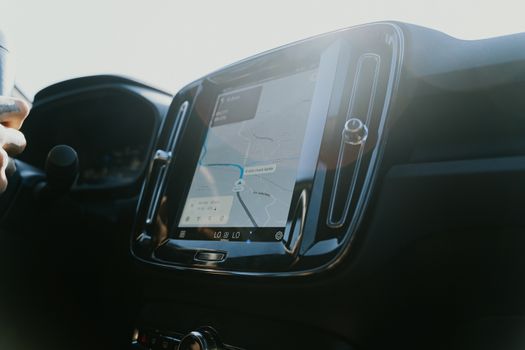
Explore modern car navigation with advanced touchscreen technology for seamless travel.Photo: Daniel Andraski / Pexels
While sensors and AI handle real-time perception and decision-making, a crucial underlying component of how do self driving cars work is high-definition (HD) mapping and precise localization. Imagine trying to navigate a new city without a map; even with excellent vision, it would be challenging. Self-driving cars face similar challenges, but on an exponentially more complex scale. HD maps provide a detailed, pre-built understanding of the road network, far beyond what a standard GPS map offers, giving the autonomous vehicle a critical context for its real-time observations. High-definition mapping is essential for robust operation. These HD maps contain an incredible level of detail, including lane boundaries, traffic signs, traffic light locations, road curvature, elevation changes, curb heights, and even the precise location of road furniture like lampposts and utility poles. They are often created using specialized mapping vehicles equipped with high-precision lidar, cameras, and GPS, which scan the environment and build a 3D model. This data is then meticulously processed and maintained, often updated frequently to reflect changes in road infrastructure. Localization is the process by which the self-driving car determines its exact position within this highly detailed map. Standard GPS provides accuracy within a few meters, which is insufficient for autonomous driving where centimeter-level precision is often required. To achieve this, self-driving cars use a combination of technologies. They correlate the real-time sensor data – such as lidar point clouds or camera images of lane markings – with the pre-recorded features on the HD map. If the car's lidar sees a specific lamppost, it can match that to the lamppost's known location on the HD map, thereby pinpointing its own position with extreme accuracy. In addition to sensor-to-map matching, vehicles also employ Inertial Measurement Units (IMUs), which contain accelerometers and gyroscopes. These sensors track the car's movement, acceleration, and orientation, providing continuous updates on its position even in areas where GPS signals might be weak or unavailable, such as tunnels or urban canyons. By fusing IMU data with GPS and sensor-to-map correlations, the car maintains a highly accurate and robust understanding of its precise location on the road. This localization isn't just about knowing which street it's on; it's about knowing exactly which lane it's in, its distance from the lane lines, and its precise relationship to all other static and dynamic objects in its immediate vicinity. This foundational layer of mapping and localization provides the stability and predictability needed for the AI to execute complex driving maneuvers safely and confidently.

The Road Ahead: Challenges, Ethics, and the Future of Autonomous Driving

A white autonomous vehicle navigating a city street, reflecting urban architecture in daylight.Photo: Stephen Leonardi / Pexels
While the technology behind how do self driving cars work is undeniably advanced, the journey to widespread adoption is fraught with challenges, both technical and societal. Understanding these hurdles is crucial for a realistic perspective on the future of autonomous vehicles. One significant technical challenge is handling edge cases – those rare, unexpected scenarios that are difficult to anticipate and program. While AI can handle common driving situations with remarkable proficiency, a sudden, unpredictable event like a mattress falling off a truck on the highway, or an animal darting into the road in an unusual way, can still pose a significant challenge. Ensuring the AI can react appropriately and safely to an infinite number of unforeseen circumstances requires continuous data collection, simulation, and algorithm refinement. Weather remains another formidable obstacle. While sensors like radar perform well in adverse conditions, heavy snow can obscure lane markings, dense fog can limit lidar and camera range, and icy roads can drastically alter vehicle dynamics, making precise control difficult. Developing systems that can reliably operate in all weather conditions, from blizzards to dust storms, is an ongoing research area. Ethical dilemmas are also at the forefront of public discussion. The 'trolley problem' – where an autonomous vehicle might have to choose between two undesirable outcomes in an unavoidable accident – highlights the profound moral questions surrounding AI decision-making. Who is responsible in the event of an accident? How should algorithms be programmed to prioritize lives, if a choice must be made? These are not just technical questions, but deeply philosophical and legal ones that societies are grappling with. Regulatory frameworks are another major hurdle. Different states and countries have varying laws regarding autonomous vehicle testing and deployment, creating a patchwork of regulations that complicates widespread implementation. Harmonizing these laws and developing comprehensive safety standards is essential for building public trust and facilitating commercial rollout. Despite these challenges, the potential benefits of autonomous driving are immense. Reduced traffic accidents (the vast majority of which are caused by human error), increased mobility for the elderly and disabled, improved traffic flow, and potentially more productive commute times are all compelling advantages. The future will likely see a gradual, phased rollout, starting with more controlled environments and progressing to full autonomy as technology matures and public acceptance grows. The evolution of autonomous vehicles is not just about technology; it's about transforming our relationship with transportation and reimagining the future of mobility. **Key Considerations for the Future:** * **Continued Sensor Redundancy:** More diverse and overlapping sensor systems to handle failures and extreme conditions. * **Advanced AI Learning:** Greater use of reinforcement learning and unsupervised learning to handle novel situations. * **Robust Cybersecurity:** Protecting vehicles from hacking and data breaches. * **Infrastructure Integration:** Smart cities and V2X (Vehicle-to-Everything) communication to enhance safety and efficiency. * **Public Education and Trust:** Addressing concerns and showcasing the safety benefits to gain widespread acceptance. The journey of how do self driving cars work from concept to widespread reality is complex, but the ongoing advancements promise a revolutionary shift in transportation.

Comparison

FeatureLevel 5 (Full Automation)Level 3 (Conditional Automation)Human Driver (Level 0)
Driver EngagementNone requiredRequired for fallbackFull and constant
Operational Design Domain (ODD)All conditionsLimited conditionsAll conditions
System FallbackHandles all scenariosRequires human takeoverHuman handles all
Legal Responsibility (Current)Manufacturer (future)Driver (currently)Driver

What Our Readers Say

5 ★★★★★

"The detailed breakdown of how do self driving cars work, especially the sensor fusion, was incredibly insightful. It clarified many misconceptions I had about their capabilities and limitations."

5 ★★★★★

"As an engineer, I found the explanation of AI and machine learning in autonomous vehicles to be exceptionally clear and thorough. This article perfectly explains the 'brains' of the operation."

5 ★★★★★

"I was skeptical about self-driving cars, but this article on how do self driving cars work made me understand the immense technology and safety considerations involved. It's truly eye-opening."

4 ★★★★☆

"The information on mapping and localization was fantastic, though I would have liked a bit more on the specific challenges of real-time map updates. Still, a very comprehensive overview."

5 ★★★★★

"This article was exactly what I needed to grasp how do self driving cars work. It's presented in an easy-to-understand way, making complex tech accessible to everyone."

Frequently Asked Questions

What is the biggest challenge in making self-driving cars safe?
The biggest challenge lies in perfecting their ability to handle 'edge cases' – rare, unpredictable scenarios that are difficult to program for. While they excel in routine driving, unexpected events require robust AI that can react safely and appropriately, often involving continuous testing and refinement.
Are self-driving cars available to the general public right now?
Currently, vehicles with Level 2 (partial automation, like advanced cruise control) and some limited Level 3 (conditional automation) features are available. Fully autonomous Level 5 vehicles, capable of operating everywhere without human intervention, are still in development and not yet widely available to the public.
How do self-driving cars 'see' in the dark or bad weather?
Self-driving cars use a combination of sensors. While cameras can be limited, radar and lidar sensors are much more effective in low light, fog, or heavy rain/snow. Radar can penetrate these conditions to detect objects, and specialized lidar can also provide accurate data even when visibility is poor, though extreme weather remains a challenge.
How much do self-driving cars cost?
The cost of fully self-driving cars is not yet established for mass market, as they are still in development. However, current vehicles with advanced driver-assistance systems (ADAS) that incorporate some self-driving features (like adaptive cruise control or lane-keeping) can add several thousand dollars to the vehicle's price, depending on the manufacturer and package.
How do self-driving cars compare to human drivers in terms of safety?
Proponents argue that self-driving cars have the potential to be significantly safer than human drivers, as they eliminate human error, fatigue, and impairment. While current testing shows promising safety records, they are still collecting enough miles to statistically prove superior safety across all conditions compared to the vast human driving population.
Who should consider using a self-driving car in the future?
Once fully developed and widely available, self-driving cars could benefit a wide range of individuals. This includes those who cannot drive due to age or disability, commuters seeking to maximize productivity during travel, and anyone looking for a safer, more efficient, and potentially less stressful driving experience.
What happens if a self-driving car's sensors fail?
Self-driving cars are designed with redundancy. They typically use multiple types of sensors (cameras, radar, lidar) that overlap in function. If one sensor type fails, the others can often compensate. Additionally, systems are designed to detect sensor failures and, in such cases, safely pull over or prompt human intervention if operating at lower automation levels.
What is the next big breakthrough expected in self-driving car technology?
The next major breakthroughs are expected in improving AI's ability to handle complex, unpredictable urban environments and adverse weather conditions. Advances in 'common sense' reasoning for AI, better simulation tools, and Vehicle-to-Everything (V2X) communication for enhanced situational awareness are also highly anticipated.

Now that you understand how do self driving cars work, you're better equipped to appreciate this groundbreaking technology. Stay informed as autonomous vehicles continue to evolve and reshape our world.

Topics: how do self driving cars workautonomous vehicle technologyLIDAR self-drivingAI in carsfuture of transportation
Leo List