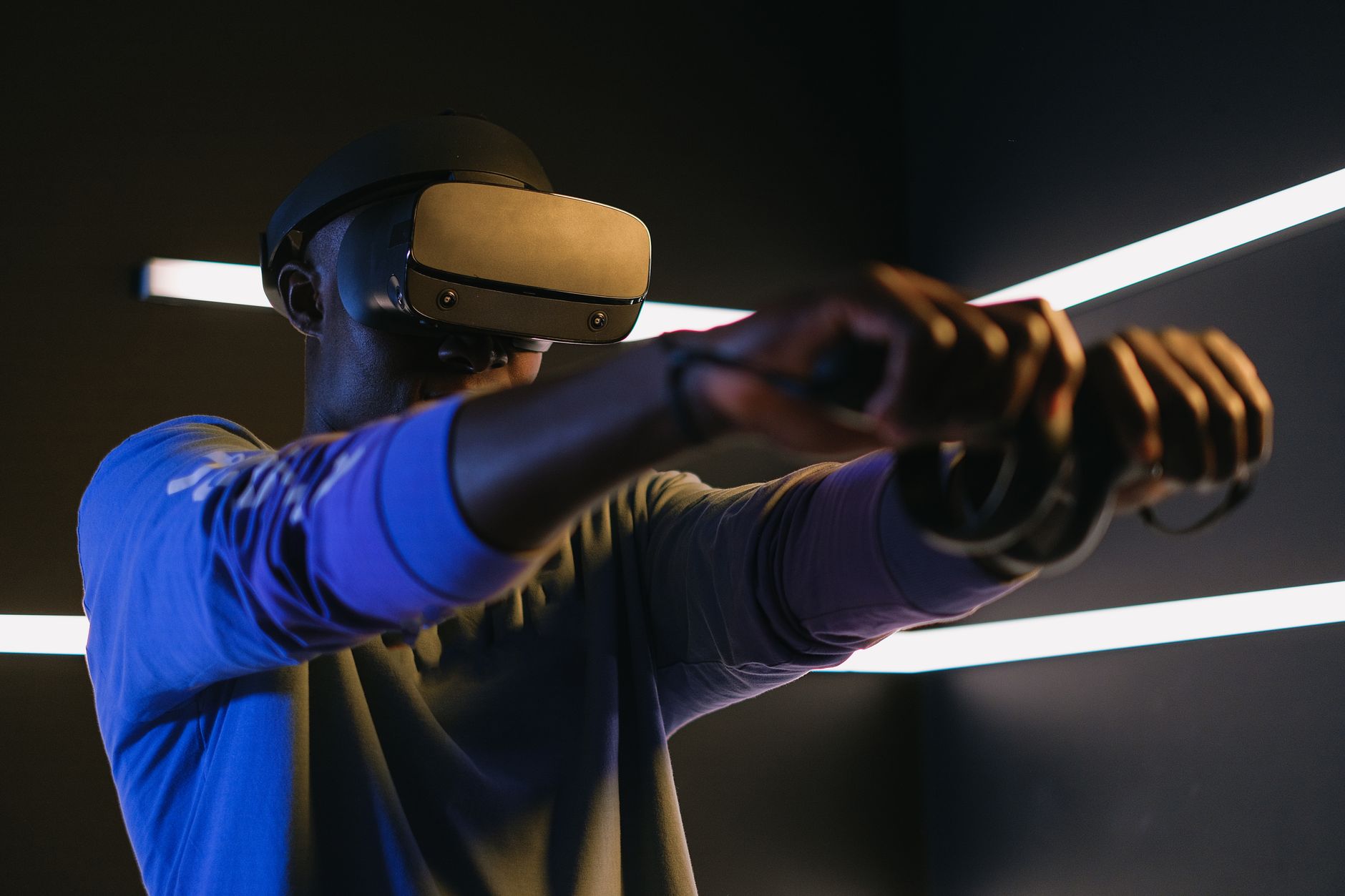
The Future of Virtual Reality Gaming: Beyond the Hype
future of virtual reality gaming

The Future of Virtual Reality Gaming: Beyond the Hype

Dive into the next generation of immersive gaming, where virtual worlds become indistinguishable from reality.

Explore the Future

Key Takeaways

  • ✓ VR gaming market expected to reach over $50 billion by 2028.
  • ✓ Haptic technology is rapidly advancing for full-body immersion.
  • ✓ Metaverse integration will create persistent, shared VR gaming worlds.
  • ✓ Eye-tracking and foveated rendering are enhancing visual fidelity and performance.
  • ✓ Wireless VR headsets are becoming the new standard for freedom of movement.

How It Works

1
Advanced Headsets & Displays

Next-gen VR headsets will feature higher resolution, wider fields of view, and lighter designs. Micro-OLED and pancake optics will deliver unparalleled visual clarity and comfort.

2
Enhanced Input & Interaction

Beyond traditional controllers, future VR gaming will integrate hand tracking, eye tracking, and even brain-computer interfaces (BCIs). This allows for more intuitive and natural interaction within virtual environments.

3
Full-Body Immersion

Haptic suits, omnidirectional treadmills, and scent generators will engage more senses. Players will not just see and hear, but also feel, walk, and even smell the virtual world, blurring the lines between digital and physical.

4
Persistent & Social Worlds

The integration with the metaverse will enable persistent, shared virtual spaces where players can interact, socialize, and participate in massive multiplayer experiences. These worlds will evolve dynamically based on player actions.

The Evolution of Immersion: Beyond Sight and Sound
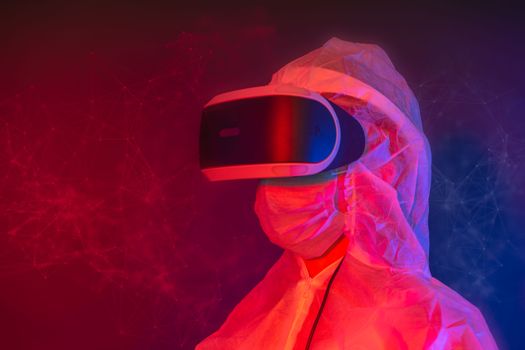
Individual in protective gear immersed in virtual reality under vibrant neon lighting. Photo: Atlantic Ambience / Pexels
For years, virtual reality has promised to transport us to other worlds, but the early iterations, while groundbreaking, often felt like a glimpse rather than a full dive. The future of virtual reality gaming, however, is poised to deliver an unprecedented level of immersion that extends far beyond the visual and auditory. We're talking about engaging all five senses, blurring the lines between the physical and digital realities in ways previously confined to science fiction. This next wave of VR technology isn't just about better graphics; it's about making you *feel* like you're truly there. At the forefront of this evolution is advanced haptic feedback. Current VR controllers offer rudimentary vibrations, but the future holds full-body haptic suits and gloves capable of simulating textures, temperatures, impacts, and even the resistance of virtual objects. Imagine feeling the recoil of a futuristic blaster, the chilling wind of a virtual mountaintop, or the gentle touch of a digital companion. Companies are developing sophisticated haptic systems that use micro-actuators, pneumatic feedback, and electro-tactile stimulation to create a detailed sense of touch. This isn't merely about immersion; it's about creating a physiological connection to the game world. Players will be able to differentiate between walking on sand, concrete, or grass through their feet, or feel the precise weight and balance of a virtual weapon in their hands. This tactile revolution will fundamentally change gameplay, adding layers of strategy, realism, and emotional depth previously impossible. Consider a horror game where you feel the brush of a spiderweb, or a simulation where you feel the intricate workings of a machine part. The possibilities are truly boundless. This level of sensory feedback is critical for creating believable virtual environments and will be a cornerstone of future VR gaming experiences. Furthermore, researchers are exploring olfactory (smell) and gustatory (taste) feedback, albeit in their nascent stages. While full integration of these senses might be further down the line, even subtle scent cues could dramatically enhance atmosphere and realism in specific game genres, from the gunpowder of a battlefield to the fresh scent of a virtual forest. The goal is to eliminate the cognitive dissonance that reminds players they are in a virtual world, allowing for truly seamless and unforgettable experiences.

The Metaverse and Persistent Virtual Worlds
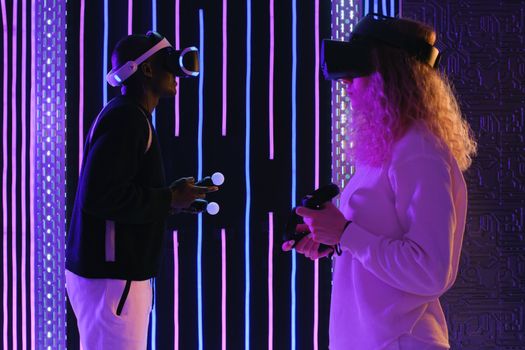
Two adults enjoying virtual reality gaming in a vivid neon-lit room for an immersive experience. Photo: SHVETS production / Pexels
The concept of the metaverse has surged into public consciousness, and its integration with virtual reality gaming is not just inevitable but fundamental to its future. No longer will VR games be isolated experiences; instead, they will become interconnected, persistent, and evolving digital ecosystems. The future of VR gaming lies in these shared, online virtual worlds where millions of players can gather, socialize, create, and participate in a vast array of activities. This shift signifies a move from discrete game sessions to continuous virtual lives, offering unprecedented social interaction and community building. Imagine a single, sprawling virtual universe where you can seamlessly transition from a high-stakes multiplayer battle arena to a casual social hub, then to a user-generated concert, and finally to a virtual marketplace to trade digital assets – all without leaving VR. This interconnectedness is the promise of the metaverse. It will foster economies driven by digital goods and services, allowing players to earn, spend, and create within these virtual realms. User-generated content (UGC) will explode, empowering players to design their own games, experiences, avatars, and even entire virtual districts, contributing to a dynamic and ever-expanding metaverse. Blockchain technology, particularly NFTs, will play a crucial role in securing ownership of digital assets and enabling true interoperability between different metaverse platforms, meaning an item you acquire in one game might be usable in another. This level of persistent identity and ownership will foster deeper engagement and investment in these virtual worlds. Beyond individual game experiences, the metaverse will facilitate entirely new forms of entertainment and social interaction. Virtual concerts, sporting events, educational experiences, and even virtual workplaces will become commonplace within these immersive environments. Developers will leverage cloud computing and edge computing to render these massive, complex worlds in real-time for countless users, ensuring low latency and high fidelity. The computational demands are immense, but advancements in distributed computing and streaming technologies are making this vision increasingly feasible. Furthermore, AI-driven NPCs (Non-Player Characters) will become more sophisticated, offering dynamic interactions, personalized quests, and contributing to the living, breathing feel of these persistent worlds. The metaverse isn't just a platform; it's a paradigm shift for how we interact with digital content and each other, with VR gaming at its very core.

Hardware Horizons: Untethered Freedom and Sensory Enhancement
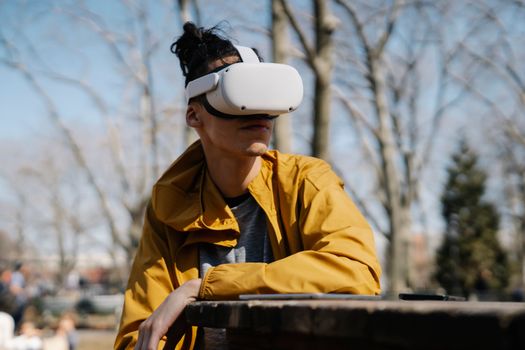
Young male with long hair in bright yellow jacket sitting at wooden table while using VR goggles in park in autumn Photo: Eren Li / Pexels
The hardware powering the future of virtual reality gaming is undergoing a relentless transformation, driven by the pursuit of ultimate freedom and sensory fidelity. The clunky, wired headsets of yesteryear are rapidly being replaced by sleek, standalone devices, and this trend will only accelerate. Wireless connectivity is paramount, and next-generation headsets will boast ultra-low latency wireless streaming, potentially leveraging 60GHz Wi-Fi or even dedicated wireless protocols, to deliver PC-level VR experiences without the need for cumbersome cables. This untethered freedom isn't just a convenience; it's a fundamental enabler for active, room-scale VR experiences, allowing players to move naturally and without fear of tripping or snagging. Imagine engaging in a sword fight or exploring a vast dungeon without any physical constraints.This freedom of movement is crucial for truly believable immersion and will unlock new gameplay mechanics. Beyond wirelessness, the displays within these headsets are set for a monumental leap. Micro-OLED and QLED technologies are promising resolutions far exceeding current standards, pushing towards retina-level pixel density where individual pixels are imperceptible. Coupled with wider fields of view (FOV) – approaching or even surpassing 180 degrees – these displays will create a panoramic, seamless visual experience that eliminates the 'screen door effect' and enhances peripheral vision, making virtual worlds feel truly expansive. Varifocal optics, which can dynamically adjust focus to match the user's eye movements, will also be crucial in reducing eye strain and increasing visual comfort over extended play sessions. Eye-tracking technology, already present in some high-end headsets, will become standard. This not only allows for foveated rendering – where only the area the user is directly looking at is rendered in full detail, saving computational power – but also enables more natural avatar eye contact and intuitive UI interactions. Further hardware innovations include lighter materials, improved ergonomics for extended wear, and integrated audio solutions that deliver spatial 3D sound with exceptional clarity and bass response. Battery life, a current limitation for standalone devices, will see significant improvements, potentially leveraging solid-state battery technology or external power packs that can be comfortably worn. Beyond the headset itself, peripherals like omnidirectional treadmills are evolving from niche, expensive devices into more compact and affordable solutions, allowing for realistic locomotion within virtual worlds without needing vast physical spaces. These treadmills, combined with haptic suits, will complete the sensory loop, delivering a truly full-body, unconstrained, and deeply immersive VR gaming experience that transcends anything available today.

Challenges and Opportunities in the VR Gaming Landscape
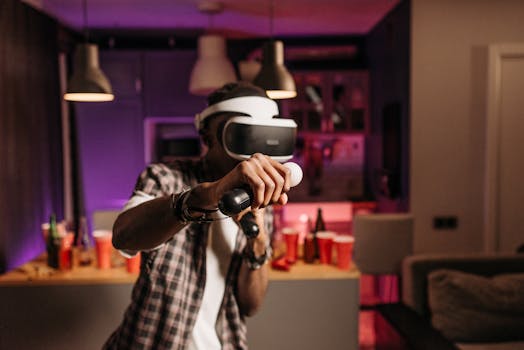
Young adult playing virtual reality games with headset and controller in a stylish indoor setting. Photo: Pavel Danilyuk / Pexels
While the future of virtual reality gaming glows with promise, it's essential to address the significant challenges that lie ahead, as well as the immense opportunities they present for innovation and growth. Overcoming these hurdles will be critical for VR to move from a niche enthusiast product to a mainstream entertainment platform. **Challenges:** * **Cost of Entry:** High-end VR hardware, especially with advanced peripherals like haptic suits, remains a significant investment. Reducing manufacturing costs and increasing accessibility will be crucial for mass adoption. * **Motion Sickness:** Despite advancements, some users still experience motion sickness. Developers are implementing techniques like comfort modes and smooth locomotion, but further research into visual perception and vestibular system interaction is needed. * **Content Library:** While growing, the breadth and depth of truly compelling, long-form VR games still lag behind traditional gaming. A 'killer app' or genre-defining titles are needed to attract a wider audience. * **Physical Space Requirements:** Room-scale VR often demands dedicated physical space, which not all consumers have readily available. Innovations like compact omnidirectional treadmills and advanced guardian systems help, but space remains a consideration. * **Interoperability and Standards:** The fragmented ecosystem of VR platforms and proprietary content creates friction. Industry-wide standards for hardware, software, and metaverse interoperability are vital for a unified user experience. **Opportunities:** * **Esports and Competitive Gaming:** The unique perspective and physical skill required in VR gaming open doors for entirely new esports genres, offering thrilling spectator experiences. * **Hybrid Realities (Mixed Reality):** The blending of VR with Augmented Reality (AR) to create mixed reality experiences will offer innovative gameplay, allowing virtual elements to interact with the real world around the player. * **Health and Wellness Gaming:** VR's immersive nature can be leveraged for therapeutic games, rehabilitation exercises, and mental wellness applications, turning gaming into a tool for self-improvement. * **Education and Training:** Beyond pure entertainment, VR gaming mechanics can be applied to highly engaging educational simulations and professional training environments, making learning fun and effective. * **New Narrative Forms:** VR allows for unprecedented storytelling, putting players directly into the narrative. This opens opportunities for deeply personal, impactful, and branching storylines that react to player agency. The future of virtual reality gaming isn't just about technological marvels; it's about the creative minds that will harness these tools to craft experiences we can barely imagine today. Addressing these challenges head-on will pave the way for a truly revolutionary era in interactive entertainment.

Comparison

FeatureFuture VR (2030+)Current High-End VR (2024)Early Consumer VR (2016)
ResolutionRetina-level (8K+ per eye)2K-4K per eye1K-1.5K per eye
Field of View180°+ (human-like)100°-120°90°-100°
HapticsFull-body suit, localized feedbackController vibration onlyMinimal/None
LocomotionOmnidirectional treadmill, BCIRoom-scale, joystickTeleportation, limited room-scale
ConnectivityWireless, ultra-low latencyWireless/Tethered hybridPredominantly Tethered
Eye/Face TrackingLimited on high-end
Metaverse IntegrationDeep, persistent, interoperableEmerging, siloed platforms

What Readers Say

"The feeling of truly 'being' in the game world, with haptic feedback and incredibly crisp visuals, is something I've dreamt of since childhood. The future of virtual reality gaming is going to be astonishing."

Alex Chen · Seattle, WA

"I can't wait for the day when I can step into a persistent metaverse and interact with friends in hyper-realistic virtual spaces. It's more than gaming; it's a new form of social interaction."

Maria Rodriguez · Austin, TX

"My current VR setup is great, but the thought of truly untethered, full-body immersion with precise eye-tracking is mind-blowing. It will make current VR feel like a demo. I'm already saving up!"

David Lee · Orlando, FL

"While I'm incredibly excited for the advancements, I hope the technology becomes affordable for everyone. The potential for groundbreaking experiences is huge, but accessibility is key for widespread adoption."

Sarah Miller · Boston, MA

"As a developer, the tools and possibilities emerging for the future of virtual reality gaming are inspiring. The ability to create truly adaptive, sensory-rich worlds will redefine storytelling and interaction."

Omar Khan · San Francisco, CA

Frequently Asked Questions

What are the biggest advancements expected in the future of virtual reality gaming?

The biggest advancements include full-body haptic feedback, ultra-high-resolution wireless headsets with wider fields of view, seamless integration into persistent metaverse environments, and advanced input methods like eye-tracking and potentially brain-computer interfaces. These will collectively create an unprecedented level of immersion and interaction.

Will motion sickness still be an issue in future VR gaming?

While completely eliminating motion sickness for all users might be challenging, future VR gaming will significantly reduce it through advancements like varifocal displays, higher refresh rates, foveated rendering, and more sophisticated locomotion solutions like omnidirectional treadmills. Developers are also improving game design to minimize disorienting experiences.

How will I interact with games in the future of VR?

Beyond enhanced controllers, you'll likely interact using advanced hand tracking (without controllers), precise eye-tracking for UI navigation and aiming, and potentially even subtle brain-computer interfaces for direct thought-based commands. Full-body haptic suits will also add a physical layer of interaction and feedback.

How much will future VR gaming hardware cost?

Initially, cutting-edge future VR gaming hardware with full sensory immersion (like haptic suits and advanced treadmills) will likely be premium-priced, similar to how high-end PCs are today. However, as technology matures and economies of scale kick in, more accessible and affordable options will emerge, making advanced VR available to a broader market over time.

How will future VR gaming compare to traditional console or PC gaming?

Future VR gaming will offer a fundamentally different experience, emphasizing immersion, presence, and direct interaction in a way traditional gaming cannot. While traditional gaming will continue to thrive, VR will carve out its own unique niche, offering unparalleled sensory engagement and social connectivity within persistent virtual worlds that blur the lines of reality.

Who should be most excited about the future of virtual reality gaming?

Anyone looking for truly immersive, boundary-pushing entertainment should be excited. This includes hardcore gamers, social enthusiasts interested in virtual communities, creators wanting to build new digital worlds, and even those seeking novel forms of fitness, education, or therapeutic experiences through interactive virtual environments.

Are there any safety concerns with the future of VR gaming?

As with any evolving technology, safety concerns exist, including potential for digital addiction, data privacy within persistent online worlds, and physical safety during active VR play. However, developers and platform providers are continuously working on robust guardian systems, responsible content guidelines, and user-education initiatives to mitigate these risks.

What role will AI play in the future of VR gaming?

AI will play a massive role, powering more intelligent and adaptive NPCs, generating dynamic content and questlines, personalizing gaming experiences based on player behavior, and even assisting in the creation of vast, realistic virtual worlds. AI will make future VR games feel more alive, responsive, and infinitely replayable.

The future of virtual reality gaming isn't a distant dream; it's rapidly becoming our immersive reality. Prepare to step beyond the screen and into worlds where every sense is engaged, every action has consequence, and every moment is an unforgettable adventure. Don't just play the game; live it.

Topics: future of virtual reality gamingVR gaming advancementsmetaverse gaminghaptic feedback VRimmersive VR experiences
Leo List

DK Escorts LU Escorts AT Escorts SE Escorts FI Escorts CH Escorts DE Escorts HR Escorts IE Escorts GR Escorts CZ Escorts NO Escorts BE Escorts FR Escorts SI Escorts IL Escorts NL Escorts PL Escorts HU Escorts ES Escorts IT Escorts PT Escorts SK Escorts RO Escorts ZA Escorts UY Escorts US Escorts UK Escorts NZ Escorts AU Escorts
Brampton weed
Adultwork EstrelaBet Vai de Bet R7 Bet Betão Galera Bet Rainbet Bet9ja Shop SportyBet BetKing Sisal Loto Foot Hollywoodbets YesPlay Odibets RushBet Jugabet BetWarrior BetCity MSport betPawa Fortebet