
The Future of Virtual Reality Gaming: Beyond Your Wildest Dreams
Prepare to enter a new era of interactive entertainment where the lines between the digital and physical blur into astonishing realities.
Dive In NowKey Takeaways
- ✓ VR gaming is moving towards hyper-realistic graphics and physics engines.
- ✓ Haptic feedback suits and gloves will enhance tactile immersion significantly.
- ✓ Brain-computer interfaces (BCIs) are emerging to allow direct thought control.
- ✓ The metaverse will become a persistent, interconnected hub for VR gaming and social interaction.
How It Works
Next-gen VR headsets will feature higher resolutions, wider fields of view, and lighter designs. Integrated eye-tracking and foveated rendering will optimize performance and visual fidelity.
Beyond visuals and audio, haptic technology will provide realistic touch feedback, simulating textures, impacts, and environmental sensations. Olfactory devices may even introduce smell.
Artificial intelligence will drive more dynamic and responsive game worlds, creating intelligent NPCs, adaptive narratives, and procedurally generated content that reacts to player choices.
Games will transition from isolated experiences to interconnected virtual worlds. Players will seamlessly move between different games and social spaces, fostering a persistent digital identity.
The Evolution of Immersion: Beyond Visuals and Sound
 Photo: Atlantic Ambience / Pexels
Unleashing the Power of AI and Procedural Generation in VR Worlds
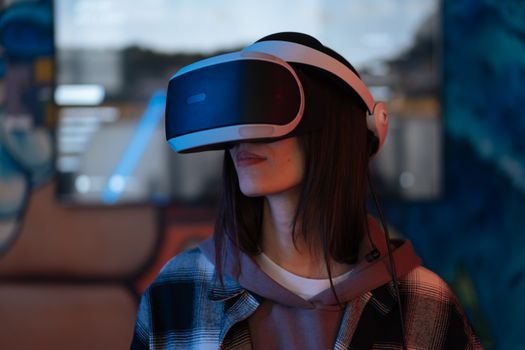 Photo: Mikhail Nilov / Pexels
The Metaverse and Social VR: Interconnected Gaming Realities
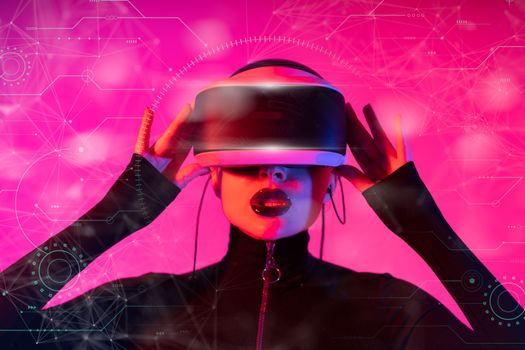 Photo: Atlantic Ambience / Pexels
Navigating the Future: Key Considerations and Emerging Technologies
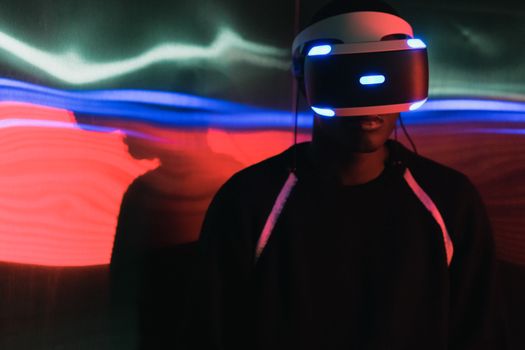 Photo: SHVETS production / Pexels
Comparison
| Feature | Current VR (2024) | Near Future (2027) | Distant Future (2035+) |
|---|---|---|---|
| Headset Resolution | 2K-4K per eye | 4K-8K per eye | Retinal resolution (16K+) |
| Field of View (FOV) | 90-120 degrees | 150-180 degrees | 200+ degrees (human-like) |
| Haptic Feedback | Controller vibrations | Full-body suits, advanced gloves | Direct neural stimulation |
| Locomotion | Room-scale, teleports | Omnidirectional treadmills, natural walking | Neural control, full freedom |
| AI in Games | Scripted NPCs, basic learning | Adaptive NPCs, emergent narratives | Sentient AI, dynamic worlds |
| Interoperability | Limited, platform-specific | Cross-platform avatars/items | Seamless metaverse travel |
| Input Methods | Hand controllers, voice | Hand/finger tracking, eye-tracking | BCI (Brain-Computer Interface) |
| Price (High-end) | $800 - $1500 | $500 - $1000 | $300 - $700 (mass market) |
What Readers Say
"The article perfectly captures my excitement for the future of virtual reality gaming. I'm particularly thrilled about the potential for full-body haptics; imagining feeling every virtual interaction is mind-blowing!"
Alex Chen · Seattle, WA"This deep dive into AI and procedural generation for VR worlds was incredibly insightful. It makes me believe that future VR games will offer truly endless replayability and emergent storytelling."
Maya Singh · Austin, TX"After reading this, I'm convinced the metaverse will revolutionize gaming. The idea of seamlessly moving between different games and social spaces with a persistent identity means my virtual life could be as rich as my real one."
David Kim · New York, NY"While the future sounds incredible, the article also realistically touches on challenges like motion sickness and accessibility. It's good to see a balanced perspective on what still needs to be overcome for mass adoption."
Sarah O'Connell · Denver, CO"As a game developer, the insights on BCI and cloud VR are fascinating. This article provides a valuable roadmap for where the industry is heading and what technologies we should be focusing on for the future of virtual reality gaming."
Ben Carter · Orlando, FLFrequently Asked Questions
What is the biggest change expected in the future of virtual reality gaming?
The most significant change will be a shift towards hyper-sensory immersion, moving beyond just visuals and audio to include tactile feedback, and potentially even smell. This will be coupled with the rise of interconnected metaverse platforms, allowing seamless transitions between diverse virtual experiences.
Will VR gaming ever be as comfortable as traditional gaming?
Yes, significant efforts are being made to improve comfort. Future VR headsets will be lighter, offer higher resolutions, and have wider fields of view. Advancements in foveated rendering and motion tracking are also crucial in reducing motion sickness, making VR experiences much more comfortable for prolonged use.
How will Brain-Computer Interfaces (BCIs) impact VR gaming?
BCIs, while still in early development, hold the potential to revolutionize VR gaming by allowing direct thought control. This could eliminate physical controllers, offer unparalleled immersion, and open up VR to individuals with mobility challenges, fundamentally changing how we interact with virtual worlds.
Will future VR gaming be expensive?
While initial cutting-edge VR technology will likely remain premium, the trend is towards increased affordability. As technology matures and production scales, standalone VR headsets are expected to become more accessible. Cloud VR gaming could also reduce the need for expensive local hardware, democratizing access to high-fidelity experiences.
How will the metaverse affect traditional single-player VR games?
The metaverse won't necessarily eliminate single-player VR games but will likely integrate them into a larger, interconnected ecosystem. Players might access these games from a central metaverse hub, and elements like shared economies or social spaces could still tie them into the broader virtual world, enhancing their longevity and community aspects.
Who should be excited about the future of virtual reality gaming?
Anyone interested in immersive entertainment, cutting-edge technology, and new forms of social interaction should be excited. This includes hardcore gamers, casual players looking for unique experiences, developers seeking new creative outlets, and even those interested in the social and economic possibilities of virtual worlds.
Are there any risks associated with the rapid advancement of VR gaming?
As with any rapidly evolving technology, there are considerations. These include potential for increased screen time, data privacy concerns with highly personal biometric data (especially with BCIs), and the need for responsible content moderation in user-generated metaverse environments. Ethical development and robust security protocols will be paramount.
What major trends will define VR gaming in the next decade?
The next decade will be defined by the convergence of hyper-realistic graphics, advanced haptics, AI-driven dynamic content, and the widespread adoption of interconnected metaverse platforms. Expect a significant leap in sensory immersion and social interaction, making virtual worlds feel increasingly real and persistent.
The future of virtual reality gaming is not just an evolution; it's a revolution that promises to redefine entertainment, social interaction, and even our perception of reality. Don't just observe from the sidelines – prepare to step into a new era where your wildest virtual dreams become tangible experiences. Stay informed, get ready, and embrace the astonishing possibilities of tomorrow's VR.