✓ VR gaming market expected to reach over $53 billion by 2030.
✓ Haptic feedback and full-body tracking are becoming mainstream.
✓ Cloud VR streaming will reduce hardware dependency.
✓ AI-powered NPCs will offer unprecedented realism and interaction.
How It Works
1
Advanced Headsets & Displays
Next-generation VR headsets will feature higher resolution, wider fields of view, and lighter designs, providing unparalleled visual clarity. Micro-OLED and pancake lenses will minimize bulk and enhance immersion.
2
Sensory Immersion
Haptic suits, gloves, and even scent generators will engage more senses than ever before, allowing players to feel impacts, textures, and even smell virtual environments. This multi-sensory input bridges the gap between digital and physical.
3
Seamless Interaction
Full-body tracking, eye-tracking, and advanced hand tracking will enable more natural and intuitive interactions within VR worlds. Players will control avatars with their own movements, enhancing presence and reducing motion sickness.
4
Connected & Dynamic Worlds
Persistent, interconnected virtual worlds powered by cloud computing and AI will allow for massive multiplayer experiences and evolving narratives. These dynamic environments will react to player actions, creating unique, personalized adventures.
Unlocking Hyper-Realism: Graphics and Immersion in VR Gaming
Photo: Ivan S / Pexels
The pursuit of hyper-realism is a cornerstone of the future of virtual reality gaming. Current VR systems offer impressive visuals, but upcoming technologies are set to blur the lines between the digital and physical even further. We're talking about advancements in display technology, such as micro-OLED panels that provide incredible pixel density, virtually eliminating the 'screen-door effect' that can break immersion. Paired with wider fields of view, these displays will make virtual worlds feel truly expansive and lifelike. Furthermore, foveated rendering, a technique that renders the area your eye is looking at in high detail while reducing resolution in your peripheral vision, will become standard. This not only optimizes performance but also mimics how human vision works, enhancing perceived realism without requiring exponentially more processing power. Eye-tracking, a key component of foveated rendering, will also unlock new interaction paradigms, allowing players to select objects or aim simply by looking at them. The integration of advanced physics engines and sophisticated lighting models will also contribute significantly. Imagine walking through a virtual forest where every leaf casts a dynamic shadow, and the rustle of foliage responds realistically to your movements. These nuanced details, often taken for granted in the real world, are vital for convincing the brain that it's truly present in a virtual space. The next generation of VR gaming will demand powerful GPUs, but the breakthroughs in rendering techniques and hardware efficiency will make these stunning visuals accessible to a broader audience. Developers are already pushing the boundaries, creating environments that are not just visually stunning but also physically believable, reacting to player input in intricate ways. This drive towards hyper-realism is not just about aesthetics; it's about deepening the player's sense of presence and belief in the virtual world, making every interaction more impactful and memorable. Exploring cutting-edge graphics cards reveals the horsepower behind these advancements.
The Sensory Revolution: Haptics, Olfaction, and Beyond
Photo: SHVETS production / Pexels
Beyond what we see and hear, the future of virtual reality gaming is profoundly about what we feel, smell, and even taste. Haptic feedback, currently limited to controller vibrations, is evolving rapidly. Full-body haptic suits are no longer science fiction; prototypes are demonstrating the ability to simulate impacts, temperature changes, and even the sensation of rain. Imagine feeling the recoil of a virtual shotgun, the chill of a digital blizzard, or the warmth of a virtual campfire. These advancements add an entirely new layer of immersion, making virtual experiences tangible. Gloves with localized haptic feedback can simulate textures, allowing players to 'feel' the rough bark of a tree or the smooth surface of a weapon. This sensory expansion is crucial for convincing our brains that we are truly present in a virtual environment. But it doesn't stop there. Olfactory VR, though still in its nascent stages, promises to introduce the sense of smell into virtual worlds. Imagine a horror game where you smell the metallic tang of blood, or an exploration game where you catch the scent of pine needles in a virtual forest. While complex to implement, the potential for enhanced immersion is immense. Early prototypes use scent cartridges that release specific aromas on demand, synchronized with in-game events. The combination of advanced visuals, spatial audio, and multi-sensory feedback creates a complete sensory illusion, drastically enhancing the believability and emotional impact of VR games. This multi-sensory approach transforms gaming from a visual and auditory experience into a full-body adventure, engaging players on a much deeper, more primal level. The integration of these diverse sensory inputs is perhaps the most exciting frontier in the quest for ultimate virtual reality immersion, promising experiences that are not just seen, but truly lived.
Seamless Interaction: Controllers, Tracking, and AI Companions
The way we interact with virtual worlds is undergoing a radical transformation, moving beyond traditional controllers towards more intuitive and natural methods. The future of virtual reality gaming will largely be defined by seamless interaction. Full-body tracking systems, which use cameras or sensors to track your entire body's movement, are becoming more accurate and accessible. This means your avatar will mirror your real-world movements, allowing for more physical and expressive gameplay. Imagine dodging a virtual projectile by physically ducking, or gesturing to an NPC with your actual hands. Eye-tracking technology, already mentioned for foveated rendering, will also facilitate new forms of interaction, enabling players to select options or interact with objects simply by looking at them. This reduces the need for button presses and makes interfaces feel more integrated into the virtual world. Hand tracking, without the need for controllers, is also improving rapidly, allowing for direct manipulation of virtual objects with your bare hands. This opens up possibilities for more intricate tasks, like sculpting, drawing, or complex puzzle solving. Beyond direct player interaction, the intelligence of non-player characters (NPCs) is set to skyrocket. Powered by advanced AI and machine learning, future NPCs will be capable of dynamic conversations, adaptive behaviors, and even emotional responses, making interactions feel incredibly realistic and unpredictable. These AI companions could learn from your playstyle, remember past interactions, and offer personalized quests or dialogue, enriching the narrative experience significantly. This level of AI sophistication will transform single-player VR games into deeply personal journeys, and multiplayer experiences into dynamic social ecosystems. The convergence of advanced tracking and intelligent AI will create virtual worlds that are not just reactive, but genuinely interactive, fostering a profound sense of presence and agency for the player. Understanding the role of AI in modern gaming highlights this crucial evolution.
The Road Ahead: Challenges and Opportunities in VR Gaming's Future
While the future of virtual reality gaming is undeniably bright, it's not without its challenges and opportunities. One significant hurdle is the continued need for powerful hardware. Although cloud VR streaming promises to alleviate some of this by offloading processing to remote servers, high-fidelity VR still demands substantial graphical and computational power. Cost remains a barrier for many, with high-end headsets and accessories often carrying premium price tags. However, as technology matures and mass production scales, prices are expected to become more accessible, mirroring the trajectory of early home computers and smartphones. Another challenge is the content library. While AAA VR titles are becoming more frequent, a consistent stream of high-quality, long-form experiences is crucial for mainstream adoption. Developers are learning how to craft compelling narratives and engaging gameplay specifically for VR, moving beyond simple tech demos. Motion sickness, a common concern for newcomers, is being addressed through improved display technologies, foveated rendering, and more refined movement mechanics that minimize inner ear discrepancies. Opportunities abound for innovation. The rise of the metaverse presents a vast canvas for persistent, interconnected VR gaming worlds where players can socialize, create, and compete across diverse experiences. Esports in VR is another burgeoning field, offering spectatorship and participation unlike anything seen before. Furthermore, the integration of VR with other emerging technologies like brain-computer interfaces (BCI) could one day allow for direct thought control, though this is a more distant prospect. Ultimately, the future success of VR gaming hinges on overcoming these challenges through continued technological advancement, creative content development, and a focus on user experience. The potential rewards – truly immersive, boundary-pushing entertainment – are well worth the effort. Ultimately, the industry must prioritize creating comfortable, intuitive, and genuinely captivating experiences to solidify VR's place as the premier gaming platform.
Comparison
Feature
Future VR Gaming
Current High-End VR
Traditional PC Gaming
Immersion Level
Full Sensory (Sight, Sound, Touch, Scent)
High (Sight, Sound, Limited Haptics)
Medium (Sight, Sound)
Interaction
Full Body, Hand, Eye-tracking, AI
Hand Controllers, Limited Eye-tracking
Keyboard, Mouse, Gamepad
Graphics Quality
Hyper-Realistic, Foveated Rendering
Excellent, Screen-door effect possible
Ultra-High, 2D Screen
Hardware Dependency
Cloud VR / Powerful Standalone
Powerful PC / Standalone
Powerful PC
Cost Barrier
Decreasing (Cloud VR accessible)
Moderate to High
Moderate to High
Social Experience
Persistent Metaverse, Hyper-realistic Avatars
Multiplayer Lobbies, Basic Avatars
Online Multiplayer, Text/Voice Chat
What Readers Say
★★★★★
"The potential for the future of virtual reality gaming is mind-blowing. I'm already experiencing incredible immersion, and knowing what's coming next makes me genuinely excited for the next decade of gaming."
Alex R. · Seattle, WA
★★★★★
"I tried a demo with advanced haptics, and it completely changed my perception of VR. Feeling rain and wind in a virtual world was an unforgettable experience; the future of virtual reality gaming is truly multi-sensory."
Sophia L. · Austin, TX
★★★★★
"My biggest hope for the future of virtual reality gaming is less wires and more realism. This article confirmed that both are on the horizon, which means I'll finally get the seamless, immersive experiences I've always dreamed of."
Mark J. · Orlando, FL
★★★★★
"While the article paints an exciting picture, I'm still a bit concerned about the cost of entry for these advanced systems. However, the promise of cloud VR makes me optimistic that the future of virtual reality gaming will be accessible to more people."
Emily P. · Boston, MA
★★★★★
"As a developer, seeing the projected advancements in AI and full-body tracking for the future of virtual reality gaming is inspiring. It opens up so many new creative avenues for game design and storytelling that were previously impossible."
David C. · Los Angeles, CA
Frequently Asked Questions
What are the biggest advancements expected in the future of virtual reality gaming?
The biggest advancements will be in display technology (higher resolution, wider FOV), multi-sensory feedback (advanced haptics, olfaction), more natural interaction (full-body, eye, and hand tracking), and intelligent AI-powered NPCs. Cloud VR streaming will also play a crucial role in making high-fidelity experiences more accessible.
Will motion sickness still be a problem in future VR gaming?
While motion sickness is a valid concern, future VR technology aims to significantly reduce it. Advancements like higher refresh rates, foveated rendering, wider fields of view, and more sophisticated movement mechanics that better align visual and vestibular cues will all contribute to a more comfortable experience, making the future of virtual reality gaming more enjoyable for everyone.
How can I prepare for the future of virtual reality gaming?
To prepare, consider investing in a capable PC if you don't already have one, as it will support higher-fidelity VR experiences. Stay updated on new headset releases and content. For a truly future-proof experience, look for headsets that offer expandable features or modular components, and keep an eye on cloud VR streaming services as they evolve.
Will future VR gaming be too expensive for the average consumer?
Initially, cutting-edge VR technology can be pricey, but historically, tech prices decrease as adoption grows and production scales. Cloud VR streaming is also emerging as a way to access high-end VR experiences without needing to purchase expensive hardware upfront, making the future of virtual reality gaming more financially accessible to a wider audience.
How will the metaverse impact the future of virtual reality gaming?
The metaverse is expected to profoundly impact VR gaming by creating persistent, interconnected virtual worlds where games and social experiences blur. It will enable players to seamlessly move between different games and environments, fostering massive multiplayer experiences, user-generated content, and entirely new economies, fundamentally reshaping the future of virtual reality gaming.
Who should be most excited about the future of virtual reality gaming?
Anyone passionate about immersive entertainment, cutting-edge technology, and interactive storytelling should be incredibly excited. Hardcore gamers will appreciate the deeper immersion and realism, while casual players will find new ways to connect and explore. Creators and developers will also find unprecedented tools to build rich, engaging worlds.
Are there any safety concerns with the future of virtual reality gaming?
As VR becomes more immersive, considerations around digital well-being, data privacy, and potential for addiction will become more prominent. Developers and platform providers are expected to implement features like play-space boundaries, parental controls, and responsible design practices to ensure a safe and healthy experience in the future of virtual reality gaming.
What role will AI play in the future of virtual reality gaming?
AI will be pivotal. It will power incredibly realistic and adaptive NPCs, generate dynamic game content, personalize player experiences, and even assist in game development. AI will make virtual worlds feel more alive, intelligent, and responsive to individual players, fundamentally enhancing the future of virtual reality gaming.
The future of virtual reality gaming promises an unprecedented era of immersion and interaction. Don't just play games; step inside them and experience the next dimension of entertainment. Embrace the revolution and prepare for a gaming future unlike anything you've ever imagined.
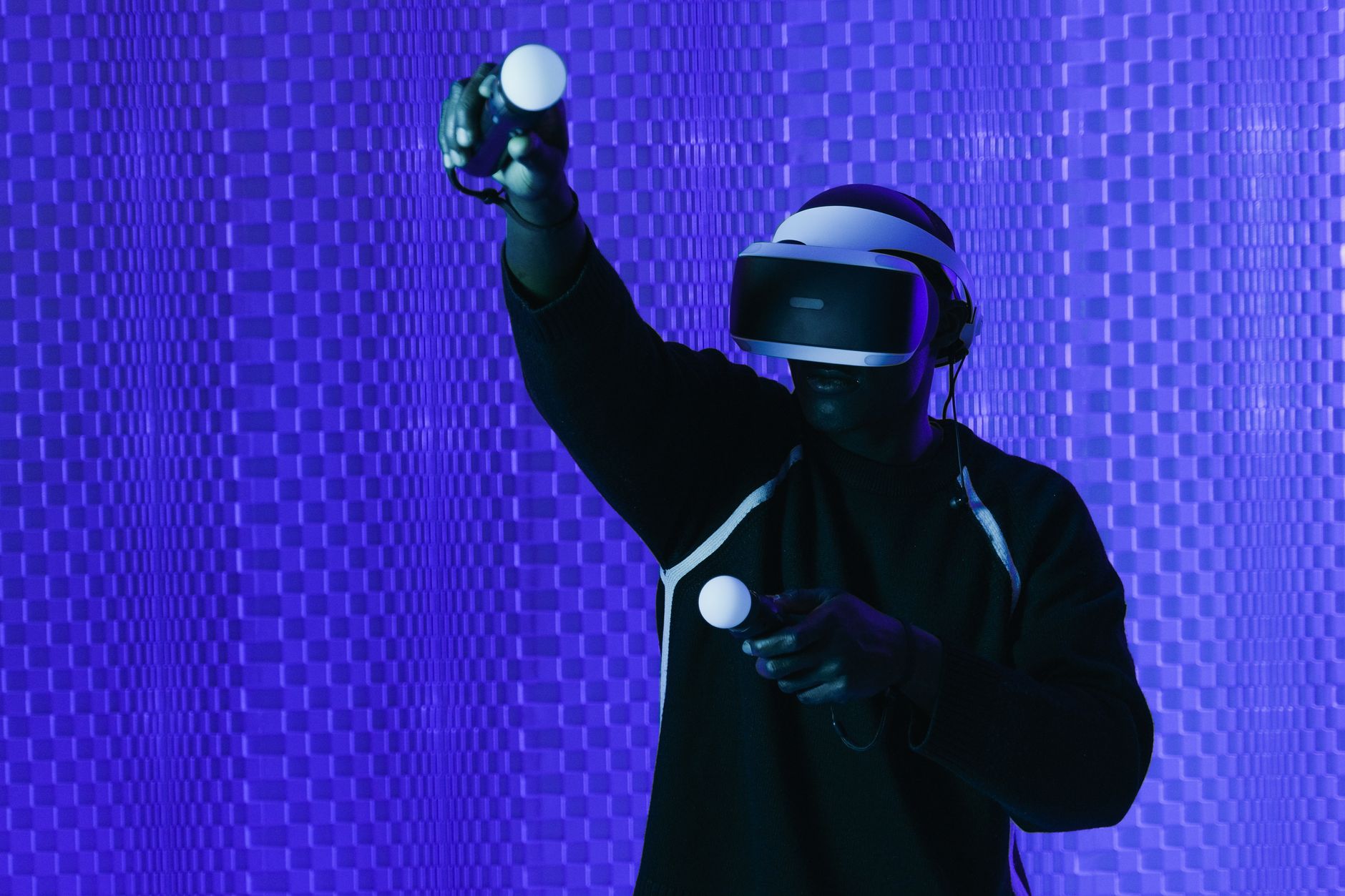
 Photo: Ivan S / Pexels
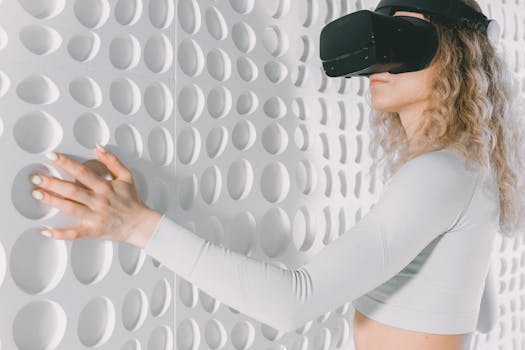 Photo: SHVETS production / Pexels