The Future of Quantum Computing Explained: A Deep Dive
Explore the revolutionary potential of quantum computing and its profound impact on technology, science, and society.
Discover the Quantum AgeKey Takeaways
- ✓ Quantum computers leverage quantum mechanics (superposition, entanglement) for exponentially greater processing power than classical computers.
- ✓ Major tech giants (IBM, Google, Microsoft) are heavily investing in quantum research and development.
- ✓ Applications range from drug discovery and materials science to financial modeling and AI optimization.
- ✓ Quantum supremacy has been demonstrated, but practical, fault-tolerant quantum computers are still years away.
- ✓ The quantum internet and quantum cryptography promise unparalleled security and communication capabilities.
How It Works
Unlike classical bits (0 or 1), qubits can exist in a superposition of both states simultaneously. This allows quantum computers to process vast amounts of information in parallel.
Superposition enables a qubit to be 0 and 1 at the same time. Entanglement links qubits so their states are dependent on each other, even when physically separated, enhancing computational power.
Quantum gates manipulate qubits, similar to logic gates in classical computing, but with quantum operations. Quantum algorithms, like Shor's and Grover's, exploit these properties to solve specific problems faster.
Measuring a qubit collapses its superposition into a definite 0 or 1. Decoherence, the loss of quantum properties due to interaction with the environment, is a major challenge requiring extreme isolation.
Understanding Quantum Technology Advancements
 Photo: Nicolas Foster / Pexels
Revolutionary Quantum Computing Applications
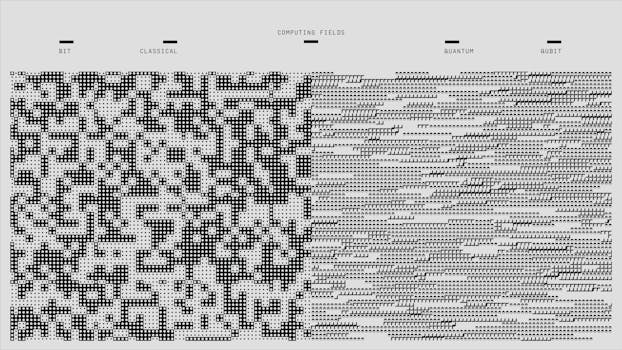 Photo: Google DeepMind / Pexels
Navigating the Challenges and Future Outlook of Quantum Computing
 Photo: Nicolas Foster / Pexels
Preparing for the Quantum Age: Tips for Businesses and Individuals
 Photo: Pachon in Motion / Pexels
Comparison
| Feature | Quantum Computer | Classical Supercomputer | Quantum-Inspired Algorithms |
|---|---|---|---|
| Computational Paradigm | Superposition, Entanglement | Binary bits (0s & 1s) | Classical algorithms on classical hardware |
| Problem Solving | Exponential speedup for specific problems (e.g., factoring, simulation) | brute-force for complex problems | Heuristic solutions for optimization |
| Hardware Complexity | Extreme isolation, cryogenic temperatures | Massive parallel processing units | Standard high-performance computing |
| Current Availability | Limited, noisy, cloud access | Widely available, high cost | Readily available, software-based |
What Readers Say
"This article brilliantly explains the future of quantum computing without oversimplifying. It’s an essential read for anyone wanting to grasp the profound implications for scientific discovery and technological progress. Highly recommend for its depth and clarity."
Dr. Anya Sharma · Boston, MA"As a software developer, I found this explanation of quantum computing's future incredibly insightful. It breaks down complex concepts into digestible information, giving me a much clearer picture of where the field is headed and how I can prepare."
Mark Chen · San Francisco, CA"The details on quantum computing applications, especially in drug discovery, were eye-opening. This article helped me understand how quantum technology could accelerate medical breakthroughs, potentially saving countless lives and transforming healthcare."
Sarah Davis · Austin, TX"A very comprehensive overview. While some sections are still quite technical, the overall explanation of challenges and future outlook was balanced and realistic. It’s a great starting point for understanding this complex subject, though I'd appreciate a bit more on specific quantum programming languages."
David Lee · Seattle, WA"From a business strategy perspective, the preparation tips for the quantum age are invaluable. It’s not just about the tech, but about how to integrate it into future business models and cybersecurity. This article truly connected the dots for me."
Emily Rodriguez · New York, NYFrequently Asked Questions
What is the biggest difference between quantum and classical computers?
The biggest difference lies in how they process information. Classical computers use bits (0s or 1s), while quantum computers use qubits, which can be 0, 1, or both simultaneously (superposition). This allows quantum computers to process vast amounts of data in parallel, solving certain problems exponentially faster.
Is quantum computing going to replace all classical computers?
No, quantum computing is not expected to replace all classical computers. Quantum computers are specialized tools designed to solve specific, highly complex problems that are intractable for classical machines. Classical computers will continue to be essential for everyday tasks, much like supercomputers coexist with personal computers today.
How can I start learning about quantum computing?
You can start by exploring online courses from platforms like Coursera, edX, or universities that offer introductory quantum computing modules. Many tech companies (IBM, Google) also provide free resources, tutorials, and cloud access to their quantum processors, allowing for hands-on experimentation.
How expensive is quantum computing, and will it be accessible?
Currently, building and operating quantum computers is extremely expensive due to the advanced technology and extreme environmental controls required. However, accessibility is increasing through cloud-based quantum services, allowing researchers and developers to use quantum hardware without owning it, making it more affordable for experimentation and specific applications.
How does quantum computing compare to AI or machine learning?
Quantum computing can enhance AI and machine learning. Quantum machine learning algorithms can process larger datasets and identify more complex patterns than classical algorithms, potentially leading to more powerful and efficient AI systems. They are complementary technologies, with quantum computing serving as a potential accelerator for AI.
Who should be concerned about the future of quantum computing?
Organizations and individuals dealing with sensitive data protected by current encryption methods (like RSA) should be concerned, as quantum computers could theoretically break these. Additionally, researchers in fields like materials science, drug discovery, and finance should pay attention to its potential to revolutionize their work.
What are the risks associated with quantum computing development?
The primary risk is the potential to break current cryptographic standards, necessitating a global transition to post-quantum cryptography. There are also ethical considerations around its potential misuse, though widespread, powerful quantum computers are still years away, allowing time for policy and security development.
What are the biggest future trends in quantum computing?
Key future trends include achieving fault-tolerant quantum computation, developing more scalable qubit architectures, advancing quantum error correction, creating more powerful quantum algorithms, and the eventual realization of a quantum internet for secure communication and distributed quantum processing.
The future of quantum computing is not just a distant dream; it's a rapidly approaching reality that promises to redefine technological capabilities. By understanding its potential, challenges, and implications, you can prepare yourself and your organization for the transformative quantum age. Start your journey into the quantum realm today and be part of shaping tomorrow's innovations.