
The Future of Autonomous Vehicles: Navigating a Driverless World
future of autonomous vehicles

The Future of Autonomous Vehicles: Navigating a Driverless World

Uncover the profound shifts autonomous technology will bring to transportation, urban planning, and daily life.

Discover What's Next

Key Takeaways

  • ✓ Autonomous vehicles (AVs) are classified into 6 levels, from Level 0 (no automation) to Level 5 (full automation).
  • ✓ The global autonomous vehicle market is projected to reach over $100 billion by 2027.
  • ✓ Lidar, radar, cameras, and ultrasonic sensors are core components of AV perception systems.
  • ✓ Ethical considerations and regulatory frameworks are key challenges alongside technological advancements.

How It Works

1
Perception Systems

AVs use an array of sensors like cameras, lidar, and radar to create a real-time 360-degree map of their surroundings. This data identifies other vehicles, pedestrians, traffic signs, and road conditions.

2
Data Processing & AI

Raw sensor data is fed into powerful onboard computers running sophisticated AI algorithms. These algorithms interpret the environment, predict movements of other agents, and understand traffic rules.

3
Path Planning & Decision Making

Based on the perceived environment and AI analysis, the AV's software plans a safe and efficient path. It makes instantaneous decisions on acceleration, braking, steering, and lane changes, adhering to programmed rules and learned behaviors.

4
Actuation & Control

The planned actions are translated into commands for the vehicle's actuators. These systems control the steering, throttle, and brakes, executing the decisions made by the AI to navigate the vehicle autonomously.

Unpacking the Core Technologies Driving Self-Driving Cars
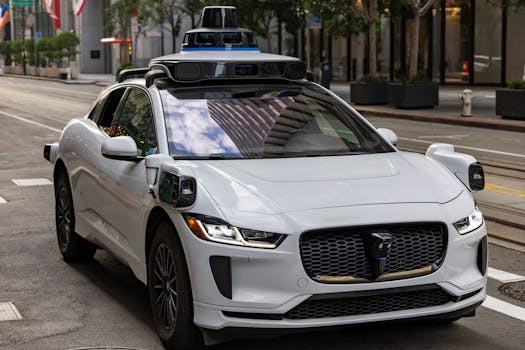
A white autonomous vehicle navigating a city street, reflecting urban architecture in daylight. Photo: Stephen Leonardi / Pexels
The journey towards the future of autonomous vehicles is fundamentally powered by an intricate web of advanced technologies, each playing a critical role in enabling a car to perceive, understand, and navigate its environment without human intervention. At the heart of this revolution are sophisticated sensor suites. Lidar (Light Detection and Ranging) systems use pulsed lasers to measure distances and create highly detailed 3D maps of the surroundings, offering unparalleled precision in object detection and mapping. Radar (Radio Detection and Ranging) excels in adverse weather conditions like fog or heavy rain, detecting objects and their velocities over longer distances, crucial for highway driving. Cameras, often multiple and strategically placed, provide rich visual data, allowing AI systems to identify traffic lights, lane markings, road signs, and even the intentions of pedestrians and other drivers through their body language or vehicle movements. Ultrasonic sensors, typically used for short-range detection, assist with parking and low-speed maneuvers, preventing bumps and scrapes. Beyond perception, the computational backbone is equally vital. High-performance computing platforms, often specialized for automotive applications, process the massive streams of data generated by these sensors in real-time. This processing power is essential for the AI and machine learning algorithms that interpret the data, predict future events, and make driving decisions. Deep learning models, trained on vast datasets of driving scenarios, enable AVs to recognize patterns, classify objects, and learn complex driving behaviors. Furthermore, precise localization and mapping technologies are indispensable. High-definition (HD) maps, far more detailed than typical GPS maps, provide lane-level accuracy, information about road curvature, elevation changes, and even the positions of traffic lights. These maps, combined with real-time sensor data, allow the vehicle to pinpoint its exact location on the road with centimeter-level accuracy, a necessity for safe and reliable autonomous operation. The integration of these diverse technologies, from hardware sensors to advanced software algorithms, forms the bedrock upon which the future of autonomous vehicles is being built, promising a transformation in how we interact with transportation. Understanding these foundational elements is key to appreciating the complexity and potential of this rapidly evolving field. Explore more about AI advancements in tech.

Navigating the Regulatory Landscape and Ethical Dilemmas
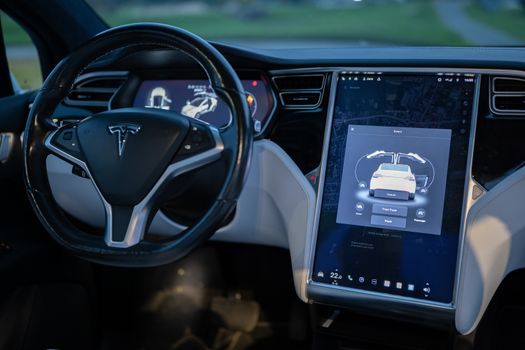
Interior shot of a modern electric car showcasing a sleek design and advanced touchscreen technology. Photo: Vladimir Srajber / Pexels
As the future of autonomous vehicles rapidly approaches, the regulatory landscape remains a complex and evolving challenge, particularly in the United States. Unlike a single, unified federal framework, states often have their own distinct laws governing the testing and deployment of AVs, creating a patchwork of regulations that complicates widespread adoption. Federal agencies like the National Highway Traffic Safety Administration (NHTSA) are working to establish guidelines and safety standards, but the pace of technological innovation often outstrips the speed of legislative processes. Key areas of focus for regulators include vehicle certification, cybersecurity protocols to prevent hacking, data privacy concerns regarding the vast amounts of information collected by AVs, and defining liability in the event of an accident. Who is at fault when an autonomous vehicle is involved in a collision – the vehicle owner, the manufacturer, the software developer, or the sensor supplier? These questions are at the forefront of legal debates and require clear, consistent answers to foster public trust and enable commercial scaling. Beyond legalities, the ethical dilemmas posed by autonomous vehicles are profound and often philosophical. The most frequently cited is the "trolley problem" – how should an AV be programmed to react in unavoidable accident scenarios where it must choose between two harmful outcomes? Should it prioritize the lives of its occupants, pedestrians, or minimize overall harm? These are not simple engineering problems but deeply moral ones that require societal consensus. Other ethical considerations include algorithmic bias, where AVs might perform differently or less safely for certain demographics due to biases in their training data. There's also the question of job displacement for professional drivers and the broader societal impact on urban planning, public transportation, and personal freedom. Addressing these ethical challenges requires multidisciplinary collaboration involving engineers, ethicists, policymakers, and the public to ensure that the future of autonomous vehicles is not only technologically advanced but also morally sound and socially equitable. Establishing clear ethical guidelines and transparent decision-making processes will be crucial for public acceptance and the responsible deployment of this transformative technology.

Societal Impact: Transforming Urban Life and Economic Structures
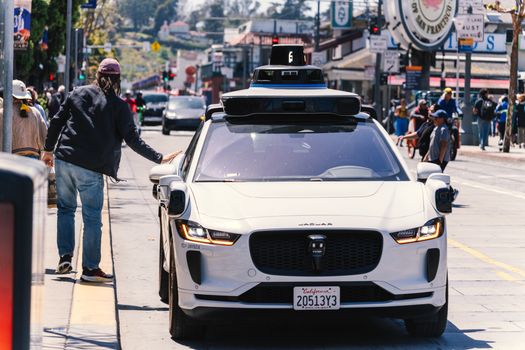
A self-driving car navigates through a bustling city street in San Francisco, capturing urban mobility in action. Photo: Abhishek Navlakha / Pexels
The advent of the future of autonomous vehicles promises to unleash a wave of societal transformations, reshaping everything from urban planning to economic structures. One of the most immediate and visible impacts will be on urban mobility. With AVs, the concept of car ownership may shift dramatically, giving way to widespread adoption of Mobility-as-a-Service (MaaS) models. Fleets of self-driving taxis and shared autonomous vehicles could significantly reduce the number of privately owned cars, leading to less congestion, fewer parking requirements, and more efficient use of urban space. This freed-up space, currently dedicated to parking lots and wide roads, could be repurposed for parks, housing, or commercial development, fundamentally altering the aesthetics and functionality of cities. Commuting could become more productive or relaxing, as passengers are no longer required to drive, opening up opportunities for work, leisure, or rest during travel time. Economically, the impact will be multi-faceted. The logistics and transportation industries stand to be revolutionized, with autonomous trucks potentially operating 24/7, reducing labor costs, and improving delivery times and efficiency. This could lead to lower consumer prices for goods and services. However, it also raises significant concerns about job displacement for millions of professional drivers, necessitating proactive strategies for workforce retraining and economic adjustment. The insurance industry will also undergo a seismic shift, as liability moves from human drivers to manufacturers and software providers, potentially leading to new insurance models and products. Furthermore, the automotive manufacturing sector will evolve, focusing more on software, AI, and sensor integration than traditional mechanical engineering. The accessibility benefits of AVs are also profound, offering unprecedented mobility to the elderly, people with disabilities, and those unable to drive, fostering greater independence and social inclusion. However, ensuring equitable access to these technologies, particularly in underserved communities, will be a critical challenge. The ripple effects of autonomous vehicles will extend into energy consumption, with the potential for optimized routing and platooning to increase fuel efficiency, especially if coupled with electric vehicle adoption. The future of autonomous vehicles is not just about cars; it's about reimagining the very fabric of our communities and economies, demanding careful planning and foresight to maximize benefits and mitigate potential disruptions. Discover how smart city initiatives integrate new technologies.

Common Pitfalls and Considerations for Autonomous Vehicle Adoption

Interior view of a modern car dashboard with digital display and speedometer, captured in Tianjin, China. Photo: Shuaizhi Tian / Pexels
While the promise of the future of autonomous vehicles is immense, several significant pitfalls and considerations must be addressed for successful widespread adoption. One major concern is the 'last mile' problem in fully autonomous systems, particularly in complex urban environments. While AVs might excel on highways, navigating unpredictable city streets with diverse human behaviors, construction zones, and intricate intersections remains a formidable challenge for Level 4 and 5 autonomy. Another critical pitfall is the potential for over-reliance and complacency among human occupants. Even in highly automated vehicles, drivers may be required to take over in certain situations, and maintaining situational awareness becomes difficult if they are disengaged for extended periods, leading to potential safety risks during transitions. Cybersecurity vulnerabilities also present a substantial threat; a hacked autonomous vehicle could become a weapon or be rendered inoperable, necessitating robust, constantly updated security protocols. Here are key considerations for the future of autonomous vehicles: * **Infrastructure Readiness:** Roads, signage, and communication networks in many areas are not yet optimized for autonomous vehicles. Smart infrastructure, including vehicle-to-infrastructure (V2I) communication, will be crucial. * **Public Perception and Trust:** Accidents involving autonomous vehicles, even rare ones, can severely erode public trust. Transparent communication, rigorous testing, and demonstrable safety records are essential to build confidence. * **Cost and Accessibility:** Initial autonomous vehicles and services will likely be expensive, potentially exacerbating existing inequalities in access to transportation. Policies to ensure equitable access are vital. * **Data Privacy:** AVs collect vast amounts of data about their surroundings and occupants. Establishing clear regulations and ethical guidelines for data collection, storage, and usage is paramount. * **Weather Limitations:** Current autonomous systems can be challenged by severe weather conditions like heavy snow, rain, or fog, which can obscure sensors and impact performance. * **Mixed Traffic Environments:** Safely integrating fully autonomous vehicles with human-driven cars, pedestrians, and cyclists requires sophisticated predictive capabilities and robust behavioral models. Addressing these multifaceted challenges requires a holistic approach involving technological innovation, regulatory clarity, public education, and ethical deliberation to pave a smooth road for the future of autonomous vehicles.

Comparison

FeatureLevel 5 (Full Automation)Level 4 (High Automation)Level 2 (Partial Automation)
Human InterventionNever requiredOptional, but not required in operating domainRequired for monitoring & intervention
Operating ConditionsAll driving conditionsSpecific operating domain (e.g., highways, geofenced areas)Limited conditions (e.g., highway cruise control)
Driver AttentionNot requiredNot required within ODDRequired at all times
System FallbackVehicle handles all failuresVehicle handles all failures within ODDHuman driver

What Readers Say

"This article provided an incredibly comprehensive overview of the future of autonomous vehicles. I particularly appreciated the breakdown of sensor technologies and the ethical considerations, which often get overlooked. It's a must-read for anyone interested in this space."

Sarah Chen · Austin, TX

"As an urban planner, I found the section on societal impact and urban transformation fascinating. It really made me think about how our cities will evolve with widespread AV adoption. Very insightful and well-researched."

David Miller · Seattle, WA

"I've been following AV tech for years, and this article managed to distill complex topics into an easily digestible format. The comparison table of autonomy levels was especially helpful, clarifying the distinctions between different stages of development."

Jessica Lee · San Francisco, CA

"The article is excellent, though I would have liked to see a bit more depth on the specific economic models for Mobility-as-a-Service. Still, a very strong piece that covers the crucial aspects of autonomous vehicle development and deployment."

Mark Johnson · Detroit, MI

"From a tech enthusiast's perspective, the detailed explanation of Lidar, Radar, and AI processing was exactly what I was looking for. It gave me a much clearer understanding of how these vehicles 'see' and 'think'."

Emily Rodriguez · Boston, MA

Frequently Asked Questions

What are the main levels of autonomous driving?

Autonomous driving is categorized into six levels by the SAE International, from Level 0 (no automation) to Level 5 (full automation). Level 2 vehicles offer partial automation like adaptive cruise control, while Level 4 can drive themselves in specific conditions without human intervention, and Level 5 vehicles are fully autonomous in all conditions.

Are autonomous vehicles safe?

While the technology is still evolving, autonomous vehicles are designed with multiple layers of redundancy and sophisticated sensors to minimize accidents. Proponents argue they could significantly reduce human error, which is a major cause of crashes. However, public trust and regulatory frameworks are still being established to ensure their safety.

How do self-driving cars 'see' the road?

Self-driving cars use a combination of sensors including cameras, lidar (light detection and ranging), radar (radio detection and ranging), and ultrasonic sensors. These systems work together to create a comprehensive, real-time 360-degree view of the vehicle's surroundings, detecting objects, lane markings, traffic signals, and other road users.

What is the projected cost of autonomous vehicles?

Initially, fully autonomous vehicles and services are expected to be expensive due to the advanced technology involved. However, as production scales and technology matures, costs are projected to decrease. The long-term value proposition includes potential savings on insurance, fuel efficiency, and increased productivity during commutes.

How will autonomous vehicles compare to public transportation?

Autonomous vehicles are likely to complement, rather than entirely replace, public transportation. They could serve as efficient 'first and last mile' solutions, connecting people to transit hubs, or offer on-demand shared mobility services that fill gaps in existing public transport networks, potentially reducing reliance on personal car ownership.

Who stands to benefit most from the future of autonomous vehicles?

A wide range of individuals and sectors stand to benefit. People with disabilities and the elderly could gain unprecedented mobility and independence. Logistics and delivery companies could see significant efficiency gains. Urban areas might experience reduced congestion and pollution. Commuters could reclaim travel time, and overall road safety could improve.

What are the biggest risks associated with autonomous vehicles?

Key risks include cybersecurity vulnerabilities, the ethical dilemmas of programming decision-making in unavoidable accident scenarios, job displacement in the transportation sector, and the potential for over-reliance by human occupants. Ensuring robust safety protocols and public acceptance are critical for mitigating these risks.

What are the next major milestones for autonomous vehicle development?

Upcoming milestones include the widespread deployment of Level 4 autonomous vehicles in more complex urban environments, the establishment of clearer federal regulatory frameworks, advancements in AI for predicting human behavior more accurately, and the development of robust vehicle-to-everything (V2X) communication systems to enhance safety and efficiency.

The future of autonomous vehicles is not a distant dream but an accelerating reality. By understanding its technologies, challenges, and profound societal impacts, we can better prepare for and shape a smarter, safer, and more efficient driverless world. Stay informed and ready for this transformative journey.

Topics: future of autonomous vehiclesself-driving carsAI in transportationsmart mobilitydriverless technology
Leo List

IE Escorts NO Escorts US Escorts NZ Escorts AU Escorts
Brampton weed
Adultwork EstrelaBet Vai de Bet R7 Bet Betão Galera Bet Rainbet Bet9ja Shop SportyBet BetKing Sisal Loto Foot Hollywoodbets YesPlay Odibets RushBet Jugabet BetWarrior BetCity MSport betPawa Fortebet