✓ Blockchain is a decentralized, distributed, and immutable ledger.
✓ Transactions are grouped into 'blocks' and cryptographically linked.
✓ It operates without a central authority, relying on consensus mechanisms.
✓ Transparency and security are core tenets, making data tamper-proof.
How It Works
1
A Transaction is Initiated
Someone wants to send value (like cryptocurrency or data) to another party. This transaction is created and signed digitally.
2
The Transaction is Broadcast
The proposed transaction is sent to a network of computers (nodes) participating in the blockchain. These nodes validate its authenticity.
3
Validation and Block Creation
Once validated, the transaction is bundled with other recent, valid transactions into a 'block'. This block is then cryptographically secured.
4
Block Added to the Chain
The newly created block is added to the end of the existing chain of blocks. This finalizes the transaction and makes it permanently recorded across the network.
Understanding the Core Concepts of Blockchain
Photo: RDNE Stock project / Pexels
To truly explain blockchain technology simply, we must first break down its fundamental components. Imagine a digital ledger, much like an accounting book, but with some crucial differences. First, this ledger isn't kept in one central location; instead, identical copies are distributed across a vast network of computers, known as 'nodes.' This distribution is what makes blockchain 'decentralized' – there's no single point of control or failure. Think of it like a Google Doc shared with hundreds or thousands of people, where everyone has access to the same, continuously updated information, and no single person can unilaterally change past entries without everyone else noticing.
Each 'page' in this digital ledger is called a 'block.' A block contains a list of transactions, and once a block is filled with validated transactions, it's sealed with a unique cryptographic code, known as a 'hash.' This hash isn't just a random number; it's a digital fingerprint of all the data within that block. Crucially, each new block also contains the hash of the *previous* block, creating an unbreakable chain – hence the name 'blockchain.' This linking mechanism is what makes blockchain 'immutable,' meaning once a transaction is recorded in a block and that block is added to the chain, it's virtually impossible to alter or delete. Any attempt to change an old transaction would change its block's hash, which would then invalidate the hash in the next block, and so on, cascading through the entire chain. The network would immediately detect this discrepancy and reject the tampered version.
Another vital concept is 'cryptography.' This is the science of secure communication, allowing information to be protected from unauthorized access. In blockchain, cryptography is used extensively, from securing individual transactions with digital signatures to linking blocks with cryptographic hashes. It ensures the integrity and authenticity of all data on the chain. Without robust cryptography, the security claims of blockchain would crumble. This blend of decentralization, immutability, and cryptographic security creates a system of unparalleled transparency and trust, even among anonymous participants. It's a radical departure from traditional systems that rely on intermediaries like banks or governments to verify transactions and maintain records. By understanding these core concepts, you've taken the first significant step in grasping how this revolutionary technology operates.
How Blockchain Builds Trust Without Intermediaries
Photo: Pachon in Motion / Pexels
The true genius of blockchain lies in its ability to establish trust in a trustless environment. Traditional systems, whether financial or informational, are built on the premise of central authorities. When you send money through a bank, you trust the bank to accurately record your transaction and ensure the funds reach the recipient. When you use an online service, you trust the company to securely store your data. This reliance on intermediaries, while seemingly convenient, introduces vulnerabilities: single points of failure, potential for censorship, data breaches, and transaction fees. Blockchain fundamentally shifts this paradigm by distributing trust across an entire network.
Instead of a single entity validating transactions, every participant (node) in the blockchain network plays a role. When a new block of transactions is proposed, it's broadcast to all nodes. These nodes then independently verify the transactions within that block against a set of predetermined rules. For example, in a cryptocurrency blockchain, nodes check if the sender has sufficient funds and if the transaction is properly signed. Only when a consensus is reached among a majority of the nodes – meaning most of them agree that the transactions are valid – is the block added to the chain. This consensus mechanism is crucial. Different blockchains use different methods to achieve consensus, with 'Proof of Work' (used by Bitcoin) and 'Proof of Stake' (used by Ethereum 2.0) being the most well-known. Proof of Work involves complex computational puzzles that 'miners' solve to propose new blocks, consuming significant energy but making it incredibly difficult to tamper with the chain. Proof of Stake, on the other hand, selects validators based on the amount of cryptocurrency they 'stake' as collateral, offering a more energy-efficient alternative.
This distributed verification process eliminates the need for a central authority. No single bank, government, or corporation has the power to approve, reject, or reverse transactions on its own. The integrity of the ledger is maintained by the collective agreement of the network participants. This inherent transparency means that every transaction ever recorded on the blockchain is visible to anyone who chooses to view it (though participant identities are often pseudonymous). This auditability further reinforces trust, as anyone can verify the history of the chain. This paradigm shift from centralized trust to distributed, cryptographic trust is what makes blockchain a truly disruptive innovation, promising a future where individuals have more control over their data and transactions, free from the constraints and vulnerabilities of traditional gatekeepers. It’s a move towards a more resilient and transparent digital infrastructure.
Beyond Cryptocurrency: Diverse Applications of Blockchain Technology
Photo: Morthy Jameson / Pexels
While blockchain gained prominence through its association with cryptocurrencies like Bitcoin, its potential extends far beyond digital money. The underlying principles of decentralization, immutability, and transparency make it a versatile technology applicable to a vast array of industries and use cases. To explain blockchain technology simply in its broader context, we need to look at how these core features solve real-world problems across different sectors. One significant application is in supply chain management. Imagine tracking a product from its origin as a raw material, through manufacturing, shipping, and finally to the consumer. With blockchain, each step of this journey can be recorded as an immutable transaction on a distributed ledger. This creates a transparent and auditable history, making it easier to verify product authenticity, identify bottlenecks, reduce fraud, and ensure ethical sourcing. Consumers could potentially scan a QR code and see the entire provenance of their purchase, from farm to table or factory to store. This level of transparency is transformative for industries grappling with counterfeiting and complex global supply chains.
Another powerful application is in digital identity. Our current identity systems are fragmented and often controlled by central authorities. Blockchain offers the possibility of self-sovereign identity, where individuals control their own digital credentials. Instead of relying on a government or company to verify your identity, you could use a blockchain-based identity system to securely store and selectively share your personal data. For example, instead of providing your full date of birth to prove you're over 21, you could simply present a cryptographic proof that confirms you meet the age requirement without revealing the exact date. This enhances privacy and reduces the risk of identity theft. Voting systems could also benefit from blockchain's immutable ledger, ensuring secure, transparent, and verifiable elections, free from tampering. The record of every vote would be permanently stored and auditable, increasing public confidence in electoral processes.
Healthcare is another sector ripe for blockchain integration. Securely sharing patient medical records among different providers, while maintaining patient privacy, is a persistent challenge. A blockchain could provide an unchangeable record of medical history, accessible only by authorized parties with the patient's consent. This could streamline care, reduce medical errors, and empower patients with greater control over their health data. Similarly, in intellectual property, blockchain can provide immutable timestamps for creations, proving ownership and helping to protect copyrights and patents. Even real estate transactions, known for their complexity and reliance on intermediaries, could be simplified and made more transparent through blockchain-based smart contracts, which automatically execute terms of an agreement when predefined conditions are met. These examples merely scratch the surface, illustrating how blockchain is poised to revolutionize various aspects of our digital and physical lives, creating more efficient, secure, and transparent systems across the board. The innovation isn't just in the technology, but in the new possibilities it unlocks for how we interact and exchange value. Smart contracts are a particularly exciting development.
Navigating the Challenges and Future of Blockchain Adoption
Photo: Morthy Jameson / Pexels
While the promise of blockchain technology is immense, its widespread adoption isn't without significant hurdles. Understanding these challenges is crucial to grasping the realistic trajectory of this nascent technology. One of the primary concerns is scalability. Current blockchain networks, particularly public ones like Bitcoin and Ethereum, can process a limited number of transactions per second compared to centralized payment systems like Visa. This bottleneck can lead to slower transaction times and higher fees, especially during periods of high network congestion. While significant research and development are underway to address this – including layer-2 solutions, sharding, and alternative consensus mechanisms – achieving enterprise-level scalability remains a key focus. Another challenge is regulatory uncertainty. Governments worldwide are still grappling with how to classify and regulate blockchain-based assets and applications. The lack of clear, consistent legal frameworks can deter institutional adoption and create an environment of apprehension for businesses looking to innovate in this space. Harmonizing global regulations will be vital for blockchain's maturation.
Energy consumption, particularly for Proof of Work blockchains, is another frequently cited concern. The computational power required to secure these networks can be substantial, leading to questions about environmental impact. However, newer consensus mechanisms like Proof of Stake offer significantly more energy-efficient alternatives, and many projects are actively working towards greener solutions. Interoperability, the ability for different blockchain networks to communicate and exchange data seamlessly, is also a critical area for development. Just as the internet connects disparate websites, a truly interconnected blockchain ecosystem will require robust solutions for cross-chain communication. Without it, blockchains risk becoming isolated silos, limiting their overall utility.
User experience (UX) is another often-overlooked factor. For blockchain to go mainstream, interacting with decentralized applications (dApps) needs to be as intuitive and user-friendly as using traditional web applications. Abstraction of cryptographic keys, simpler wallet management, and more accessible interfaces are essential to onboard a broader user base. Despite these challenges, the future of blockchain looks incredibly promising. We are likely to see continued innovation in scalability solutions, a gradual clarification of regulatory landscapes, and increasing integration of blockchain into existing enterprise systems. The development of specialized blockchains (private and consortium chains) for specific industry needs will also accelerate. Furthermore, the convergence of blockchain with other emerging technologies like Artificial Intelligence (AI) and the Internet of Things (IoT) could unlock entirely new possibilities, creating more intelligent and autonomous systems. The journey toward mainstream adoption is a marathon, not a sprint, but the foundational shift blockchain offers in how we establish trust and manage data suggests its impact will only grow over time. It's a technology that's still evolving, but its disruptive potential is undeniable.
* **Scalability Solutions:** Exploring layer-2 networks like Lightning Network and optimistic rollups to increase transaction throughput.
* **Regulatory Evolution:** Anticipating clearer guidelines and frameworks from governments to foster innovation and adoption.
* **Environmental Impact:** Shifting towards energy-efficient consensus mechanisms and sustainable practices.
* **Interoperability Standards:** Developing protocols for seamless communication between different blockchain networks.
* **User Experience Enhancements:** Focusing on intuitive interfaces and simplified processes for broader accessibility.
* **Enterprise Integration:** Observing increased adoption of private and consortium blockchains within corporate environments.
Comparison
Feature
Blockchain
Traditional Database
Centralized Ledger
Control
Decentralized
Centralized
Centralized
Immutability
✓
✗ (can be altered)
✗ (can be altered)
Transparency
High (auditable)
Low (internal only)
Medium (internal, some external access)
Security
Cryptography, Consensus
Access Control, Firewalls
Access Control
Single Point of Failure
✗
✓
✓
Intermediaries
✗
✓
✓
What Readers Say
★★★★★
"This article truly helped explain blockchain technology simply. I've been struggling to grasp the concepts, but the analogies and clear explanations made it click. Highly recommend for beginners!"
Sarah J. · Austin, TX
★★★★★
"As a non-tech professional, I needed something that could explain blockchain technology simply without overwhelming me. This guide did exactly that, covering the essentials without getting bogged down in jargon."
Mark D. · Seattle, WA
★★★★★
"I was able to finally understand the difference between blockchain and traditional databases after reading this. The comparison table was particularly useful in breaking down complex ideas into understandable points."
Emily R. · Boston, MA
★★★★★
"A very solid overview of blockchain. While I still have some deeper questions, this article laid an excellent foundation and successfully managed to explain blockchain technology simply for a broad audience."
David P. · Chicago, IL
★★★★★
"I used this guide to prepare for a meeting where blockchain was discussed, and it gave me the confidence to participate meaningfully. It's concise yet thorough, making it easy to explain blockchain technology simply to others."
Jessica L. · Miami, FL
Frequently Asked Questions
What is the simplest way to explain blockchain technology?
Think of blockchain as a highly secure, digital ledger that is distributed across many computers. Every transaction or piece of information added to it is grouped into a 'block,' which is then cryptographically linked to the previous block, forming an unbreakable 'chain.' This makes it incredibly difficult to tamper with any past record.
Is blockchain only used for cryptocurrencies like Bitcoin?
No, while blockchain gained fame through cryptocurrencies, its applications extend far beyond digital money. It's being explored for supply chain management, digital identity, voting systems, healthcare records, and much more, leveraging its core features of transparency, immutability, and decentralization.
How does blockchain ensure security without a central authority?
Blockchain ensures security through several mechanisms: cryptography (digital signatures and hashes), decentralization (no single point of failure), and consensus mechanisms. The network collectively verifies and agrees on the validity of transactions before they are added to the chain, making it highly resistant to fraud and manipulation.
Is blockchain a costly technology to implement?
The cost of implementing blockchain varies significantly depending on the specific use case, the type of blockchain (public, private, consortium), and the scale of the deployment. While public blockchains can incur transaction fees and energy costs, private or permissioned blockchains might involve significant setup and maintenance costs for infrastructure and development.
How is blockchain different from a traditional database?
The key differences lie in their structure and control. A traditional database is typically centralized, allowing data to be altered or deleted by a central administrator. Blockchain, conversely, is decentralized, immutable (records are permanent), and transparent, with data verified by a network rather than a single entity.
Who should learn about blockchain technology?
Anyone interested in the future of digital transactions, data management, and secure information exchange should learn about blockchain. This includes business professionals, technologists, investors, policymakers, and even curious individuals who want to understand the technological shifts shaping our world.
Are there risks associated with using blockchain technology?
Yes, risks include regulatory uncertainty, scalability limitations for some networks, potential for '51% attacks' on smaller blockchains, and the irreversible nature of transactions (if you make a mistake, it's permanent). However, ongoing development aims to mitigate many of these risks.
What are the future trends for blockchain technology?
Future trends include improved scalability solutions, increased interoperability between different blockchains, clearer regulatory frameworks, greater enterprise adoption, and convergence with other emerging technologies like AI and IoT to create more sophisticated decentralized applications and systems.
Ready to deepen your understanding? This guide aimed to explain blockchain technology simply, providing a solid foundation for your journey into this transformative field. Continue exploring and stay ahead in the decentralized revolution.

 Photo: RDNE Stock project / Pexels
 Photo: Pachon in Motion / Pexels
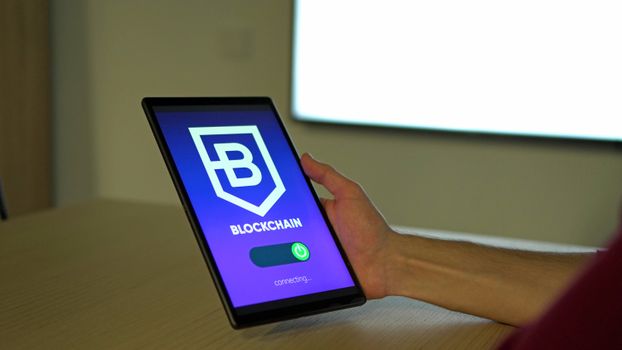 Photo: Morthy Jameson / Pexels
 Photo: Morthy Jameson / Pexels