Essential Cybersecurity Tips for Small Businesses
cybersecurity tips for small businesses

Essential Cybersecurity Tips for Small Businesses

Fortify your small business against evolving cyber threats and safeguard your valuable assets with proactive strategies.

Secure Your Business Now

Key Takeaways

  • ✓ Small businesses are increasingly targeted by cybercriminals due to perceived weaker defenses.
  • ✓ A single data breach can cost a small business an average of $120,000 to $1.24 million.
  • ✓ Employee training is often cited as the weakest link in a company's cybersecurity posture.
  • ✓ Implementing basic cybersecurity measures can significantly reduce the risk of a successful attack.

How It Works

1
Assess Your Current Risk

Understand your vulnerabilities and the types of data you handle. Identify critical assets that need the most protection.

2
Implement Core Protections

Deploy essential tools like firewalls, antivirus software, and strong password policies. These form the foundation of your defense.

3
Educate Your Team

Regularly train employees on cybersecurity best practices and how to spot threats. Human error is a leading cause of breaches.

4
Plan for the Worst

Develop an incident response plan and conduct regular data backups. This ensures business continuity even after an attack.

Understanding the Cyber Threat Landscape for Small Businesses

A person in a hoodie sits at a computer screen, engaged in coding or hacking activities. Photo: Mikhail Nilov / Pexels
In today's interconnected digital world, no business, regardless of size, is immune to cyber threats. While large corporations often make headlines for massive data breaches, small businesses are, in fact, increasingly becoming prime targets for cybercriminals. Why? Because they are often perceived as having fewer resources dedicated to cybersecurity, making them easier prey. Cybercriminals operate on an opportunistic basis, and if a small business presents a weaker defense, it becomes an attractive target. The consequences of a successful cyberattack can be devastating for a small business, far beyond just financial losses. Reputational damage can be irreparable, leading to a loss of customer trust and market share. Regulatory fines, especially concerning data privacy laws like GDPR or CCPA, can cripple a small operation. Operational downtime, caused by ransomware or system breaches, can halt business activities for days or weeks, directly impacting revenue and employee morale. Furthermore, the recovery process itself – including forensic investigations, system restoration, and public relations management – can be incredibly costly and time-consuming, diverting precious resources away from core business functions. Many small businesses, unfortunately, never fully recover from a significant cyber incident, often leading to closure within six months of a major attack. This stark reality underscores the critical need for robust cybersecurity measures, not as an optional add-on, but as an integral part of business strategy. It's not just about protecting data; it's about safeguarding the very existence and future viability of the business. Understanding the specific types of threats targeting small businesses is the first step towards building an effective defense. Phishing attacks, where employees are tricked into revealing sensitive information or downloading malware, remain incredibly prevalent. Ransomware, which encrypts data and demands payment for its release, can bring operations to a standstill. Malware, viruses, and trojans can compromise systems, steal data, or spy on activities. Even insider threats, whether malicious or accidental, pose a significant risk. The shift to remote work, accelerated by recent global events, has further complicated the cybersecurity landscape for small businesses. Employees working from home often use personal devices and less secure home networks, expanding the attack surface significantly. Without centralized IT management and robust endpoint protection, these remote setups can become entry points for cybercriminals. Therefore, small businesses must recognize that their digital assets are as valuable as their physical ones and require similar, if not greater, levels of protection. Ignoring cybersecurity is no longer an option; it's a direct threat to survival. Proactive measures, rather than reactive ones, are essential for building resilience against the ever-evolving tactics of cyber adversaries. For more insights on digital defense, explore our guide on advanced threat detection.

Establishing Foundational Cybersecurity Controls
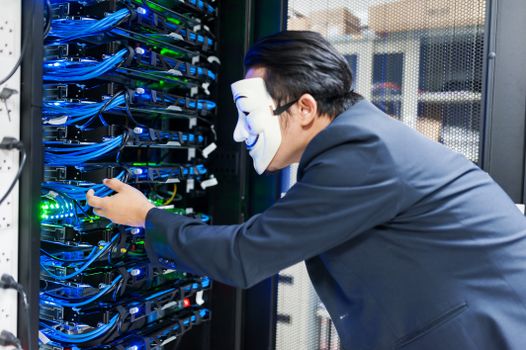
Masked individual interacting with server racks, symbolizing cybersecurity threats. Photo: panumas nikhomkhai / Pexels
Building a strong cybersecurity posture for a small business begins with establishing foundational controls that address the most common vulnerabilities. These controls act as the first line of defense, preventing many attacks before they can even begin. The cornerstone of this defense is robust network security. This involves implementing a strong firewall, which acts as a barrier between your internal network and the internet, filtering out malicious traffic. It's crucial to configure this firewall correctly and regularly update its rules. Secure Wi-Fi networks are also paramount; use strong encryption (WPA2 or WPA3) and change default passwords immediately. Separate guest networks should be provided for visitors, ensuring they don't have access to your primary business network. Endpoint security is another critical area. Every device connected to your network—desktops, laptops, smartphones, and even IoT devices—represents a potential entry point for attackers. Installing reputable antivirus and anti-malware software on all endpoints is non-negotiable. These tools should be kept up-to-date with the latest threat definitions and configured to perform regular scans. Beyond traditional antivirus, consider endpoint detection and response (EDR) solutions, which offer more advanced threat hunting and incident response capabilities, even for smaller budgets. Patch management, while often overlooked, is a vital control. Software vulnerabilities are a primary target for cybercriminals. Regularly updating all operating systems, applications, and firmware is essential to patch these known vulnerabilities. This should be an automated process where possible, ensuring that security updates are applied promptly and consistently across all systems. Delaying updates leaves gaping holes in your defenses that attackers are quick to exploit. Access control is fundamental to protecting sensitive information. Implement the principle of least privilege, meaning employees should only have access to the data and systems absolutely necessary for their job functions. This limits the potential damage if an employee account is compromised. Strong password policies are also crucial: require complex passwords (a mix of uppercase, lowercase, numbers, and symbols), enforce regular password changes, and mandate multi-factor authentication (MFA) for all accounts, especially for accessing critical systems and cloud services. MFA adds an extra layer of security, making it significantly harder for unauthorized users to gain access even if they have stolen credentials. Data backup and recovery planning are not just good business practices; they are critical cybersecurity controls. In the event of a ransomware attack, hardware failure, or accidental data deletion, having recent, secure backups can mean the difference between a minor inconvenience and catastrophic data loss. Implement a 3-2-1 backup strategy: at least three copies of your data, stored on two different types of media, with one copy offsite. Regularly test your backup and recovery procedures to ensure they work when needed. These foundational controls, when implemented consistently and maintained diligently, provide a robust shield against a vast majority of cyber threats targeting small businesses.

Cultivating a Cybersecurity-Aware Culture and Incident Response

Man holding a 'FRAUD' sign in a tech setting, symbolizing cybersecurity threats. Photo: Tima Miroshnichenko / Pexels
Even the most sophisticated technological defenses can be undermined by human error. Therefore, cultivating a cybersecurity-aware culture within your small business is just as important as implementing technical controls. Employees are often the first and last line of defense against cyberattacks, and their awareness and vigilance can make all the difference. Regular, mandatory cybersecurity training for all employees is essential. This training should cover a range of topics, including how to identify phishing emails, the dangers of clicking suspicious links or opening unknown attachments, the importance of strong passwords and MFA, and safe browsing habits. It should also educate them on company policies regarding data handling, device usage, and reporting suspicious activities. These training sessions should not be one-off events but rather ongoing programs, with refreshers and updates to address new threats and evolving tactics. Simulating phishing attacks can be an effective way to test employee awareness and provide targeted additional training where needed. Empowering employees to be proactive defenders, rather than passive recipients of information, is key. They should understand the 'why' behind security policies, not just the 'what'. Beyond prevention, every small business needs a well-defined incident response plan. No security system is 100% foolproof, and expecting to never be breached is unrealistic. The goal, then, is to minimize the damage and recover as quickly as possible when an incident does occur. An incident response plan outlines the steps to take immediately following a cyberattack. This includes identifying the breach, containing it to prevent further spread, eradicating the threat, recovering affected systems and data, and conducting a post-incident analysis to learn from the event and improve future defenses. Key elements of this plan should include clear roles and responsibilities for each team member involved, contact information for external support (e.g., IT forensics, legal counsel, cyber insurance provider), communication protocols for informing affected parties and regulators, and a detailed recovery strategy utilizing your data backups. Regularly testing this plan through tabletop exercises or simulations can help identify weaknesses and ensure that everyone knows their role under pressure. Having a clear plan reduces panic and allows for a more efficient and effective response, potentially saving the business significant time, money, and reputational damage. It's also crucial to consider cyber insurance as part of your overall risk management strategy. This insurance can help cover the costs associated with data breaches, including legal fees, notification costs, forensic investigations, and business interruption. While it doesn't prevent attacks, it provides a vital financial safety net. For further reading on business resilience, check out our insights on disaster recovery planning.

Advanced Protections and Common Cybersecurity Mistakes to Avoid
A conceptual image highlighting the issue of data breaches, featuring bold text on a textured background. Photo: Ann H / Pexels
Once foundational controls are in place, small businesses should consider implementing more advanced protections to further bolster their defenses. These might include next-generation firewalls with intrusion detection and prevention systems (IDPS), which offer deeper packet inspection and can identify more sophisticated threats. Security Information and Event Management (SIEM) systems can aggregate and analyze security logs from various sources, providing a centralized view of security events and helping to detect anomalies that might indicate an attack. While often associated with larger enterprises, scaled-down SIEM solutions or managed security service providers (MSSPs) offering SIEM capabilities are becoming more accessible to small businesses. Another critical advanced protection is regular vulnerability scanning and penetration testing. Vulnerability scans automatically identify known weaknesses in your systems and applications, while penetration tests involve ethical hackers attempting to exploit these weaknesses to demonstrate real-world attack vectors. These proactive assessments help identify gaps before malicious actors do. Cloud security is also paramount, as many small businesses leverage cloud services for storage, applications, and infrastructure. Ensure that all cloud providers adhere to strong security standards, and configure your cloud environments securely, paying close attention to access controls, data encryption, and logging. Never assume the cloud provider is solely responsible for your data's security; the shared responsibility model means you have a significant role to play. Here are some common cybersecurity mistakes small businesses frequently make and how to avoid them: * **Relying solely on free antivirus:** While better than nothing, free solutions often lack the advanced features and real-time protection needed for a business environment. Invest in business-grade security software. * **Ignoring software updates:** Procrastinating or skipping updates leaves your systems vulnerable to known exploits. Automate updates whenever possible and ensure critical patches are applied promptly. * **Weak or reused passwords:** This is an easy entry point for attackers. Mandate strong, unique passwords for all accounts and enforce multi-factor authentication. * **Lack of employee training:** Human error is a leading cause of breaches. Regular, engaging training is crucial to empower employees as a strong defense. * **No incident response plan:** Without a plan, a breach can quickly spiral out of control, leading to greater damage and recovery costs. Develop and test a clear, actionable plan. * **Not backing up data:** A single point of failure can lead to catastrophic data loss. Implement a robust 3-2-1 backup strategy and test restorations regularly. * **Over-permissioning user accounts:** Giving employees more access than they need increases risk. Follow the principle of least privilege. * **Neglecting physical security:** Physical access to devices can bypass many digital defenses. Secure your premises and devices physically. * **Assuming 'it won't happen to us':** This complacency is a dangerous mindset. Every business is a target. Proactive measures are always cheaper than reactive recovery.

Comparison

FeatureEssentialRecommendedAdvanced
FirewallBasic Router FirewallBusiness-Grade UTM/Next-Gen FirewallManaged Firewall with IDPS
Antivirus/Anti-MalwareFree Consumer AVPaid Business Endpoint ProtectionEDR Solution
Password PolicyWeak/No PolicyStrong Passwords + MFAPassword Manager + MFA + SSO
Data BackupLocal Hard DriveCloud + Local (3-2-1 Rule)Automated, Encrypted Offsite + Immutable Backups
Employee TrainingAd-Hoc MentionsAnnual Formal TrainingOngoing Phishing Simulations + Regular Modules
Incident Response PlanBasic Documented PlanTested, Comprehensive Plan with External Support
Vulnerability ScanningAnnual Basic ScanContinuous Scanning + Pen Testing
Cyber InsuranceBasic CoverageComprehensive Coverage with Breach Response Services

What Readers Say

"These cybersecurity tips for small businesses were a game-changer for my online retail store. We implemented MFA and better backup practices, and now I sleep much better at night knowing our customer data is safer."

Sarah J. · Austin, TX

"As a small law firm, client confidentiality is paramount. This article provided actionable steps we could take immediately to enhance our digital security without breaking the bank. Highly recommend it for any SMB owner."

Mark D. · Miami, FL

"Following the advice on employee training led to a significant reduction in suspicious email clicks. Our team is now much more vigilant, and we haven't had a single phishing incident since implementing the new protocols."

Emily R. · Denver, CO

"The tips are excellent and comprehensive. While some of the 'advanced' suggestions might be a stretch for truly tiny businesses, the foundational controls are absolutely essential and well-explained. A great starting point."

David P. · Seattle, WA

"We run a small marketing agency, and the section on cloud security was particularly relevant. It helped us re-evaluate our cloud provider's security and adjust our internal settings for better protection. Very practical advice."

Maria G. · Chicago, IL

Frequently Asked Questions

What is the most common cyber threat to small businesses?

Phishing attacks remain the most prevalent threat, where cybercriminals trick employees into revealing sensitive information or downloading malware. Ransomware and business email compromise (BEC) are also highly common and damaging, often exploiting human vulnerabilities rather than technical ones.

Is cybersecurity too expensive for a small business?

While there are costs involved, the expense of proactive cybersecurity measures is significantly lower than the potential cost of a data breach or cyberattack. Many effective solutions are affordable, and neglecting security can lead to financial ruin, regulatory fines, and reputational damage far exceeding prevention costs.

How often should employees receive cybersecurity training?

Employees should receive initial comprehensive training upon onboarding, followed by regular refresher courses at least annually. Additionally, short, focused training modules or alerts should be provided whenever new threats emerge or company policies change. Ongoing awareness is key.

What's the most effective way to back up my small business data?

The '3-2-1 rule' is highly effective: keep at least three copies of your data, store them on two different types of media (e.g., local hard drive and cloud), and keep one copy offsite. Regularly test your backups to ensure they are recoverable and encrypted for security.

How do cloud services affect my small business's cybersecurity?

Cloud services can enhance security by leveraging provider expertise, but they also introduce new risks. It's crucial to understand the shared responsibility model: while the cloud provider secures the 'cloud itself,' you are responsible for securing 'your data in the cloud.' Configure settings carefully, use strong access controls, and ensure data encryption.

Who should be responsible for cybersecurity in a small business?

Ultimately, the business owner or leadership team is responsible for setting the cybersecurity strategy. Day-to-day implementation and monitoring might fall to a dedicated IT manager, an outsourced IT service provider, or even be distributed among tech-savvy employees with clear guidelines and accountability.

Are free cybersecurity tools sufficient for a small business?

While free tools can offer basic protection, they are generally not sufficient for a business environment. Business-grade solutions offer more advanced features, centralized management, dedicated support, and better protection against sophisticated threats. Investing in paid solutions is a critical step for business security.

What are future cybersecurity trends small businesses should watch?

Small businesses should prepare for increased AI-powered attacks and defenses, the growing importance of supply chain security, and the continued rise of ransomware and phishing. Focusing on robust identity and access management, zero-trust principles, and continuous employee training will be crucial to adapt.

Don't let your small business become another cyberattack statistic. By implementing these essential cybersecurity tips, you can significantly reduce your risk, protect your valuable assets, and build a resilient foundation for future growth. Start fortifying your defenses today and secure your business's future.

Topics: cybersecurity tips for small businessessmall business cyber protectiondata security for SMBscyber threat preventionIT security small business
Leo List

DK Escorts LU Escorts AT Escorts SE Escorts FI Escorts CH Escorts DE Escorts HR Escorts IE Escorts GR Escorts CZ Escorts NO Escorts BE Escorts FR Escorts SI Escorts IL Escorts NL Escorts PL Escorts HU Escorts ES Escorts IT Escorts PT Escorts SK Escorts RO Escorts ZA Escorts UY Escorts US Escorts UK Escorts NZ Escorts AU Escorts
Brampton weed
Adultwork EstrelaBet Vai de Bet R7 Bet Betão Galera Bet Rainbet Bet9ja Shop SportyBet BetKing Sisal Loto Foot Hollywoodbets YesPlay Odibets RushBet Jugabet BetWarrior BetCity MSport betPawa Fortebet