
The Key Differences Between 5G and 6G Technology Explored
Explore the revolutionary advancements and fundamental distinctions defining the next two generations of wireless connectivity.
Discover the FutureKey Takeaways
- ✓ 6G is projected to be 100-1000 times faster than 5G, reaching speeds of 1 Terabit per second (Tbps).
- ✓ Latency in 6G is expected to drop to sub-millisecond levels, enabling truly real-time interactions.
- ✓ 6G will leverage new frequency bands, including terahertz (THz) spectrum, for unprecedented data capacity.
- ✓ Artificial Intelligence (AI) and Machine Learning (ML) will be natively integrated into 6G networks, optimizing performance and security.
How It Works
5G utilizes millimeter-wave (mmWave), mid-band, and low-band frequencies to deliver enhanced mobile broadband, ultra-reliable low-latency communication, and massive machine-type communication. It’s the foundation for many current IoT and smart city initiatives.
6G aims to build upon 5G's capabilities by introducing even higher frequencies (Terahertz), integrating AI/ML at the network core, and exploring new concepts like holographic communication and sentient networks. It envisions a truly immersive and intelligent digital world.
The transition involves advancements in antenna technology (reconfigurable intelligent surfaces), new modulation schemes, and distributed ledger technologies for enhanced security and data management. These enable the extreme performance targets of 6G.
While 5G powers autonomous vehicles and advanced IoT, 6G is expected to unlock fully autonomous systems, ubiquitous extended reality (XR), digital twins, and a seamlessly connected 'Internet of Everything.' It transforms how we interact with digital and physical realms.
Understanding the Evolution: From 5G to Next-Gen 6G Network Capabilities
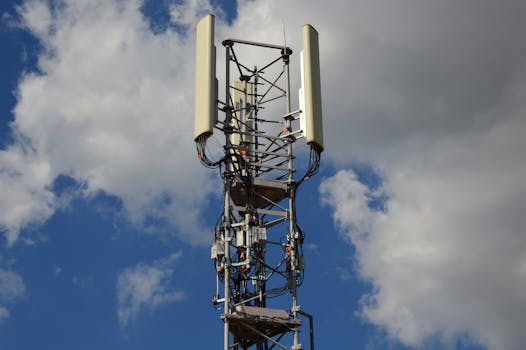 Photo: Ulrick Trappschuh / Pexels
Speed, Latency, and Frequency: The Core Technical Distinctions in 5G vs 6G Speed
 Photo: Egor Komarov / Pexels
Beyond Connectivity: AI Integration and the Future of Wireless Communication
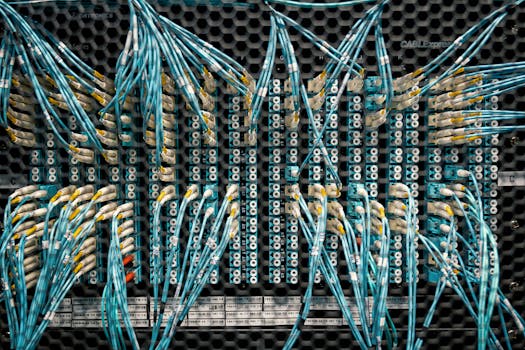 Photo: Brett Sayles / Pexels
Applications and Societal Impact: How 6G Outpaces 5G
 Photo: SHVETS production / Pexels
Comparison
| Feature | 5G Technology | 6G Technology (Projected) | Key Advancement |
|---|---|---|---|
| Peak Speed | Up to 10 Gbps | Up to 1 Tbps (100-1000x faster) | Terahertz (THz) Spectrum |
| Latency | ~1 millisecond | ~0.1 millisecond (sub-ms) | Real-time responsiveness |
| Frequency Bands | Low, Mid, mmWave (up to 100 GHz) | THz, Visible Light, Quantum (up to 10 THz+) | Vast spectrum expansion |
| AI/ML Integration | Network optimization (overlay) | Native, pervasive, cognitive network | Self-optimizing, sentient networks |
| Key Applications | eMBB, URLLC, mMTC, Smart Cities, IoT, AR/VR | Ubiquitous XR, Holographic Comm., Digital Twins, IoS, Fully Autonomous Systems | Immersive, intelligent, truly autonomous |
| Energy Efficiency | Improved over 4G | Highly optimized, green communication | AI-driven resource management |
| Security | Enhanced encryption, network slicing | Quantum-safe, AI-driven threat detection, blockchain | Proactive, distributed, quantum-resistant |
What Readers Say
"The article brilliantly highlights the core differences between 5G and 6G technology. The focus on AI integration and the shift to terahertz frequencies truly underscores the revolutionary potential of 6G, making it clear this isn't just an upgrade but a new paradigm."
Dr. Evelyn Reed · Palo Alto, CA"As a network architect, I found this breakdown of 5G vs 6G speed and latency incredibly informative. It's essential for us to understand these future capabilities to start planning infrastructure, and this article provides that clarity."
Marcus Chen · Austin, TX"This content truly helped me grasp the differences between 5G and 6G technology, especially regarding their applications. The examples of holographic communication and sentient networks really brought the future to life for me."
Sarah Davis · Boston, MA"A very comprehensive overview. While the technical details were dense, they were well-explained. I particularly appreciated the emphasis on how 6G will integrate AI natively, which is a crucial distinction from 5G's more supplementary use of AI."
Kevin Rodriguez · Seattle, WA"From a business perspective, understanding the differences between 5G and 6G technology is vital for strategic planning. This article clearly articulates the future opportunities 6G presents, especially in areas like digital twins and autonomous systems."
Linda Peterson · Chicago, ILFrequently Asked Questions
What are the most significant differences between 5G and 6G technology?
The most significant differences lie in speed, latency, and frequency bands. 6G is projected to be 100-1000 times faster than 5G (up to 1 Tbps), with sub-millisecond latency, leveraging terahertz (THz) spectrum. Additionally, 6G will feature native AI/ML integration, making the network cognitive and self-optimizing, a capability not present in 5G.
Will 6G replace 5G immediately upon launch?
No, 6G will not immediately replace 5G. Wireless generations typically coexist for a significant period. 5G networks will continue to evolve and serve as a foundational layer, with 6G deployments initially targeting specific high-demand areas and advanced applications, gradually expanding over time, much like 5G is still expanding after 4G.
How will 6G impact everyday users compared to 5G?
For everyday users, 6G will bring an era of truly immersive digital experiences like photorealistic holographic communication and ubiquitous XR without lag. It will enable seamless interaction with smart environments and fully autonomous services, making digital experiences feel more integrated and intuitive than what 5G can currently offer.
What is the projected timeline for 6G deployment and availability?
While research and development are well underway, commercial deployment of 6G is not expected until around 2030. This timeline allows for significant technological breakthroughs, standardization efforts, and the necessary infrastructure build-out to support its advanced capabilities.
What are the biggest challenges in developing 6G technology?
Key challenges include harnessing the terahertz spectrum effectively due to its high attenuation and short range, developing new antenna technologies like reconfigurable intelligent surfaces, ensuring energy efficiency, and integrating AI/ML securely and ethically. The sheer complexity and cost of deployment also present significant hurdles.
Who should be most interested in the differences between 5G and 6G technology?
Anyone involved in technology development, telecommunications, urban planning, advanced manufacturing, healthcare, and entertainment industries should be keenly interested. Businesses and governments aiming to leverage future digital transformation will find understanding these differences crucial for strategic planning and investment.
Is 6G safe, given its use of higher frequencies?
Safety is a primary concern in the development of any new wireless technology. Research into the biological effects of higher frequencies, including terahertz, is ongoing. Regulatory bodies will establish strict guidelines and safety standards to ensure 6G deployments adhere to health and safety limits, similar to how previous generations of wireless technology have been regulated.
How will 6G contribute to the 'Internet of Everything'?
6G's pervasive sensing capabilities, ultra-low latency, and massive connectivity will enable the true realization of the 'Internet of Everything.' It will connect not just devices, but also environments, objects, and even biological systems, generating vast amounts of real-time data to create intelligent, responsive ecosystems across all aspects of life.
Understanding the differences between 5G and 6G technology is not just academic; it's a window into the future of our digitally connected world. As 6G moves from concept to reality, being informed allows you to anticipate and prepare for the next wave of innovation that will redefine industries and daily life.