✓ AR enhances student engagement by making learning interactive and experiential.
✓ Complex concepts become easier to understand through 3D visualization and real-time interaction.
✓ AR fosters collaborative learning experiences among students.
✓ It provides personalized learning paths, adapting to individual student needs and paces.
How It Works
1
Digital Overlay on Reality
AR technology superimposes digital information, such as 3D models, videos, or text, onto a user's real-world view. This is achieved through devices like smartphones, tablets, or specialized AR glasses.
2
Interactive Learning Experiences
Students engage with these digital overlays, manipulating virtual objects, exploring virtual environments, and receiving real-time feedback. This transforms passive learning into an active, hands-on experience.
3
Contextualized Content Delivery
AR applications often use location data or image recognition to deliver relevant educational content based on the student's physical surroundings. This provides immediate, contextualized learning opportunities.
4
Accessibility & Flexibility
Many AR experiences can be accessed via common mobile devices, making them relatively accessible for schools and students. This flexibility allows for learning both inside and outside the traditional classroom setting.
Revolutionizing Engagement: Immersive Learning with AR
Photo: Darlene Alderson / Pexels
Augmented Reality (AR) stands at the forefront of educational innovation, promising to transform traditional learning environments into dynamic, interactive spaces. One of the most significant benefits of augmented reality in education is its unparalleled ability to revolutionize student engagement. Traditional teaching methods, while foundational, often struggle to capture and sustain the attention of today's digitally-native students. AR, however, introduces a novel dimension by overlaying digital content onto the real world, creating immersive experiences that are both captivating and profoundly educational. Imagine a biology class where students can dissect a virtual frog on their desk, examining organs in 3D without the need for actual specimens. Or a history lesson where ancient Roman ruins appear to materialize in the classroom, allowing students to 'walk through' and interact with historical artifacts. These experiences are not merely visually appealing; they fundamentally change the way students interact with and process information. By making learning tangible and experiential, AR fosters a deeper level of engagement that transcends rote memorization. This immersive quality directly addresses the challenge of abstract concepts. Subjects like astronomy, physics, or complex mathematical equations often remain abstract for students, making comprehension difficult. AR bridges this gap by transforming abstract ideas into concrete, manipulable models. Students can visualize celestial bodies in motion, simulate physical forces, or manipulate geometric shapes in three dimensions. This hands-on interaction, even with virtual objects, solidifies understanding and makes complex topics more accessible. Furthermore, AR encourages active participation. Instead of passively receiving information, students become active explorers and creators within their learning environment. They can rotate 3D models, scale objects, trigger animations, and even collaborate with peers on shared AR experiences. This active learning approach has been proven to improve retention rates and critical thinking skills. The novelty factor of AR also plays a crucial role in initial engagement. Students are naturally drawn to new technologies, and AR provides a fresh, exciting way to learn. This initial curiosity can be leveraged by educators to introduce challenging topics in an appealing format, sparking interest and motivating students to delve deeper. The ability to bring remote or inaccessible subjects directly into the classroom is another powerful aspect. Imagine geography students exploring the Amazon rainforest from their classroom, or art students examining the brushstrokes of a famous painting up close, as if it were right in front of them. This democratizes access to experiences that would otherwise be impossible or prohibitively expensive, enriching the curriculum significantly. The personalized nature of AR experiences also contributes to engagement. Students can often control the pace and focus of their AR interactions, allowing them to revisit challenging areas or explore topics of particular interest in greater depth. This self-directed learning, facilitated by AR, empowers students to take ownership of their educational journey, leading to more meaningful and sustained engagement. The integration of gamification elements within AR applications further boosts engagement. Challenges, rewards, and interactive puzzles can be seamlessly woven into the learning process, transforming educational tasks into enjoyable activities. This blend of education and entertainment, or 'edutainment,' is a powerful tool for keeping students motivated and invested in their learning. Ultimately, AR doesn't just present information; it creates an experience. This experiential learning is highly effective because it mimics how humans naturally learn – through doing, exploring, and interacting with their environment. By making learning an adventure, AR ensures that students are not just present in the classroom, but actively present in the learning process, paving the way for deeper understanding and a lifelong love of learning. Exploring innovative tech in education is key to understanding its full potential.
Enhancing Comprehension and Retention Through Visualization
Photo: Norma Mortenson / Pexels
Beyond mere engagement, one of the most profound benefits of augmented reality in education lies in its capacity to significantly enhance comprehension and retention, particularly for complex subjects. Human beings are inherently visual learners, and AR capitalizes on this by transforming abstract concepts into concrete, interactive visual representations. Consider the challenges students face when trying to understand the intricate workings of the human circulatory system from a two-dimensional textbook diagram. With AR, that same system can be projected as a pulsating, three-dimensional model directly onto a student's desk or even their own body. Students can rotate the model, zoom in on specific organs, see blood flow in real-time, and even trigger animations explaining cellular processes. This dynamic visualization moves beyond static imagery, allowing for a level of understanding that was previously only achievable through specialized laboratory equipment or extensive anatomical models. The ability to manipulate these virtual objects is critical. When students can physically (or virtually) interact with a concept – pulling apart the layers of a volcano, dissecting a plant cell, or assembling a virtual engine – they are not just seeing; they are doing. This 'learning by doing' principle, even in a virtual context, solidifies neural pathways and leads to far greater retention than passive observation alone. The cognitive load associated with understanding complex spatial relationships is dramatically reduced. For instance, in geometry or engineering, visualizing 3D structures from 2D drawings can be incredibly difficult for many students. AR allows them to see and interact with these structures in their true three-dimensional form, eliminating guesswork and fostering intuitive understanding. This direct spatial reasoning is invaluable for subjects that rely heavily on visual and spatial intelligence. Furthermore, AR provides immediate feedback, which is crucial for learning. If a student is trying to assemble a virtual machine and places a part incorrectly, the AR application can instantly highlight the error and provide guidance. This real-time corrective feedback loop allows students to learn from their mistakes immediately, preventing the reinforcement of incorrect understanding and accelerating the learning process. The multimodal nature of AR also contributes to enhanced retention. It often combines visual information with auditory explanations, haptic feedback, and interactive elements, engaging multiple senses simultaneously. This multisensory approach caters to diverse learning styles and strengthens memory encoding, making the learned material more robust and easier to recall later. For students with learning disabilities or those who struggle with traditional text-based learning, AR can be a game-changer. It provides an alternative, highly visual, and interactive pathway to understanding that bypasses some of the barriers posed by conventional methods. It can make learning accessible and engaging for a wider range of learners, promoting inclusivity in the classroom. Moreover, AR allows for contextualized learning experiences. Imagine a history class where students can place virtual historical figures in their current classroom and hear them explain events as if they were there. Or a science class where students can observe the growth of a virtual plant over time, overlaid onto a real plant in their garden. This contextual relevance makes learning more meaningful and helps students connect abstract concepts to their real-world applications, further cementing their understanding and improving long-term retention. The ability to revisit and re-experience AR lessons at will also plays a significant role. Students can review complex topics as many times as needed, at their own pace, reinforcing their learning outside of structured class time. This self-paced review, facilitated by readily available AR apps, empowers students to take control of their revision and deepen their knowledge at their convenience. In essence, AR transforms information into an experience, and experiences are far more memorable and comprehensible than mere facts. By leveraging the power of visualization and interactivity, AR ensures that students don't just learn; they truly understand and retain what they've learned, setting a stronger foundation for future academic success and real-world application.
Fostering Collaboration and Personalized Learning Paths
Photo: Md Jawadur Rahman / Pexels
The benefits of augmented reality in education extend far beyond individual engagement and comprehension; it also plays a pivotal role in fostering collaborative learning and enabling highly personalized educational paths. In today's interconnected world, the ability to work effectively in teams is a critical skill, and AR provides unique opportunities for students to develop this. Imagine a group of students working on a shared AR project, such as designing a virtual city or collaboratively dissecting a complex 3D model. They can all view and interact with the same virtual content simultaneously, discussing observations, sharing insights, and problem-solving together in real-time. This shared immersive experience encourages active communication, negotiation, and division of labor, mirroring real-world collaborative scenarios. Unlike traditional group work where students might be looking at different resources, AR ensures everyone is literally on the same page, interacting with the same digital overlay in their physical space. This shared context can lead to richer discussions and a more cohesive team effort. For instance, in an architecture class, students can collaboratively design a building, with each team member responsible for a different section, and then view the integrated 3D model together, making adjustments and offering feedback. This kind of interaction builds essential teamwork and communication skills. Furthermore, AR can facilitate collaborative learning even when students are not in the same physical location. Remote collaboration tools allow students from different classrooms, or even different countries, to interact with shared AR content, breaking down geographical barriers and promoting a global perspective in education. This is particularly valuable in a world that increasingly relies on remote teamwork. While promoting collaboration, AR simultaneously excels at delivering personalized learning experiences. Every student learns differently and at their own pace, a reality often difficult to accommodate in a traditional classroom setting. AR applications can be designed to adapt to individual student needs, providing customized content, challenges, and feedback. For example, an AR language learning app might identify areas where a student struggles and then present additional interactive exercises focused on those specific vocabulary or grammar points. Or, a math app could offer varying levels of difficulty for AR-based puzzles, allowing students to progress at a pace that suits them, without feeling rushed or bored. This adaptive learning approach ensures that each student receives the right level of support and challenge, maximizing their learning potential. The immediate feedback loop inherent in AR is a cornerstone of personalized learning. When a student makes a mistake in an AR simulation, they receive instant, specific guidance on how to correct it. This allows for self-correction and continuous improvement, tailored to their individual learning trajectory. It also frees up teachers to focus on higher-level instruction and individual mentoring, rather than spending excessive time on grading and providing generic feedback. Moreover, AR allows students to explore topics of personal interest in greater depth. If a student is fascinated by dinosaurs, an AR app can let them bring various species into their environment, study their anatomy, and even simulate their movements, going beyond the standard curriculum. This ability to pursue passions within an educational framework makes learning more intrinsically motivating and relevant to the individual. The flexibility of AR also contributes to personalized learning. Students can access AR content on their personal devices, allowing them to learn anytime, anywhere. This extends the classroom beyond its physical walls, enabling self-directed study and exploration during free time, at home, or during field trips. This autonomy empowers students to take ownership of their learning journey, choosing what, when, and how they learn within the AR ecosystem. Advancements in educational technology are making personalized learning more accessible than ever before, with AR leading the charge in creating truly individualized and collaborative learning environments. By blending the best of both worlds – fostering teamwork while catering to individual needs – AR is setting a new standard for effective and engaging education.
Practical Applications and Overcoming Challenges in AR Adoption
Photo: Tima Miroshnichenko / Pexels
The practical applications of augmented reality in education are vast and varied, spanning across virtually all disciplines, from STEM to humanities. In science, AR allows for virtual laboratory experiments, where students can safely conduct dangerous chemical reactions or explore cellular structures without expensive equipment. Medical students can use AR to practice complex surgical procedures on virtual patients, gaining invaluable experience without risk. In engineering, students can design and test prototypes in a virtual environment, visualizing how different components fit together and function. For history and social studies, AR can bring historical sites to life, allowing students to explore ancient civilizations or witness pivotal events as if they were present. Language learners can use AR apps to overlay translations on real-world objects, practice conversational skills with AI characters in their environment, or immerse themselves in virtual scenarios to build fluency. Art and design students can use AR to visualize their creations in real-world settings before physical construction, or to explore famous artworks in intricate detail. Even in early childhood education, AR can introduce interactive storytelling, playful learning games, and engaging ways to learn letters, numbers, and shapes. The potential for AR to transform vocational training is also immense, allowing apprentices to practice complex tasks in a safe, simulated environment before working with real machinery or clients. However, despite these compelling benefits, the widespread adoption of AR in education faces several challenges that need to be addressed for its full potential to be realized.
**Common Challenges in AR Adoption:**
* **Cost of Hardware and Software:** While smartphone-based AR is accessible, specialized AR glasses or high-end tablets can be expensive, posing a significant barrier for schools with limited budgets. Developing high-quality educational AR content also requires substantial investment.
* **Technical Infrastructure:** Schools need robust Wi-Fi networks and sufficient device charging capabilities to support multiple students using AR applications simultaneously. Outdated infrastructure can hinder implementation.
* **Teacher Training and Support:** Educators require comprehensive training not only on how to use AR technology but also on how to effectively integrate it into their curriculum and pedagogy. Ongoing technical support is also crucial.
* **Content Development and Quality:** A lack of high-quality, curriculum-aligned AR content is a major hurdle. Creating engaging and accurate AR experiences requires expertise in 3D modeling, instructional design, and software development.
* **Digital Divide:** Unequal access to devices and internet connectivity among students can exacerbate existing educational disparities, creating a new form of digital divide if not carefully managed.
* **Screen Time and Health Concerns:** Concerns about excessive screen time, potential eye strain, or the psychological effects of immersive technology need to be addressed with clear guidelines and balanced usage.
* **Integration with Existing Systems:** Seamless integration of AR tools with existing learning management systems (LMS) and school IT infrastructure can be complex.
* **Equity and Accessibility:** Ensuring AR content is accessible to students with disabilities, including those with visual or auditory impairments, is paramount. Designing inclusive AR experiences requires careful consideration.
Overcoming these challenges requires a multi-faceted approach involving government funding, private sector innovation in affordable hardware and content, professional development for educators, and thoughtful policy-making focused on equitable access and responsible use. As technology advances and costs decrease, and as educators become more adept at leveraging these tools, AR's transformative power in education will become increasingly widespread, shaping the future of learning for generations to come.
Comparison
Feature
Augmented Reality (AR)
Traditional Textbooks
Virtual Reality (VR)
Engagement Level
High (interactive, real-world overlay)
Low to Medium (static, passive)
Very High (fully immersive)
Comprehension of Complex Concepts
Excellent (3D visualization, manipulation)
Moderate (2D diagrams, abstract)
Excellent (fully interactive 3D environments)
Real-World Context
✓ (digital content overlaid on reality)
✗ (abstract, detached)
✗ (fully simulated environment)
Cost of Implementation (Entry-Level)
Medium (smartphone/tablet apps)
Low (books)
High (headsets, powerful PCs)
Accessibility (Device Needs)
Smartphones, Tablets
No specific device
Dedicated VR headsets
Collaboration Potential
High (shared overlays, remote interaction)
Medium (group discussions)
High (shared virtual spaces)
Teacher Training Required
Moderate
Low
High
What Readers Say
★★★★★
"Using AR in my biology class has been a game-changer. My students, who usually struggle with abstract concepts like cell division, were completely captivated by the 3D models. It truly brought the textbook to life, and their understanding improved dramatically."
Sarah Chen · Austin, TX
★★★★★
"The benefits of augmented reality in education are undeniable. We implemented an AR history app, and suddenly, ancient civilizations felt real to my middle schoolers. They were actively exploring ruins and engaging with historical figures, which is something a textbook can never replicate."
David Rodriguez · Miami, FL
★★★★★
"As a principal, I've seen a noticeable uplift in student engagement and attendance since we integrated AR into our STEM curriculum. Our science fair projects are more innovative, and students are asking more insightful questions, directly attributable to their AR experiences."
Emily White · Denver, CO
★★★★★
"AR has been fantastic for my ESL students, allowing them to see word translations overlaid on objects, which significantly aids vocabulary acquisition. While the initial setup was a bit tricky, the long-term benefits for language comprehension have been very rewarding."
Marcus Green · Seattle, WA
★★★★★
"My son, who used to dread math, now loves his AR-enhanced geometry lessons. Being able to manipulate 3D shapes and visualize complex theorems in real-time has made all the difference. It's truly personalized learning at its best."
Jessica Lee · Chicago, IL
Frequently Asked Questions
What is the primary benefit of augmented reality in education?
The primary benefit of augmented reality in education is its ability to create highly interactive and immersive learning experiences. By overlaying digital content onto the real world, AR makes abstract concepts tangible, enhances student engagement, and significantly improves comprehension and retention of complex information across various subjects.
Is augmented reality in education too expensive for most schools?
While high-end AR hardware can be costly, many educational AR experiences are accessible through existing smartphones and tablets, making them relatively affordable. The long-term benefits in terms of improved learning outcomes can also provide a strong return on investment, and many free or low-cost AR applications are emerging.
How can teachers effectively integrate AR into their existing curriculum?
Teachers can integrate AR by identifying specific learning objectives that can be enhanced by visualization or interaction. Start with simple AR apps for specific topics, provide clear instructions, and encourage collaborative exploration. Professional development and access to curated AR content libraries are also crucial for effective integration.
What is the cost of developing custom AR educational content?
The cost of developing custom AR educational content varies widely based on complexity, interactivity, and platform. Simple apps might cost a few thousand dollars, while highly detailed, curriculum-aligned simulations can run into tens or even hundreds of thousands. Many schools opt for existing educational AR platforms or collaborate with developers to manage costs.
How does AR compare to VR for educational purposes?
AR overlays digital content onto the real world, maintaining a connection to the student's physical environment, which is great for contextual learning and collaboration. VR, conversely, creates a fully immersive, simulated environment, ideal for complete virtual field trips or practicing skills in a risk-free, isolated setting. Both have distinct advantages depending on the learning goal.
Who should use augmented reality in education?
Augmented reality in education can benefit students of all ages, from early childhood to higher education and vocational training. It's particularly effective for visual learners, those who struggle with abstract concepts, and anyone who thrives in interactive, experiential learning environments. Educators looking to boost engagement and comprehension should also explore its use.
Are there any safety concerns with using AR in classrooms?
Primary safety concerns include managing screen time to prevent eye strain or digital fatigue, ensuring appropriate content filtering, and addressing data privacy with student information. Educators should also be mindful of physical safety when students are interacting with AR in their environment, ensuring they are aware of their surroundings and not prone to tripping hazards.
What are the future trends for augmented reality in education?
Future trends include more sophisticated AR glasses that offer seamless integration, AI-powered AR tutors providing personalized instruction, widespread adoption of AR in vocational training and medical education, and the development of collaborative AR ecosystems that connect students globally for shared learning experiences. Content will become more immersive and curriculum-aligned.
Embrace the future of learning by exploring the myriad benefits of augmented reality in education. From igniting student curiosity to deepening understanding, AR offers unparalleled opportunities to transform the classroom experience. Discover how this innovative technology can empower your students and redefine educational possibilities today.

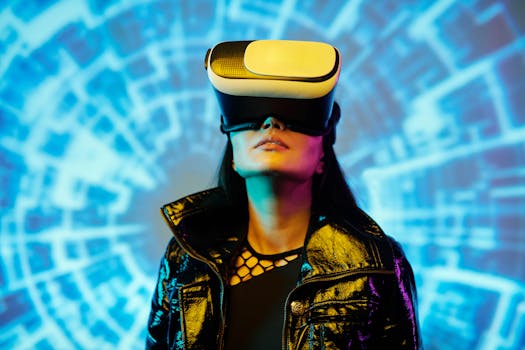 Photo: Darlene Alderson / Pexels
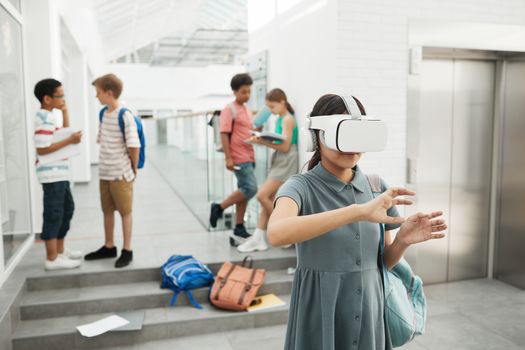 Photo: Norma Mortenson / Pexels
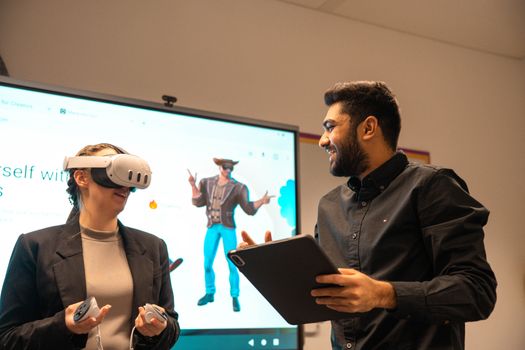 Photo: Md Jawadur Rahman / Pexels
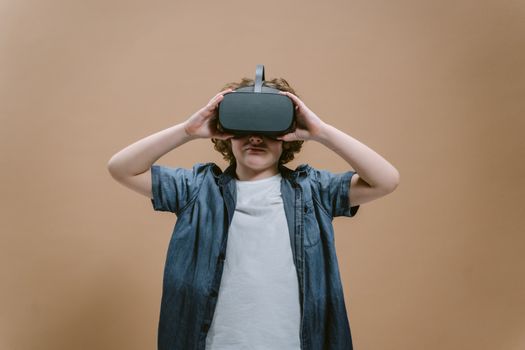 Photo: Tima Miroshnichenko / Pexels