Unleash Creativity: Affordable 3D Printers for Beginners
affordable 3D printers for beginners

Unleash Creativity: Affordable 3D Printers for Beginners

Dive into the exciting world of 3D printing without breaking the bank or getting bogged down by complexity.

Find Your Perfect Printer

Key Takeaways

  • ✓ Entry-level 3D printers are more affordable and user-friendly than ever before, often under $300.
  • ✓ FDM (Fused Deposition Modeling) is the most common and accessible technology for beginners.
  • ✓ Key features to look for include auto-leveling, silent operation, and a heated print bed.
  • ✓ Many affordable printers offer excellent print quality suitable for hobbies, prototypes, and educational projects.

How It Works

1
Choose Your Model

Select a 3D printer that aligns with your budget, desired features, and ease-of-use requirements. Research different brands and read reviews to make an informed decision.

2
Prepare Your Design

Find or create a 3D model (STL file) using CAD software or by downloading from online repositories like Thingiverse. This digital file is the blueprint for your physical object.

3
Slice and Print

Use 'slicer' software to convert your 3D model into G-code, which tells the printer how to move and deposit material. Load your chosen filament, transfer the G-code to the printer, and start printing!

4
Post-Processing (Optional)

Once your print is complete, you might need to remove supports, sand, or paint your object. This step refines the final product and enhances its appearance.

Understanding Entry-Level 3D Printing Technology for Newcomers
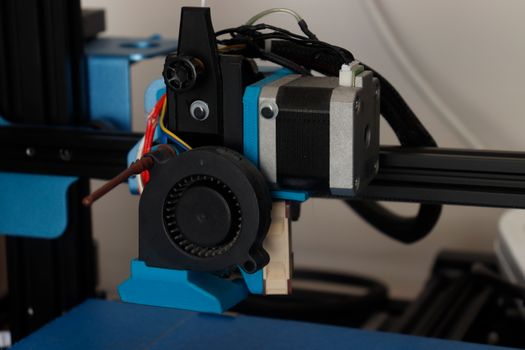
Detailed view of a 3D printer component showcasing its technology and design. Photo: Berat BAKI / Pexels
The world of 3D printing, once a niche domain for engineers and industrial designers, has dramatically expanded its accessibility, making it an exciting frontier for hobbyists, educators, and small businesses alike. For beginners looking to dive into this innovative technology, understanding the core principles and available options is the first crucial step. The term 'affordable 3D printers for beginners' isn't just about price; it encompasses ease of use, reliability, and a manageable learning curve. The most prevalent technology you'll encounter in this segment is Fused Deposition Modeling (FDM). FDM printers work by extruding a thermoplastic filament, heating it to its melting point, and then depositing it layer by layer onto a build platform to create a three-dimensional object. This process, while seemingly complex, has been refined to a point where entry-level machines are remarkably user-friendly. When considering an FDM printer, several factors contribute to its beginner-friendliness. First, the setup process should be straightforward, ideally involving minimal assembly. Many modern budget printers come almost fully assembled, requiring only a few screws or clips to get started. Second, the user interface (UI) on the printer itself should be intuitive, often featuring a touchscreen with clear icons and simple navigation. Third, and perhaps most importantly for beginners, is the availability of robust community support and online resources. Brands that foster strong user communities often provide invaluable troubleshooting tips, shared print settings, and modification ideas that can significantly ease the learning process. The materials used in FDM printing, primarily PLA (Polylactic Acid) and PETG (Polyethylene Terephthalate Glycol), are relatively inexpensive, safe to work with, and offer a wide range of colors and properties. PLA is particularly popular for beginners due to its ease of printing, low warping, and biodegradability. PETG offers more durability and temperature resistance, making it a good next step. Understanding these foundational aspects of FDM technology will empower you to make informed decisions and confidently embark on your 3D printing journey. It's not just about buying a machine; it's about investing in a new skill and a world of creative possibilities. For more on general tech insights, check out our guide on emerging tech trends.

Key Features to Prioritize in Your First Affordable 3D Printer

Detailed view of a 3D printer component showcasing its technology and design. Photo: Berat BAKI / Pexels
Navigating the myriad of features offered by affordable 3D printers can be overwhelming for a newcomer. To simplify your decision, focus on a few critical features that directly impact the ease of use and success rate for beginners. One of the most significant advancements for beginner-friendly printers is **automatic bed leveling**. Manually leveling the print bed – ensuring it's perfectly flat and at the correct distance from the nozzle – is a common source of frustration and failed prints for new users. An auto-leveling system uses sensors to map the print surface and adjust for any inconsistencies, dramatically improving first-layer adhesion and overall print quality without requiring constant user intervention. This feature alone can save hours of troubleshooting and boost confidence. Another crucial consideration is the **build volume**. This refers to the maximum size of an object your printer can create. While larger build volumes might seem appealing, they often come with a higher price tag and can be more challenging to manage for beginners. A common build volume for affordable entry-level printers, typically around 220x220x250mm, is perfectly adequate for the vast majority of beginner projects, from small figurines and functional prototypes to replacement parts. Don't overspend on a massive printer if you don't foresee needing to print very large objects immediately. **Print speed and noise level** are also practical features. While speed often correlates with price, many affordable printers now offer respectable print speeds without sacrificing quality. More importantly for a home environment, look for printers advertised as 'silent' or 'low-noise'. Stepper motor drivers like TMC2208 or TMC2209 significantly reduce operational noise, making the printer much more pleasant to have in a living space or shared office. A **heated print bed** is another must-have. While PLA prints well on an unheated bed, a heated bed significantly improves adhesion for materials like PETG and ABS, reducing warping and increasing the range of materials you can use as you advance. Finally, consider **safety features** like thermal runaway protection, which automatically shuts down the printer if temperatures go out of control, preventing potential fire hazards. A good power supply, often internal, is also a sign of a quality machine.

Top Contenders: Best Affordable 3D Printers for Beginners in the US Market
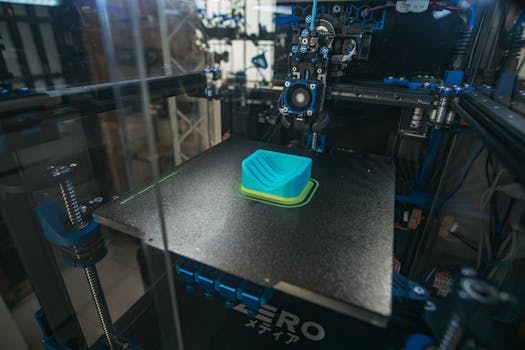
Close-up of a 3D printer creating a plastic object in an industrial setting. Photo: FOX ^.ᆽ.^= ∫ / Pexels
The US market is flooded with excellent, affordable 3D printers, making it easier than ever for beginners to find a suitable option. Here, we highlight some of the top contenders that strike a fantastic balance between price, features, and ease of use, making them ideal for those just starting out. One perennial favorite is the **Creality Ender 3 V2** (or its successors like the Ender 3 S1). The Ender 3 series has become a benchmark for budget FDM printers, known for its robust community support, relatively easy assembly, and consistent print quality. The V2 specifically improved upon its predecessor with a silent motherboard, tempered glass print bed, and a color screen, all contributing to a more refined user experience. It's a fantastic workhorse for learning the ropes and offers great value for money. Another strong contender is the **Anycubic Kobra Go** or **Kobra Neo**. Anycubic has carved out a reputation for producing reliable and feature-rich printers at competitive prices. The Kobra series often boasts automatic bed leveling, which is a huge plus for beginners, and typically comes with a direct drive extruder, offering better filament compatibility, especially for flexible materials. Their build quality is generally solid, and their user interfaces are straightforward. For those looking for something even more 'plug-and-play', printers like the **FlashForge Adventurer 3** or **Voxelab Aquila C2/X2** are excellent choices. FlashForge is known for its fully enclosed designs, which offer safer operation and better temperature control for certain filaments, though this can sometimes limit upgradeability. The Adventurer 3, for instance, often comes with auto-leveling and a removable, flexible build plate, making print removal a breeze. Voxelab, a subsidiary of FlashForge, offers similar quality at an even more aggressive price point, making their Aquila series a strong challenger to the Ender 3. When choosing among these, consider factors like the availability of local support or parts, as well as the specific features that appeal most to you. Some prefer the open-source nature and vast modification potential of the Ender series, while others value the enclosed safety and simplicity of FlashForge. All these options represent excellent starting points for anyone looking for affordable 3D printers for beginners, providing a solid foundation for mastering this exciting technology. For more advanced tech discussions, explore our articles on cutting-edge tech innovations.

Essential Tips for First-Time 3D Printer Owners & Common Mistakes to Avoid
Detailed shot of a 3D printer creating an object, focusing on the cooling fan and print head. Photo: Jonathan Cooper / Pexels
Embarking on your 3D printing journey can be incredibly rewarding, but like any new skill, it comes with its own set of challenges. Here are some essential tips for first-time 3D printer owners and common mistakes to avoid to ensure a smoother, more enjoyable experience. **Tips for Success:** * **Calibrate Diligently:** Take the time to properly calibrate your printer, especially the E-steps (extruder steps per millimeter) and PID tuning for the hotend and print bed. This ensures accurate filament extrusion and stable temperatures, leading to better print quality. * **Master Your First Layer:** The first layer is the foundation of every successful print. Ensure your bed is level, the nozzle is at the correct height, and the bed adhesion is optimal. A perfect first layer prevents warping and detachment. * **Understand Your Filament:** Different filaments have different optimal printing temperatures, speeds, and cooling requirements. Read the manufacturer's recommendations and experiment with small test prints to find the best settings for your specific filament. * **Embrace Slicer Software:** Spend time learning your slicer software (e.g., Cura, PrusaSlicer). Understanding settings like layer height, infill, supports, and retraction can dramatically improve your print outcomes. * **Join the Community:** Online forums, Facebook groups, and Reddit communities dedicated to 3D printing are invaluable resources. Don't hesitate to ask questions, share your experiences, and learn from others. * **Keep Your Printer Clean:** Regularly clean your nozzle, print bed, and inspect belts and rollers. A well-maintained printer performs better and lasts longer. **Common Mistakes to Avoid:** * **Ignoring Bed Adhesion:** Not preparing your print bed properly (e.g., cleaning it, applying adhesive if needed) is a primary cause of failed prints. A clean, properly prepared bed is crucial. * **Printing Too Fast:** While tempting, printing at excessively high speeds, especially with complex models or fine details, often leads to poor print quality, layer shifts, or nozzle clogs. Start slow and gradually increase speed. * **Neglecting Supports:** For models with overhangs or bridges, supports are essential to prevent sections from printing in mid-air and collapsing. Learn when and how to use them effectively. * **Using Cheap, Low-Quality Filament:** While affordable printers are great, skimping on filament quality can lead to frequent clogs, inconsistent prints, and frustration. Invest in reputable filament brands. * **Over-reliance on Default Settings:** While default slicer settings are a good starting point, they are rarely perfect for every printer, filament, or model. Be prepared to tweak and optimize. * **Not Learning Basic Troubleshooting:** Prints will fail. Instead of getting discouraged, learn to identify common issues (e.g., stringing, blobs, gaps, elephant's foot) and understand their causes and solutions. This will make you a more resilient and skilled printer.

Comparison

FeatureCreality Ender 3 V2Anycubic Kobra GoFlashForge Adventurer 3
Price Range (approx.)$200-$280$180-$250$300-$380
Auto Bed LevelingManual (with CR-Touch upgrade)Semi-Auto LeviQFully Automatic
Build Volume (mm)220x220x250220x220x250150x150x150
Extruder TypeBowdenBowdenDirect Drive
Heated Bed
Enclosed Frame
Noise LevelQuiet (silent board)ModerateQuiet
Removable Print BedGlass (clips)PEI Steel SheetFlexible (magnetic)

What Readers Say

"My Creality Ender 3 V2 was surprisingly easy to set up, even as my first 3D printer. I've already printed so many useful little gadgets and toys for my kids. Definitely one of the best affordable 3D printers for beginners!"

Sarah J. · Austin, TX

"The Anycubic Kobra Go is fantastic. The auto-leveling feature saved me so much hassle, and the print quality is way better than I expected for the price. Highly recommend for anyone starting out."

Michael D. · Orlando, FL

"I got the FlashForge Adventurer 3, and within an hour of unboxing, I had my first successful print. The fully enclosed design gives me peace of mind, and the prints are super consistent. A true plug-and-play experience."

Emily R. · Seattle, WA

"The Voxelab Aquila X2 offers incredible value. While it took a bit more tweaking initially than some pricier options, the community support is amazing, and I'm now getting professional-looking results for a fraction of the cost. A great learning tool."

David L. · Boston, MA

"As a teacher, I needed an easy-to-use and affordable 3D printer for my classroom. The Ender 3 V2 fit the bill perfectly. My students love designing and printing, and it's been a great educational tool without breaking our budget."

Jessica M. · Denver, CO

Frequently Asked Questions

What is the absolute best affordable 3D printer for beginners?

While 'best' is subjective, the Creality Ender 3 V2 (or S1) and Anycubic Kobra Go/Neo are consistently rated as top choices for beginners due to their balance of affordability, features like auto-leveling (on Kobra), large communities, and reliable print quality.

Are affordable 3D printers difficult to set up and use?

Not anymore! Many modern affordable 3D printers for beginners come largely pre-assembled with features like automatic bed leveling, making setup and initial use significantly easier than older models. You'll still need to learn the basics, but the barrier to entry is much lower.

How do I get started with designing things to print?

You can start by downloading free models from websites like Thingiverse or Printables.com. To design your own, beginner-friendly CAD software like Tinkercad (web-based and free) or Fusion 360 (free for hobbyists) are excellent starting points to learn 3D modeling.

What's the typical cost of filament for these printers?

A 1kg spool of good quality PLA filament typically costs between $18-$25. This amount can print numerous small objects or several larger ones, making the running cost quite reasonable for hobbyist use.

How do FDM printers compare to Resin (SLA/DLP) printers for beginners?

FDM printers are generally more affordable, safer to operate (no toxic resins), and easier to maintain for beginners. They are better for functional prints and larger objects. Resin printers offer much higher detail but are messier, require more post-processing, and use more expensive, toxic resins, making them less ideal for a first-time user.

Who should buy an affordable 3D printer for beginners?

An affordable 3D printer is perfect for hobbyists, students, educators, small business owners prototyping ideas, or anyone curious about bringing their digital designs into the physical world without a significant financial investment or a steep learning curve.

Are there any safety concerns with operating a budget 3D printer?

While generally safe, it's important to be aware of hot components (nozzle, bed) and moving parts. Ensure proper ventilation, especially when printing with materials like ABS. Always supervise your printer, particularly during longer prints, and look for models with thermal runaway protection for added safety.

What future trends should I be aware of in affordable 3D printing?

Expect to see continued advancements in ease of use, including more sophisticated auto-leveling, remote monitoring, and faster print speeds at lower price points. Multi-color printing and the ability to print with a wider range of materials will also become more accessible to budget-conscious users.

Embarking on your 3D printing journey with an affordable 3D printer for beginners is an exciting and accessible endeavor. With the right machine and a bit of patience, you'll be creating amazing things in no time. Choose wisely, print often, and unleash your inner innovator!

Topics: affordable 3D printers for beginnersentry-level 3D printerbudget 3D printingbeginner 3D printer reviewseasy 3D printer
Leo List

DK Escorts LU Escorts AT Escorts SE Escorts FI Escorts CH Escorts DE Escorts HR Escorts IE Escorts GR Escorts CZ Escorts NO Escorts BE Escorts FR Escorts SI Escorts IL Escorts NL Escorts PL Escorts HU Escorts ES Escorts IT Escorts PT Escorts SK Escorts RO Escorts ZA Escorts UY Escorts US Escorts UK Escorts NZ Escorts AU Escorts
Brampton weed
Adultwork EstrelaBet Vai de Bet R7 Bet Betão Galera Bet Rainbet Bet9ja Shop SportyBet BetKing Sisal Loto Foot Hollywoodbets YesPlay Odibets RushBet Jugabet BetWarrior BetCity MSport betPawa Fortebet